



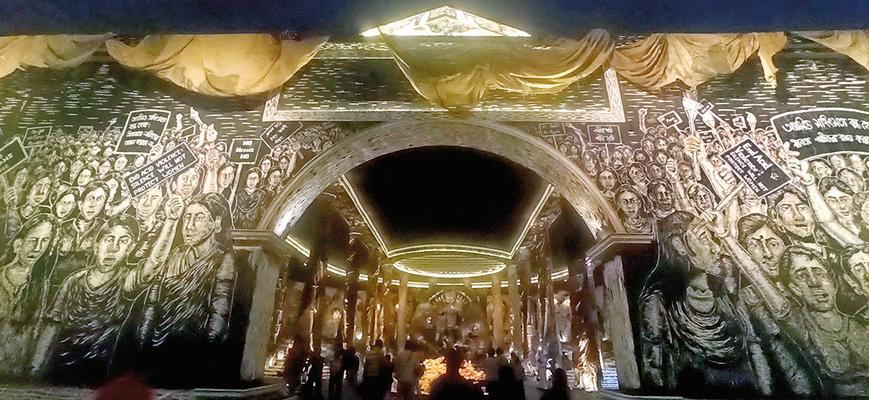
Condemning acid attacks
The theme at the Dakshindari Youth pandal was Dahan or burning to protest against acid attacks on women. Artist Anirban Das conceived it after meeting a survivor. The entrance wall featured a stark monochromatic painting of survivors holding placards while, above, a phoenix spread its wings. Inside, performers mended shattered terracotta figurines, symbolizing hope. Jute-wrapped pillars concealed engravings of women. Dusty, opaque mirrors lay around. A hollow-bellied Goddess evoked scarring and strength. There was also a deeply moving performance by survivors.
Aiema Tauheed & Photographer Ashoke Chakrabarty criss-crossed Kolkata
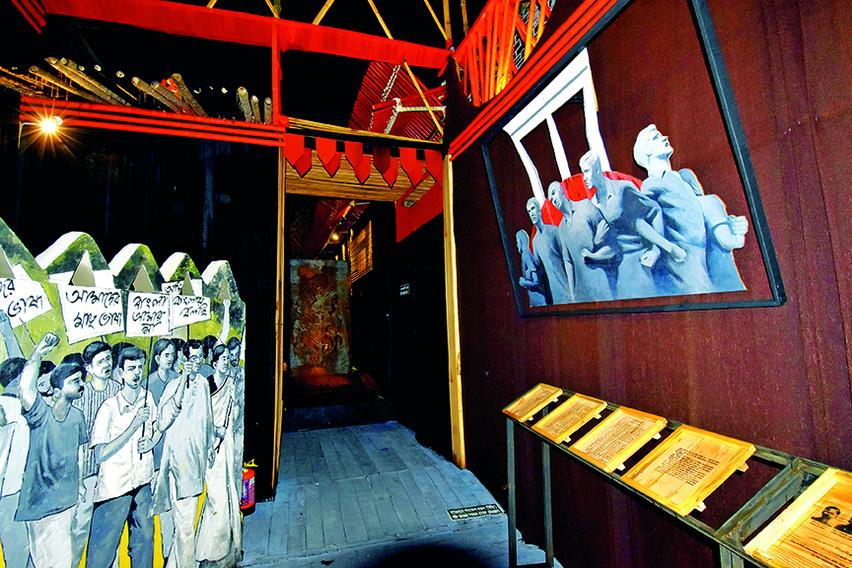
Speaking Bengali with pride
The Chaltabagan Sarbojanin pandal’s topic was ‘I speak in Bengali’ (Ami Banglai Bolchi). It was designed by Pradipta Karmakar, an artist, to honour the Bengali language and revive pride in the mother tongue. The recent crackdown against Bengali-speaking migrant workers in Delhi and Gurugram made the theme even more emotive. The pandal included a ‘tree of evolution’ tracing Bengali’s linguistic roots.
Aiema Tauheed & Photographer Ashoke Chakrabarty criss-crossed Kolkata
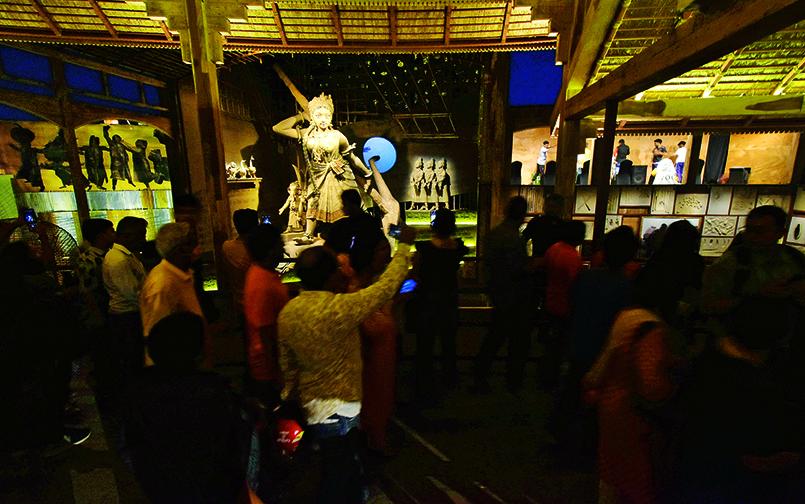
Women as the first farmers
The Tala Prattoy pandal’s theme was Beej Angan or ‘seed courtyard’, curated by artist Bhabatosh Sutar and chosen by Chief Minister Mamata Banerjee. The pandal presented the seed as a vessel of memory, knowledge, and continuity. The Goddess appears as a primeval peasant, honouring women as the first farmers who brought forth seeds. Her plough becomes a trident as she battles demons, pesticides and harmful policies.
Aiema Tauheed & Photographer Ashoke Chakrabarty criss-crossed Kolkata
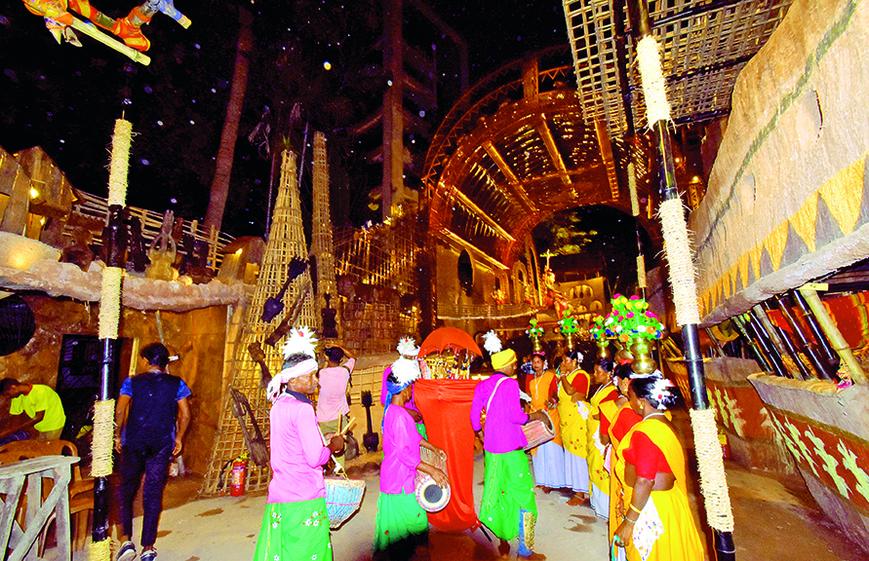
Dying art forms
The Hindustan Park Durgotsav celebrated its 95th year with Lokoj, or indigenous folk culture, conceptualized by artists Moloy Roy and Subhamay Sinha. It sought to revive Chador-Bador, a Santhal puppetry tradition, performed by the community’s purportedly last generation of puppeteers. The open to the sky set-up evoked a village with earthen pots, tribal instruments, and empty puppetry houses. The Durga idol, modelled on a village woman, and performances by Santhals brought the theme to life.
Aiema Tauheed & Photographer Ashoke Chakrabarty criss-crossed Kolkata
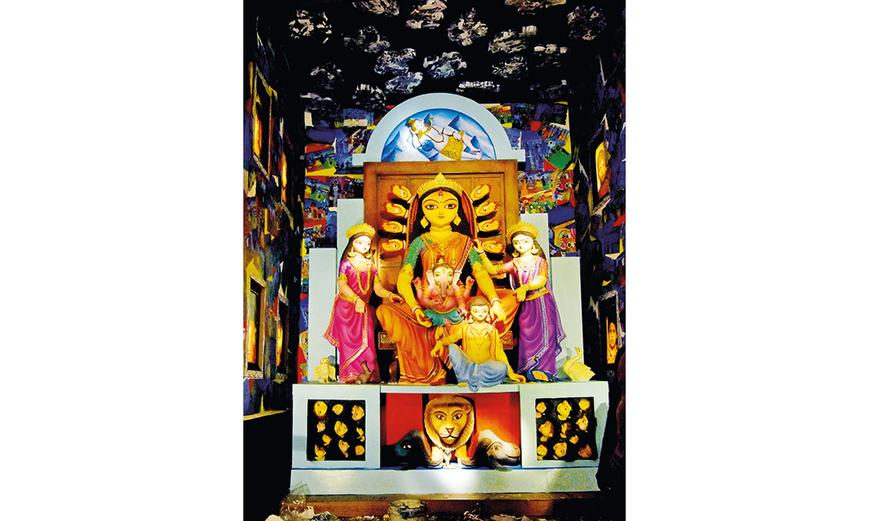
Children caught in broken homes
The Golaghata Sammilani pandal, by theme artist Manash Roy, explored the impact of divorce on children. Organizers clarified that they were not against divorce. Children’s drawings of their parents formed the backdrop, alongside a Kalighat Pattachitra painting on infidelity and a painting of struggles in school. Facing the Goddess were figurines of children holding placards asking, “What is our fault?”
Aiema Tauheed & Photographer Ashoke Chakrabarty criss-crossed Kolkata


