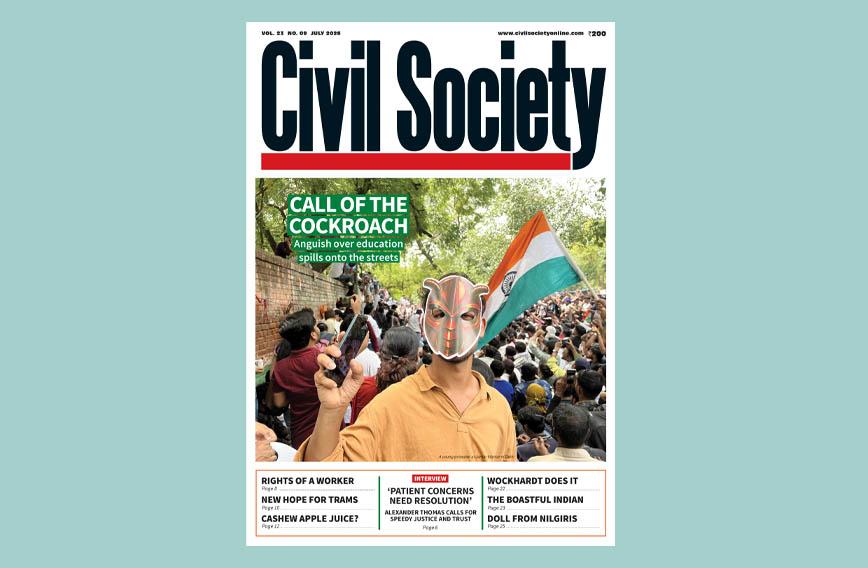
-
When those in power refuse to listen
The long-drawn agitation by students for education reforms need not have happened, if only the ...
Read More
-
Cockroach and cause
People trying to wrap their heads around the sudden emergence of Abhijeet Dipke’s Cockroach Janta ...
Read More
-
Polls apart: Damage to the system is depressing
We emerge from an election season drenched in cynicism and foreboding. The flaws in the ...
Read More
-
Voluntarism does help, but fixing cities needs more
W e shouldn’t fool ourselves that volunteers, however spirited, can seriously bring order to Bengaluru’s ...
Read More
-
Trump’s war: A low point as we watch children die
When schoolgirls are killed in an age of precision bombing, a terrifying low point has ...
Read More
-
Perfection comes from simplicity and dedication
Saptak is our kind of story. It is a small, passionate venture delivering great value ...
Read More
-
Viksit vision is needed to build a Viksit Bharat
Viksit Bharat is a laudable objective. India must aspire to be a developed country. All ...
Read More
-
So this is a new year and what have we done?
As 2026 kicks in, what should we be celebrating? It’s a tough call, swamped as ...
Read More
-
A river’s got rights and should be given respect
We claim to worship rivers, but in practice we abuse them. The evidence is all ...
Read More
-
The rush to get out among talented Indians is real
Some years ago, we spent a week interviewing hawkers on Kolkata’s streets. While talking to ...
Read More
-
22 and still seeking the missing stories in India
Time flies in our magazine. It is an immersive experience. The stories and interviews, the ...
Read More
-
Community museums are for those everyday things
How can people hold on to bits and pieces of their collective past so as ...
Read More
-
Training teachers and improving schools
The school system as we know it to be now needs to undergo a serious ...
Read More
-
Opportunities aplenty to boost farm incomes
War clouds were gathering as we were getting this issue together, making us think what ...
Read More
-
Tracking nature and making the best of a second chance
MUCH is reported about how the planet has been degraded. Scientific studies detail what has ...
Read More
-
Beguiled by the AQI rope trick as pollution grows
WE have psyched ourselves into being AQI worshippers. Its numbers, going up and down, hold ...
Read More
-
Where AAP came from and what it has become
HOW should the Aam Aadmi Party’s (AAP) defeat in Delhi’s assembly elections be seen? It ...
Read More
-
21 years of tracking India like no one else does
Bringing out a magazine for 21 years, month after month without missing an issue, rates ...
Read More
-
People pay when health facilities are neglected
THE shortcomings in public healthcare are now showing up more starkly than ever. Disease burdens ...
Read More
-
Meeting Wangchuk, hearing out the mountain states
PUTTING Sonam Wangchuk and Ladakh on the cover was a no-brainer for us. We have ...
Read More
-
Speaking up for those remote islands
A country’s attitude to its environment defines how good a place it is to live, ...
Read More
-
Jobs and skills: What crafts can do for rural areas
AMID the chatter about creating more jobs, the opportunities in promoting traditional skills and crafts ...
Read More
-
Cities and water: Working with nature is best
POLITICIANS don’t think water except to give it away free. In the absence of political ...
Read More
-
The vote and after: A post-poll special issue
WHAT do the recent election results tell us? In our view people may care about ...
Read More
-
Village and city: One needs the other more than ever
ANOTHER election has come and gone without the problems of development getting the attention they ...
Read More
-
In search of new politics and better governance
The more politicians talk of change, the more similar they seem to become. Politics is in ...
Read More
-
What’s the future of our growing, dying cities
MUCH is made of how cities matter to the future of India. Not enough thought ...
Read More
-
Jobs on trees in Kerala and the ASER fine print
THE coconut harvesters featured in this month’s cover story are a good example of how ...
Read More
-
Our 20th anniversary! Thank you, 20 times over!
PEOPLE express amazement that Civil Society should have survived 20 years as an independent magazine. ...
Read More
-
Making peace not war a universal response
AS brutality in Gaza reaches a crescendo, a cry for peace goes out in street ...
Read More
-
Farmers need helping hand to deal with markets
WHEN the Kuttiattoor mango was given geographical indicator status there was reason to celebrate. Its ...
Read More
-
Value of patience: Why It took SEWA all of 13 years
COMPLEX problems need time to solve. Voluntary organizations in a hurry to deliver outcomes tend ...
Read More
-
Getting design right makes everything much better
Design matters THERE is a lot of recent policy talk on preschool development. ...
Read More
-
Drugs, addiction and the Green Revolution
Punjab’s problems have been in plain sight for a long time and it should be ...
Read More
-
Essays are insightful and we bring them back
WHEN we began our magazine in 2003, we used to publish an essay on the ...
Read More
-
Officers with a difference deserve to be recognized
IT shouldn’t be the role of the media to cheer the government. On the contrary ...
Read More
-
Farming plus: Much can be done for rural incomes
A rethink on the farm sector is long overdue. The view that people will inevitably ...
Read More
-
Cities need expertise and better governance
Our cover story this month is an example of small but important efforts that can ...
Read More
-
On turning 19 with all its joys and many challenges
TO be able to go the distance is always a good feeling. Completing 19 years ...
Read More
-
Looking back and ahead in another difficult year
As 2023 is ushered in, it is time to look back and ahead. The past ...
Read More
-
On the wild side: Wildlife, potholes and construction
INDIA is teeming with biodiversity. Animals, birds, insects, plants, trees, water bodies — there is ...
Read More
-
Past matters: Hyderabad an example for other cities
CITIES make themselves noticeable in many ways. Heritage brought alive and made accessible is one ...
Read More
-
Reviving rivers, justice for Bilkis, cookies from insects
HEALTHY rivers make for a healthy economy. But how does one bring ailing rivers back ...
Read More
-
Living for others, cheetahs, free power, cancer
WE met Ram Gidoomal in the early years of our magazine and so it has ...
Read More
-
The plant world and what it means to better healthcare
SO much attention has our page on medicinal plants attracted from readers over the past ...
Read More
-
Dogs at home and dogs on the streets
THERE have been dogs at home from as far back as one can remember. They ...
Read More
-
Summertime and the living this year hasn't been easy
OUR June issue goes to press with an intimidating summer upon us. It is not ...
Read More
-
Least-developed districts and their aspirations
ON more than one occasion, as we would go about our stories, we would hear ...
Read More
-
Frontline people we are proud to know
BLESSED are the people who serve in remote areas. They are self-motivated and get little ...
Read More
-
Civil Society Public Health Initiative
THE pandemic is a reminder of the need to quickly strengthen our public healthcare system. ...
Read More
-
We are all of 18! It's great to be around and growing!
IF you asked us how 18 years have passed in our magazine, we would have ...
Read More
-
Getting the story straight from the source
We have since the inception of this magazine worked with a broad definition of civil ...
Read More
-
The whole problem with standards
WE can’t stop talking about what a great future the Indian economy has. But how ...
Read More
-
When justice is strained: The sad case of Stan Swamy
THE problems with our justice system are there for all to see. They have been ...
Read More
-
Putting out our magazine in the shadow of the virus
IT has been more than a year and the pandemic continues to serve up surprises. ...
Read More
-
Why we cover politics and why we don’t
OUR readers tell us that they don’t want us to cover politics and politicians. They ...
Read More
-
Figure out green issues quickly
THE flood in Chamoli and the controversy that has followed are reminders that we are ...
Read More
-
Lessons from farmers: reforms need buy-in
THE long agitation over the Union government’s new farm laws shows that reforms by stealth ...
Read More
-
Put strong public healthcare system above all else
A pandemic may not be the right time to judge healthcare systems. The best can ...
Read More
-
Stop worrying and keep going is our mantra
THE collapse of the economy and the oppressive nature of the pandemic leave us with ...
Read More
-
Beating the lockdown
Lockdown stories around us are invariably of the hard-luck variety. It has been a punishing time ...
Read More
-
One more issue under lockdown
This is the third issue of Civil Society brought out in lockdown conditions. It means ...
Read More
-
Keeping on going in the shadow of the virus
The coronavirus pandemic is a great story. As journalists we have our work cut out ...
Read More
-
Fringe to the fore
Consumers invariably end up taking what they are given. Someone somewhere shapes their decisions ...
Read More
-
Rethinking healthcare
Public health services need a big push. A larger spend is required, but it is not ...
Read More
-
Lurching along
Just when India should be rapidly dealing with its many problems and coasting into a ...
Read More
-
Take it back
Widespread opposition to the Citizenship Amendment Act (CAA) and plans for a proposed National Register ...
Read More
-
Dharamshala matters
You might ask why we chose to go to Dharamshala to cover a film festival ...
Read More
-
Customise, localise
Environmental solutions are becoming more precise and targeted and therefore more impactful. Water harvesting is ...
Read More
-
Civil Society's Sweet 16
The running of a small media enterprise comes with many challenges but the journalistic satisfaction ...
Read More
-
Tracking cities
Cities have a major role to play in India’s economy, but there is little that ...
Read More
-
Doctors for all
Finding a doctor has become increasingly difficult. Of course, there are doctors everywhere and their ...
Read More
-
Politics and beyond
In this magazine we prefer to keep ourselves out of politics. Of course, as journalists, ...
Read More
-
The business of farming
Cooperatives come with well-known frailties. In many ways, Campco is no exception. It was set ...
Read More
-
Blessed is the small business for it is the future
The agrarian crisis has everyone worried. But the coolest solutions seem to come from farmers ...
Read More
-
A slow churn
An economy on the move needs to invest in social change. The problem is that ...
Read More
-
Biennale and more
Free-falling spaces enrich a democracy. The Biennale held in Kochi, which is featured as our ...
Read More
-
The NE picture
Much has been said about developing the states in the Northeast of the country and ...
Read More
-