




MEGHNA UNIYAL
In early 2018, a group of residents noticed large amounts of sewage water flowing into a stormwater drain near their residential area in Noida. The stormwater drain, meant to ensure that excess rainwater was directed into the Yamuna rather than flooding the area, was being severely polluted, causing numerous health issues to local people and adversely affecting their quality of life. Despite the fact that the Water Pollution Control Act prohibits sewage from being discharged into water bodies like lakes and rivers, the same was taking place unchecked and unreported.
Led by a public-spirited citizen, Abhisht Gupta, the residents took up the issue with the CEO of the Noida Authority. They were told that the matter was apparently “beyond the official capacity of Noida Authority” to address and that they were free to approach the courts.
The residents first petitioned the National Human Rights Commission, leading to notices being issued to the government. However, the matter remained unaddressed. They then approached the Central Pollution Control Board (CPCB) only to be disappointed yet again as nothing came out of that approach either. This is quite concerning as the CPCB is a statutory organization under the Ministry of Environment, Forest and Climate Change, whose primary objectives are to monitor, control and promote cleanliness of streams and wells in different areas of the country through the implementation of environmental standards and regulations.
Later that year the residents decided to file a petition in the Supreme Court. All this was done with citizens pooling their own money, running from pillar to post, just to try and get some authority to at least take cognizance of the problem.
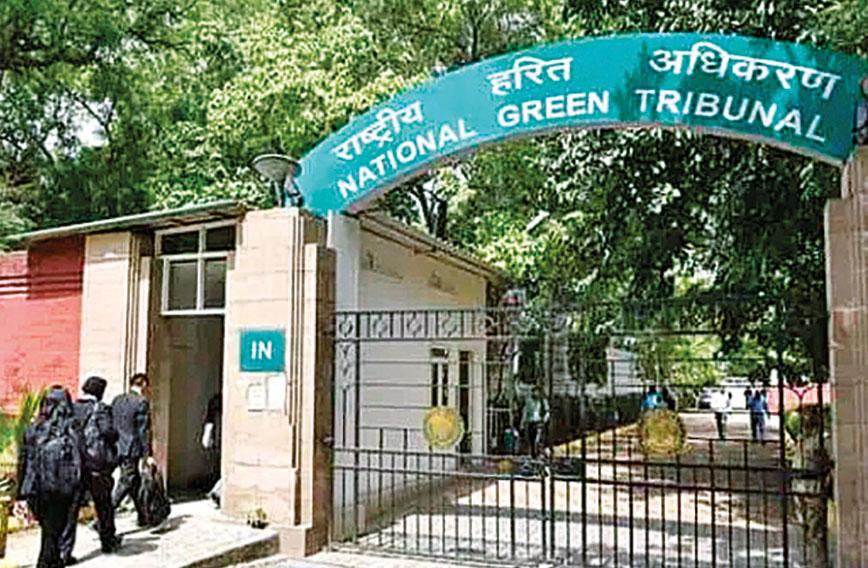
Despite the fact that the Apex court regularly hears matters related to the environment, it directed the petitioners to go to the “appropriate forum”, which in this case was the National Green Tribunal (NGT). In November 2018, Gupta approached the NGT as directed by the Supreme Court, asking for directions to relevant government bodies and departments to ensure that discharge of sewage into the stormwater drain was stopped with immediate effect.
The NGT directed the Uttar Pradesh Pollution Control Board (UPPCB) to submit its report on this matter. The report shocked even the NGT in its revelation. It revealed that due to sewage flowing into the stormwater drain, 215 MLD (million litres per day) of sewage was being discharged into the Yamuna. Even more appalling was the fact that the Yamuna Monitoring Committee, despite its explicit and stated objectives to oversee and ensure the effective implementation of measures to clean and rejuvenate the Yamuna river, monitor wastewater treatment plants and check illegal discharge into the river, particularly within the National Capital Territory of Delhi, seemingly had no idea about this massive and continuing pollution of the river.
The report further stated that the pollution of the Yamuna from the stormwater drain was an inter-state issue that affected both UP and Delhi and that relevant authorities from both states must be involved in addressing the issue. Under the direction of the NGT, a committee was formed comprising the Noida Authority, Delhi Jal Board (DJB), UPPCB, Delhi Pollution Control Board and the East Delhi Municipal Corporation.
The Noida Authority had initially claimed that the source of the pollution/sewage was in Delhi and not any stormwater drains in Noida. The committee found that not only was this claim false but that 30 sewage drains under the Noida Authority were in fact discharging sewage into the stormwater drain. It also found that the Khoda Vikas Parishad, a small municipality in Ghaziabad, was responsible for the drainage of sewage from the entire municipal area under it, into the 20-km stormwater drain flowing into the Yamuna.
Between 2020 and 2022, the NGT issued several directions to all relevant authorities to ensure the immediate stopping of sewage flow into the stormwater drain. It also directed that the sewage must instead be directed into an STP (sewage treatment plant) and not even treated water must be allowed to enter the stormwater drain.
Subsequently, due to lack of compliance with the tribunal’s orders, a fine of `100 crore was imposed on the Noida Authority and another of `50 crore on the DJB. The NGT additionally directed criminal prosecution of all entities responsible for allowing this severe pollution of the stormwater drain. The Delhi Jal Board stopped all three of its sewage drains from causing any further pollution.
In 2023, the Noida Authority approached the Supreme Court against the NGT order and the Apex court stayed the financial penalties. Although the case continues, residents are disappointed that despite NGT orders and directions, they are still waiting for authorities to carry out their most basic and statutory duties towards citizens and the environment. As Abhisht Gupta puts it, “The situation is pathetic. We demand that the pollution be stopped immediately. Compliance with the NGT orders has to be full, not partial, not ad hoc, not half-done.”
These citizen-led cases reveal more than just the struggle of citizens. One, there is only so much citizens can do on their own time and dime, after which they are understandably left dejected with nowhere to turn to. Two, a lack of prosecution of and penalties on government officials and bodies for violating statutory provisions, encourages non-compliance. Surely, this is obvious to our courts? Most important perhaps is the glaring fact that despite the existence of numerous Central and state bodies, supposedly set up with the stated objective of addressing precisely such issues, they seem to be either non-functional or disinterested.
By conservative estimates, approximately `10,000 crore has been spent by the Central and state governments combined on cleaning the Yamuna over the past decade. Seven years later, the case continues for these citizens, in not one but two courts, and still without being resolved.
Meghna Uniyal is Director, Humane Foundation for People and Animals
Comments
Currently there are no Comments. Be first to write a comment!