



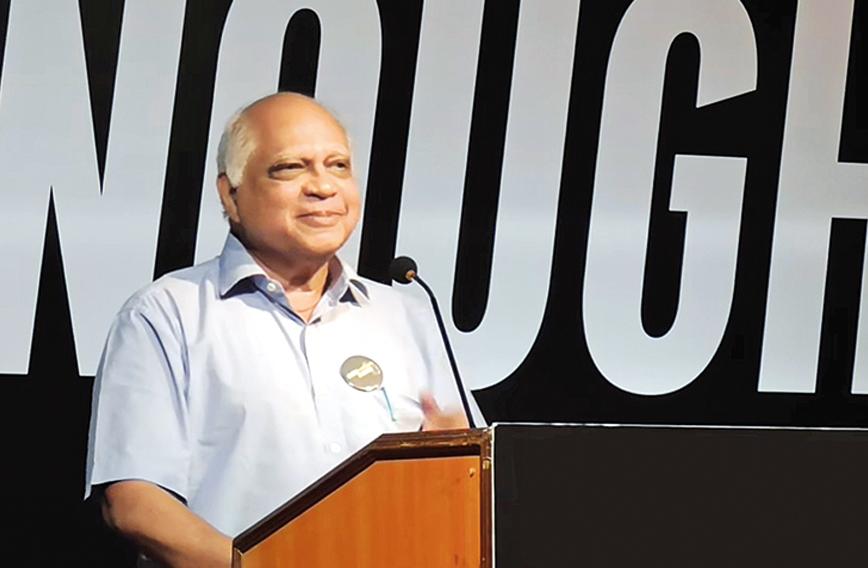
Ferdino Rebello: ‘This model of development is only helping vested interests’
Enough say Goans, asking for Goa to be Goa again
Civil Society News, New Delhi/Panaji
Full-page advertisements in national dailies promise beaches, greenery, quietude and everything else that is associated with susegad, the easy Goan way of life. But Goans themselves aren’t quite so sure what they have got left to offer.
Decades of property developers carving up Goa have resulted in lasting damage to the state’s sylvan character. So large, however, is nature’s bounty bestowed on Goa that even after plunder much exists. But the question Goans are asking is, for how long?
Deleterious changes have been happening rapidly. Orchards, hills, paddy fields and the seaside continue to be turned into real estate with little accountability for the impact such development is having on the intricate topography of the state. Once-pristine settings brimming with the biodiversity of the Western Ghats are being morphed into flats, villas, hotels and whatnot. There are casinos on the magnificent Mandovi river.

Goans are concerned. They live in the grip of politicians and big money. Yet, when given a chance to speak up and protest they do. So, when retired Justice Ferdino Rebello decided in January to get people together, they turned up in droves to a meeting in Panaji, informing one another by word of mouth. Rebello had expected 50 activists to show up, but instead 1,500 or so Goans came, prompting a change of venue to accommodate the large number.
‘Enough is enough’ is how Rebello had issued his call for the meeting. It was a cry that resonated with anguished Goans and is now the name of a movement to hold politicians, bureaucrats and business interests to account.
Traditionally Goa has known decentralized governance with decisions taken in villages to serve the interests of the community. The system is still decentralized, but it no longer works that way. Average Goans find they aren’t taking the decisions that shape their lives. They have been outgunned by powerful politicians who call the shots.
The quality of life for Goans has been declining. Raucous nightclubs play loud music late into the night, keeping traditionally quiet families awake and leading to protests in the streets. Traffic snarls, uncleared garbage and, most shocking of all in a rain-rich zone, water shortages all point to the lack of systems. There are also no jobs except those frivolous ones that seasonal tourism can provide.
“It is not development which is taking place in Goa. It is just the construction of apartments and bungalows. A builder comes in, constructs, makes his money and then leaves the state. Development should benefit the people of Goa. It should generate employment. But this model of growth is not helping anyone except a few vested interests,” says Rebello.
Conversion of land to facilitate construction is a key concern. A series of policy decisions have taken away checks and balances, making it easy for construction companies to get permissions ignoring the ecological harm they could be causing.
Orchards, paddy fields and hillsides are now up for grabs. Goans whose lives are directly impacted by such land changes are now left to battle it out in courts. It is tough for them to stand up against both politicians and moneyed interests.
The movement wants to reset the clock in favour of ordinary Goans. Rebello and the core group have drafted a bill which will reverse all the decisions relating to conversion of land. The bill has also been tabled. But it seems to have little chance of becoming law since politicians across party lines have so far gone along with the real estate boom.
The movement has also asked the government to allocate funds for conducting studies to determine the carrying capacity of villages.
Asked what chance the bill has of being passed, Rebello says: “It may not have a chance, but that is a base for us to move forward. We can tell the people that we gave the current set of politicians a chance but they were not willing to change the law. It’s up to you now to bring in people who will change this law.”
The movement has no intention of converting itself into a political party. Members of its core group also can’t hold positions in parties, says Rebello.
But it hopes to succeed in bringing politicians together in support of a progressive development agenda for Goa.

A 10-point agenda that followed the meeting generally has the support of all parties. But that is because they can’t be seen opposing a good thing. Suggestions like keeping the bureaucracy independent so that it doesn’t do the bidding of politicians will be tough to implement. It would not be unrealistic to expect the political class in Goa to find ways of wriggling out.
“We want political parties which are existing in Goa and have supported the movement’s charter to come together. And for the people to bring them together. That’s for their thought process. So, as far as we are concerned, this is not going to be a party. We are not going to convert ourselves into a political party,” says Rebello.
The movement has succeeded in highlighting the omissions and commissions of the political class. But this is not the first time that activists in Goa are speaking up. They have been protesting and going to court and also winning court orders. But these efforts have done little to deter politicians and the government.
But Enough Is Enough could be different. It brings groups from across Goa together. It also places in sharp focus the misdemeanours in governance. An example is the proliferation of casinos — an absurdity in a small state with a population of 1.5 million. Through a bureaucratic fiddle, casinos on ships have been allowed along the river front. Permission for yet another ship has been stalled after the movement took off. It is an early gain but perhaps a sign of things to come.
Comments
Currently there are no Comments. Be first to write a comment!