




Nurses and training institutes were honoured at Joyee Awards 2025
Giving nurses a better deal
Aiema Tauheed, Kolkata
Holding the Joyee Award, nurse Melina Rumba Lama, born and raised in Kathmandu, Nepal, spoke frankly about the ground realities of nursing. With over 12 years in the profession, she admitted with a laugh she rarely has time for herself. She moves back and forth between being a nurse at IQ City Medical College Hospital in Durgapur and a mom at home, with little room to pause. But she came back to one point again and again: the pay for nurses in India needs to improve.
The Joyee Awards event, held every year by the Confederation of Indian Industry (CII) West Bengal and its Indian Women Network (IWN), honours caregivers and 50 institutes that have excelled in their profession. The awards event was part of the 9th Nursing Conclave — one of the few platforms which places nurses and their concerns, centrestage.
The panel discussions, led by experts, were about digital literacy and deeper systemic issues in modern nursing.
Despite being a highly skilled profession requiring education and intensive training, nursing continues to be poorly paid. There is lack of respect and recognition as well. As a result, for most nurses, it has remained a career path that they “settled for”.

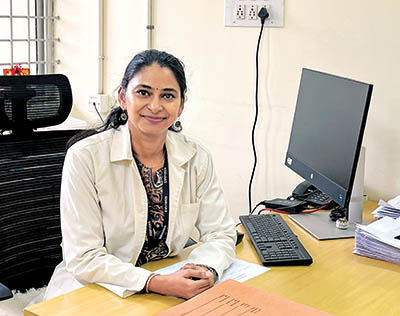 That was also true for Dr Priya Baby, a neuroscience nurse, researcher and educator at the National Institute of Mental Health and Neuro Sciences (NIMHANS), who is working to change perceptions about nursing and improve working conditions in the profession.
“In India finding a job is not difficult, finding the one that pays well might be an issue,” says Dr Baby. “It all comes down to how skilled you are and what you can negotiate.” Apart from pay, that means work hours, incentives, perks, and so on.
Nurses have long protested against the paltry compensation they receive for their skills and hours. “The Central government offers a fairly appropriate pay package for the kind of work nurses do,” says Dr Baby. “A fresher appointed at a Central government hospital can take home around `90,000 a month which is quite good,” she added, noting that salaries have improved over time. Shifts are divided into morning, evening, and night — six hours each for morning and evening, and 12 hours for night.
But outside the government system, conditions often remain bleak. “In the private sector, there are still places where nurses are paid peanuts,” she said bluntly. “And many of them don’t know how to speak up.”
Nurses in private hospitals typically earn somewhere between `20,000 and `40,000. Why is it difficult to improve pay scales?
|
|
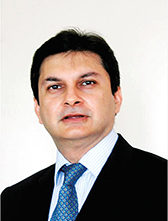
Dr Rana Mukherjee, co-founder and director of Care Continuum Pvt Ltd, a healthcare company delivering long-term, hospital-grade care at home, points to scale as the key hurdle. In a hospital, 70 to 80 percent of the workforce consists of nurses. “Now, if you increase pay by even `1,000 for 70 to 80 percent of the workforce, it does affect the viability of caregiving.”
The challenge, he explained, lies in the disconnect between what patients can pay and what nurses deserve. “Patients are not willing to or cannot afford to pay high charges. Nurses are not willing to work for low pay. Somewhere, it has to meet otherwise we’ll either have too few nurses, or patients who can’t afford nursing care. It’s a balance.”
Beyond pay, there are other issues that dog the profession. Nurses are often not placed according to their area of specialization. “I’m lucky. I trained in neuroscience nursing and I actually get to work in neuroscience. But many of my colleagues who specialized in paediatrics or psychiatry are working in other areas, including midwifery,” says Dr Baby.
“We’re educating nurses, but we don’t have a streamlined system to place them where they’re most needed.”
Research suggests that this, combined with insufficient pay, contributes significantly to attrition in the nursing workforce.

The World Health Organization (WHO) predicts a global shortfall of 4.5 million nurses by 2030. India is one of the top countries sending its nurses abroad, to make up for the shortfall. But many nurses come from non-English speaking backgrounds, so could language become a barrier?
“It’s not just English-speaking countries that need nurses anymore,” says Dr Mukherjee. “Across Europe, especially in geriatric care, there’s a growing demand for nursing staff.” He explained that nurses often train in the destination country’s language.
“Indian nurses are known globally for their commitment,” notes Dr Baby. “The skills, compassion, and empathy they bring are unmatched. Language can be picked up along the way, I don’t think it stops anyone from stepping onto the global stage or growing within it.”
But for India, the outflow comes at a cost. The country’s nurse-to-population ratio stands at 1.96 per 1,000, well below the WHO recommendation of 3 per 1,000. “We need sufficient manpower,” confirmed Melina when asked what needed to improve.
“Doctors do their rounds and leave, but nurses are there morning to night,” she explained. From angry patients to everyday disrespect, it’s all in a day’s work. Asked what respect should look like beyond awards, she paused and said simply, “If people are humble and treat us a bit politely, it would make things much easier.” ν
Comments
Currently there are no Comments. Be first to write a comment!