



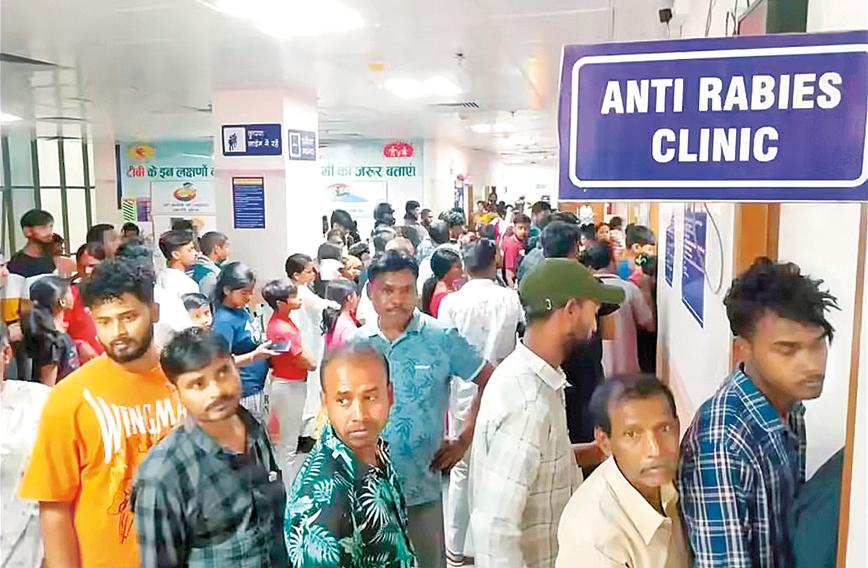
Why are people across India dying of rabies?
Civil Society News, New Delhi
Deaths from rabies caused by dog bites have been taking place in a disaggregated way across the country. In the absence of centrallized information, a reliable number is not available. Based on reports in regional and national newspapers, Civil Society has made a rough count and found that between February this year and August 2025, roughly a period of six months, there were reports of 19 deaths.
The collation is not scientific and the period has been arbitrarily chosen. The idea is to have some indication of the extent of the problem. It is certain, however, from the news reports that the deaths took place. It is also logical to infer from this rough count that there could be more deaths that aren’t getting reported. Equally, there could be more or fewer deaths in different periods. The population of stray dogs has been increasing, as is well known, and so also there has been vulnerability to bites and rabies.
In the absence of a professional audit of each death by experts, as should be done, it is not reliably understood what resulted in the onset of rabies. There are several possibilities. The anti-rabies vaccine may not have been administered as per medical protocol. It may have been administered correctly but given after a delay which would make it ineffective. The vaccine could be inert, not having been preserved in a cold chain till the time it was administered. Lastly, is the rabies virus going through mutations that aren’t being surveilled and make the vaccine ineffective?
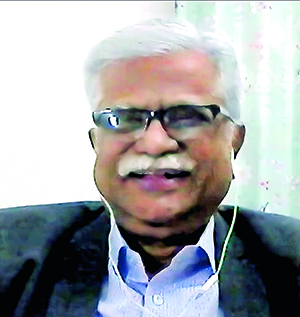 |
| Dr M.K. Sudarshan |
Rabies is not as yet a notifiable disease uniformly across India. The result is that not enough is reliably known about its incidence. The information available is dispersed, delayed and anecdotal.
Recently, the Australian Technical Commission on Immunization issued an alert regarding a batch of vaccines in use in India which was found to have expired and of dubious quality. There was no official Indian word on this Australian concern.
Even as the stray dog population has increased in India there has been no awareness drive on a matching scale bringing vaccine supplies, hospitals and individual medical practitioners together in a concerted public health initiative.
To have a clearer picture of these developments, we spoke to Dr M.K. Sudarshan, a long-time community health expert and founder-president and mentor of the Association for Prevention and Control of Rabies in India.
Q: The Australians have raised concerns over the efficacy of the Abhayrab rabies vaccine. Could you throw some light on the concerns raised and the outcome?
As per reports in the print and electronic media and my personal interaction with the officials of Indian Immunologicals, Hyderabad, the makers of Abhayrab rabies vaccine, a particular batch of the vaccine, KA24014, a government and institutional supply, was found circulating in the markets of Bihar and UP. It had the dates of manufacture and expiry as March 2024 and February 2027, respectively. A close scrutiny of the vaccine pack showed that it was pilfered repacked and resold in private markets. In January 2025, when this was noticed by the officials of Indian Immunologicals, a formal complaint was lodged with the Central Drugs and Standards Control Organization (CDSCO) in Delhi. Subsequently, raids were conducted in Patna, on the wholesaler and others who were involved in the racket. The stolen and repackaged vaccine packs were seized and destroyed.
| 19 deaths in five months CLICK HERE |
In 2026, when this gained international attention, the overseas national regulators of the UK, US and Australia alerted their nationals (animal bite victims) that if they had received this batch of the Abhayrab brand or any unknown brand of rabies vaccine in India during this period they should get revaccinated with a brand of rabies vaccine that is approved by their respective national regulatory authorities.
There are two issues in this whole affair. One is of public trust and patient safety regarding the quality of the rabies vaccine and the other is pilfering of government or institutional supply of vaccines and diverting them to private outlets and markets which is an issue of theft and corruption. Both need to be addressed comprehensibly by the concerned authorities by corrective and preventive actions.

Q: Cases of people dying of rabies even after taking the vaccine post a bite have been coming to light. These are disaggregated cases from across the country. What do you think could be causing the deaths?
With my over four decades of experience, I can say that to know the cause of rabies death despite rabies prophylaxis, supposedly a case of treatment failure, only a proper death audit done by a team of experts will provide the answer, and guidelines for this are available. However, the most common and known reasons for these deaths are non-use or wrong use of rabies immunoglobulins in Category III or severe bites (wounds that ooze blood), and delayed and incomplete course of rabies vaccination.
Q: How sure can one be of a vaccine purchased in the open market?
Vaccines, for that matter any medicine, should be purchased as far as possible from popular and reputed pharmacies or chemist shops, preferably housed in a hospital facility. These assure genuine drugs and their proper storage. It is generally advisable to avoid standalone private chemist shops that are often a source of trouble.

Q: What is the current post-bite protocol for doctors to follow?
All wounds should be thoroughly washed with soap and water preferably up to 15 minutes and an antiseptic (preferably povidone iodine) applied. If it is an intramuscular regimen, it is five doses of rabies vaccine given on days 0, 3, 7, 14 and 28 and in case of intradermal regimen it is four doses given on days 0, 3, 7 and 28. Day 0 is the day of administration of the first dose of vaccine and may not be the day of bite and rabies exposure. In cases of severe exposure or bite (wounds with bleeding or even oozing of blood) infiltrating such wounds with rabies immunoglobulin or rabies monoclonal antibody will ensure complete therapy.
Q: In your experience, have you found dog bite cases increasing?
Yes. It is because of, one, an increase in the dog population, better rabies awareness resulting in more people seeking anti-rabies treatment and improved reporting system.
Q: Is it possible that the rabies virus has been mutating resulting in the vaccine losing its efficacy?
Whenever there is any treatment failure, this is often the suspected cause. But till date research done in the laboratories of the vaccine manufacturers, premier research institutions like the National Institute of Mental Health and Neurosciences (NIMHANS) in Bengaluru, the National Centre for Disease Control (NCDC) in Delhi and others in the country has not proven this.
Q: How many times in a year can a person take the rabies vaccine?
Pre-exposure vaccination is not recommended for all. It is recommended for those who are likely to be in contact with animals like dogs and others due to their vocation, travel and residence like having a pet dog and cat at home and where the stray dog menace is well perceived. It involves three doses of rabies vaccine given by intramuscular or intradermal routes on days 0, 7, 21, 28. Periodic boosters are not recommended. Subsequently, rabies vaccine is given only following an animal bite or exposure to rabies.
Comments
-

Donthi Narasimha Reddy - March 5, 2026, 11:44 a.m.
I don't think this interview offers information of substance. The Qs which were asked at the beginning of the article continues to remain unanswered. Rabies vaccine efficacy seems to be a serious concern that needs research. Unfortunately, that is not being done. There is as yet no evidence about repacking/ spurious RBV. It appears that this is being floated merely to protect markets.