



SHYAM BHATIA
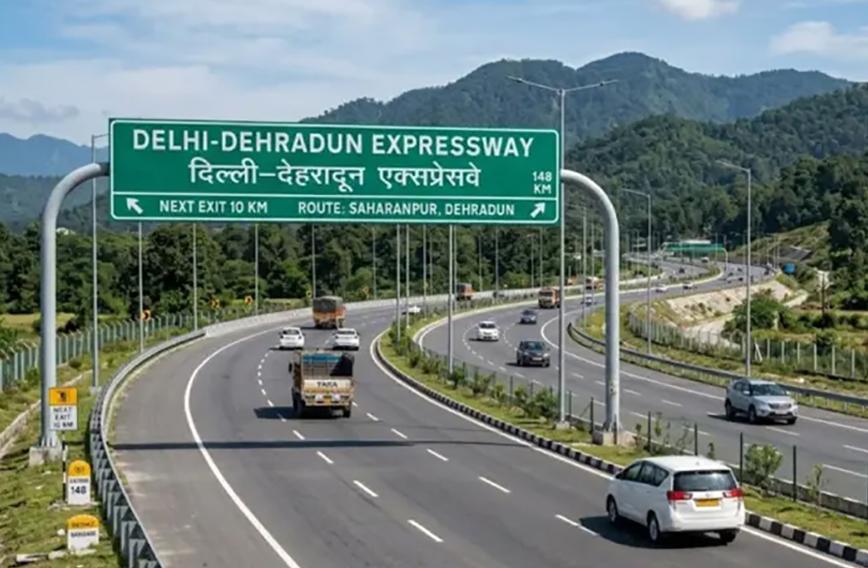
The new expressway to Dehradun opened on April 11 and has already transformed distance. My drive from Delhi took little more than 150 minutes. Sixty years ago, such a journey could consume an entire day or require an overnight train journey. India’s physical infrastructure has changed with astonishing speed. Roads, airports, digital payments, app-based transport and baggage handling increasingly function with an efficiency that would have been unimaginable a decade ago.
At Delhi airport I was off the aircraft, through immigration, reunited with my luggage and into a black-and-yellow taxi in what felt like less than half an hour. Unlike Dubai, there were no visibly privileged queues or elaborate stratifications of passengers. It simply worked.
The airport itself felt calmer than many global hubs. There was less theatre about security and less visible hierarchy. For decades India was associated with delays, uncertainty and friction. Increasingly, that stereotype no longer holds.
Later, from my brother’s home in Delhi, Uber autorickshaws appeared repeatedly within minutes of being summoned. The autorickshaw once embodied improvizational urban life — bargaining, waving, vague directions and shouted negotiations. Now it arrived silently through an app, digitally mapped and algorithmically tracked.

The expressway northwards was superb. Wide carriageways, disciplined surfaces, emergency breakdown numbers overhead, signs warning drivers not to feed wild animals along forest stretches. The Indian state, once conspicuously absent from public life except in moments of obstruction, now appeared present as organizer, regulator and provider.
There was also surprisingly little visual chaos. Traffic moved with unusual discipline. Signage was clear and modern. Along the roadside giant hoardings advertised private universities proudly proclaiming themselves India’s 47th or 49th best institution. The ranking itself seemed almost beside the point. What mattered was the aspiration.
Modern India increasingly measures itself numerically via rankings, ratings, scores, certifications and digital reputations. Even ambition now arrives quantified.
Curiously absent were the jewellery advertisements that dominate so much of Delhi’s visual landscape. Instead there were signs about education, mobility, safety and managed progress.
We stopped at a roadside dhaba for tea. Even there, cash was accepted with visible reluctance beneath a sign indicating digital payments were preferred. My driver surveyed the establishment with optimism rather than nostalgia.
“This is temporary, sir,” he said cheerfully. “Next year it will all be McDonald’s and fried chicken.” He did not say this critically. On the contrary, he seemed proud of the transformation to come. Standardization itself had become aspirational.
The dhaba occupied an interesting space between two Indias. Plastic chairs, steel kettles and truck drivers still belonged to the older roadside culture. But digital payments, branded refrigerators and the expectation of eventual chain expansion pointed towards another future entirely.
As we drove farther north, memories returned of earlier overnight train journeys to school when the distances seemed immense. Roads were narrower, travel uncertain, breakdowns common. The expressway has compressed not merely geography but mental space as well. Dehradun now feels almost like an extended suburb of the capital.
I was travelling to my alma mater, The Doon School, where I had been invited to speak to students about my recent book. Returning after six decades carried its own emotional undertow. Schools exist partly outside time with echoes of earlier selves in corridors, playing fields and dining halls.
The visit itself was unexpectedly moving. There was warmth, curiosity and a seriousness of engagement which many public conversations now lack. The boys were alert, sceptical and engaged. Their questions ranged widely — journalism, geopolitics, books, identity and public life. For an hour and a half there was sustained silence in the hall, interrupted only by questions. In another age silence might have implied boredom. Here it felt more like concentration. Afterwards students clustered around, wanting to continue talking. The experience left me oddly hopeful.
Then came the hotel. Or more precisely, the check-in.
I had my British passport and OCI card, but not a photograph of the reverse side of the OCI document carrying my home address. The receptionist, impeccably polite in his dark suit, apologized repeatedly.
“Sir, I could lose my job if I check you in without all the details.” He mentioned LIU requirements — the Local Intelligence Unit — and the manager, equally courteous, explained that the rules had become much stricter only two months earlier. They needed the reverse side of the card. Nothing less would do.
I was by then almost on my knees with exhaustion. Yet it still took two and a half hours of endless discussion, verification and apologetic consultation before the hotel staff finally handed over my room card.
For two and a half hours nobody could exercise ordinary human discretion. Not because they were rude or incompetent. Quite the opposite. They were anxious. The contrast with the expressway was striking.

India can now move people across hundreds of kilometres with remarkable efficiency. Airports function. Highways glide through mountains and forests. Autorickshaws arrive through satellites and smartphones. Yet ordinary human judgement increasingly appears constrained by compliance systems, documentation anxieties and fear of professional repercussions.
The receptionist was not the villain of the story. One sensed how he himself found the situation faintly absurd. Yet he also knew that systems no longer reward discretion. They reward procedural obedience. India’s talent for flexibility — sometimes maddening, often humane — is slowly giving way to audit culture, digital traceability and institutional defensiveness.
Modern societies require systems. Few would willingly surrender the new roads, the speed and the astonishing reduction in physical friction that improved infrastructure has brought. But something else may also be quietly receding: civic ease.
Old India often functioned through improvization, persuasion and human discretion. New India increasingly functions through traceability, rankings, digital verification and procedural compliance. India has learned to compress geography with extraordinary success. Less certain is whether it still knows how to relax socially in public space.
Shyam Bhatia is the London correspondent of The Tribune.
Comments
Currently there are no Comments. Be first to write a comment!