




SHYAM BHATIA
To borrow a line from an old pop song, let me take you by the hand and lead you through the streets of London. A timely walk as Britain approaches 2026 and finds itself once again confronted by questions of accountability and national purpose.
And allow me to pause at four great British institutions: the British Museum, the BBC, the monarchy and the security services. Each is a national icon, each admired far beyond Britain’s shores. Their histories differ, yet they share a single flaw that has shaped Britain’s past and now clouds its future: a persistent, deeply rooted lack of accountability.
This is not a matter of political hostility. It is cultural. For generations, Britain has protected its most revered institutions by avoiding uncomfortable questions about how they behave, how they are governed, and how they acquired their status. The result is a country that excels at ceremony but hesitates when confronted with scrutiny. From afar, these institutions appear dignified and powerful; close up, they reveal vulnerabilities, moral, structural or both.
Consider first the British Museum, one of the world’s most visited cultural institutions. Its relationship with its Asian and African collections remains fraught. The Indian case stands out. The controversy is not the 2023 internal theft scandal — that involved Greek, Roman and Hellenistic items — but the far older removal of the Amaravati sculptures, also known as the Amaravati Marbles.
These Buddhist reliefs, dating from roughly the 2nd century BCE to the 3rd century CE, were extracted in stages between 1845 and 1880 by British officials in the Madras Presidency. They were taken before India had any antiquities laws and without meaningful consent from local authorities. The Archaeological Survey of India, in its 2013 report, called the removals “an early example of unregulated extraction of India’s cultural patrimony”.
Even the Museum has conceded the ethical problem. In a 2020 research publication it stated that “the Amaravati sculptures entered the British Museum in circumstances that would be considered highly problematic today”.
Similar concerns apply to temple carvings removed during the 19th century, objects taken after the 1857 uprising and items acquired during the Anglo-Sikh wars. None of these removals would meet modern ethical standards.
All of this raises a deeper question: is Britain, implicitly or otherwise, teaching new generations that might is right? British schoolchildren are not told this explicitly. But the silences in the national narrative — the euphemisms around imperial acquisitions, the language of “collections”, the reluctance to confront the ethics of past removals — convey their own message. When children learn that the Museum “holds world heritage” without learning how those objects arrived, when institutions evade scrutiny because they are historic or prestigious, the implicit lesson is that power justifies its own privileges.
A senior civil servant in London captured this cultural habit succinctly when he told the Institute for Government that Britain is extremely good at ceremony and much less good at accountability. These instincts linger across public life and help explain why the country reveres its great institutions, yet so often avoids asking how they behave, who they serve or whether they meet the standards they claim to embody.
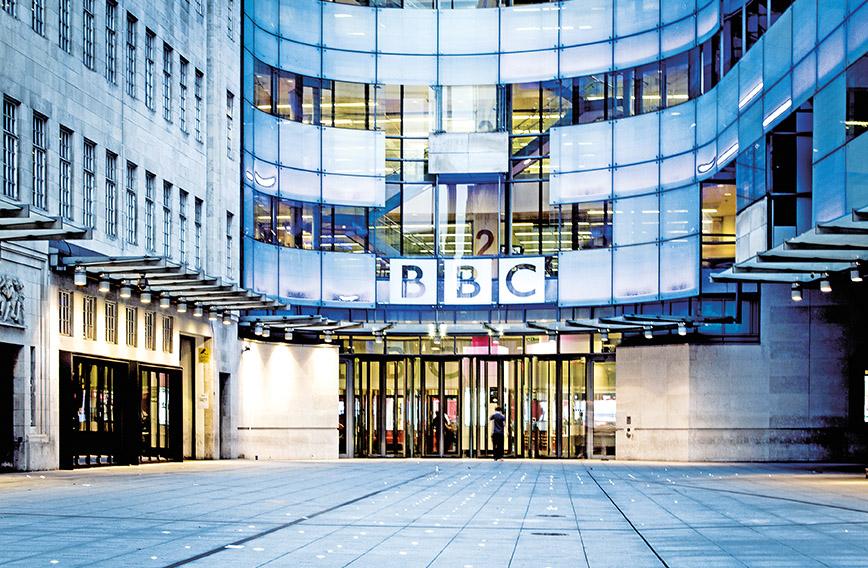
The BBC presents a parallel story. Admired globally and funded by a mandatory licence fee, it often assumes its reputation is a shield. Yet the 2021 Dyson Inquiry into Martin Bashir’s 1995 interview with Princess Diana concluded that “the BBC fell short of the high standards of integrity and transparency which are its hallmark”. A former prime minister, who had been misrepresented by forged documents used to secure the interview, described the affair as “a shocking blot on the BBC’s integrity”.
The Corporation was shaken again in 2023 when its chairman, Richard Sharp — an ex- Goldman Sachs banker, Conservative donor and one-time adviser to Boris Johnson — resigned after an inquiry found he had broken the rules governing public appointments.
The controversy was straightforward: while he was applying to become BBC chairman, Sharp had been involved in discussions about helping Johnson secure an £800,000 personal loan guarantee and Johnson was the very person who had to approve Sharp’s prestige appointment.
The UK Commissioner for Public Appointments concluded that Sharp had “breached the Governance Code” by failing to disclose this conflict of interest. Although he denied wrongdoing, Sharp acknowledged the damage to the BBC’s credibility and resigned, saying: “I feel that this matter may well be a distraction from the Corporation’s good work.”
The monarchy remains the most admired institution of all and the least accountable. Royal finances are exempt from the Freedom of Information Act, and the Sovereign Grant, which funds the Royal Household, cannot be scrutinized like ordinary government expenditure. For the coming financial year the Grant has been set at £132.1 million, a substantial rise driven by higher Crown Estate profits under the formula laid down in the Sovereign Grant Act. Yet there is no straightforward mechanism for the public to see how this money is allocated or to challenge how it is spent.
The Andrew-Epstein scandal shows how accountability works inside the royal system. Following the former Prince Andrew’s disastrous 2019 television interview, Buckingham Palace issued a statement saying that he “continues to unequivocally regret his ill-judged association with Jeffrey Epstein”.
There was no independent inquiry, no parliamentary examination and no public investigation of what occurred. Consequences were determined privately, using royal prerogative and internal procedures, rather than any open process. As former MP and Privy Counsellor Chris Bryant observed in the House of Commons: “There is no mechanism to hold the monarchy to account. None.”
The security and intelligence services occupy an even more sealed space. MI5, MI6 and GCHQ are formally overseen by the Intelligence and Security Committee (ISC) of Parliament, yet even this body has repeatedly reported obstruction. Its long-delayed Russia Report in 2020 stated bluntly: “The Government has actively avoided parliamentary scrutiny.” Earlier, in its 2018 reports on detainee mistreatment and rendition, the Committee wrote that it had “not been able to fully examine the extent of UK involvement”.
After the Manchester Arena bombing, the 2023 inquiry found that “opportunities to prevent the attack were missed”, yet the chain of accountability remained opaque. All of this brings us back to the larger question: what lesson does Britain pass on to its young? When institutions preserve their prestige but sidestep scrutiny, when history is curated but not confronted, Britain risks teaching that power protects itself — that, in the end, might is always right.
Shyam Bhatia is the London correspondent of The Tribune
Comments
Currently there are no Comments. Be first to write a comment!