




SHYAM BHATIA
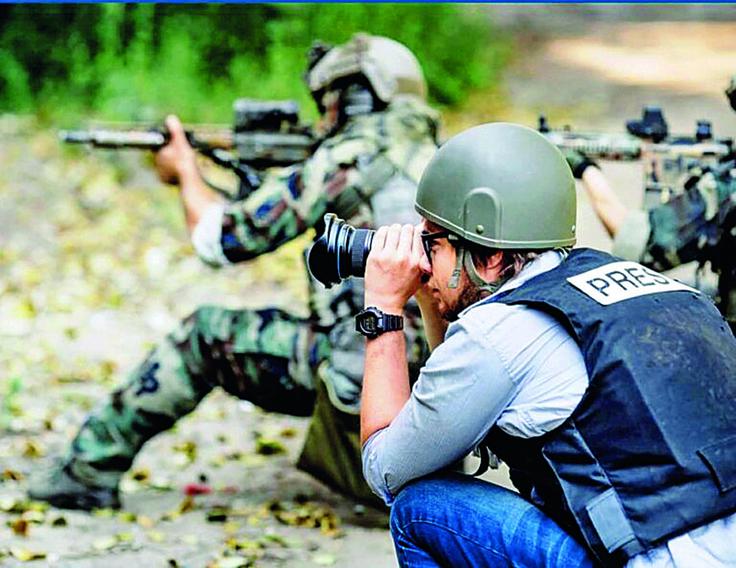
For younger journalists entering the profession today, it is hard to imagine how foreign reporting once worked. News organizations now require hostile-environment training, flak jackets, GPS trackers, evacuation plans and liability sign-offs before a correspondent crosses a border. Insurance companies insist on detailed risk assessments. Editors monitor reporters’ movements in real time through dashboards and security briefings.
And yet, even as safety protocols have multiplied, the institutions that once sustained foreign reporting are quietly disappearing. Recent layoffs at The Washington Post, including the closure of its remaining foreign bureaux, mark another step in a long retreat. It is now possible to be better protected than ever and still have nowhere left to report from.
The death this year of Sir Mark Tully, aged 90, marks the passing of a generation that practised foreign correspondence very differently. From the 1960s into the early 2000s, reporting abroad relied less on institutional protection than on judgement, trust and improvization, and on an unspoken understanding that if something went wrong, you were largely on your own.

Foreign bureaux were often little more than rented flats with unreliable phones and a battered typewriter. Copy was dictated down crackling lines, filed by telex, or carried across borders by hand. Travel plans changed hourly; visas dissolved without explanation. Correspondents learned to read atmospheres as much as briefings: the look of a checkpoint, the tone of a fixer’s warning, the sudden quiet before trouble.
During years of reporting from Cairo, Beirut, Tehran, Khartoum and Gaza, “insurance” was little more than a word. Some organizations provided basic health cover, but it rarely extended to war, militias, kidnapping or terrorism. There were no medical evacuations, no kidnap-and-ransom policies, no trauma counselling, and no formal safety briefings. If a correspondent was injured, editors generally offered sympathy and little else. The expectation was simple: get help if you could, and file when able.
Correspondents survived not because they were protected, but because they were embedded. Personal networks were built with diplomats, aid workers, drivers, fixers, intelligence officers and, occasionally, armed men. A local journalist might tell you which militia controlled which street. An embassy contact might get you through a checkpoint. A friendly commander might warn you before shelling began. Instinct mattered more than equipment because there was very little equipment.
The risks were apparent early on. In January 1980, while crossing into Afghanistan, I was kidnapped and badly beaten by Mujahideen fighters who suspected every outsider of espionage. There was no evacuation plan, no emergency hotline, no security adviser negotiating on my behalf. When I eventually got out, shaken and bruised, colleagues were sympathetic, but structurally that was the end of incidents like this. One simply returned to work.
Some colleagues never did. David Holden, the respected Sunday Times correspondent, was found shot dead near Cairo airport in 1977. His unsolved murder was a reminder that danger did not come only from front lines and militias, but from darker, less visible forces. His death produced no inquiry and no institutional change. It was mourned, then absorbed.
Earlier still, Nicholas Tomalin — one of the finest stylists in British journalism — was killed on the Golan Heights during the 1973 Arab-Israeli war when a missile strike hit the area where reporters were standing. Like many of that generation, he worked without flak jacket or helmet, guided only by experience and instinct. His death altered little.
Even those who survived catastrophic injury received no special protection. James Cameron, one of the giants of post-war journalism, nearly died in Korea when his vehicle hit a landmine. After months in hospital, he returned to the field and later covered the 1971 India-Pakistan war. Courage was admired, but it did not translate into safeguards.
What characterized that era was not fearlessness, but endurance. Correspondents learned to survive by blending in rather than standing out, by understanding the rhythms of the societies they covered, and by avoiding unnecessary display.
The improvisational culture persisted well into the late 20th century. When journalists began disappearing in Beirut, editors issued brief instructions — often via telex — to “avoid Beirut for the time being”. That was the entirety of the safety guidance. Beirut was lethal then, with kidnappings frequent and unpredictable. Still, the profession carried on much as before.
Local colleagues were the real insurance. Fixers, drivers and journalists who lived with the danger protected visiting correspondents far more effectively than any distant newsroom could. They bore the greatest risks and received the least recognition.

The vulnerability of the old system became brutally clear after the fall of the Taliban in 2001, when four journalists were murdered on the road between Jalalabad and Kabul. Even then, change came slowly. It took the kidnappings and beheadings of the Iraq war, and later the death of Marie Colvin in Homs in 2012, for news organizations to accept that the improvisational model was no longer defensible.
The transformation since then has been real and necessary. Training, insurance, security advisers and mental-health support are now standard. Too many were injured or killed before these changes arrived.
Yet something else has faded. There was a humility in travelling light, in relying on strangers, in knowing that judgement — not protocol — would decide whether you lived or died. There was also a strong sense of purpose: the belief that witnessing mattered, and that people living through war deserved to have their lives recorded beyond the battlefield.
That earlier generation of foreign correspondents worked in a world without safety nets. For those who inhabited it, the risks were constant, the protections minimal, and the responsibility absolute. With the passing of figures such as Tully — and the retreat of foreign bureaux — that way of working has receded into history. What remains is the memory of how exposed foreign reporting once was — and how much was done, despite it.
Shyam Bhatia is the London correspondent of The Tribune.
Comments
Currently there are no Comments. Be first to write a comment!