



The unique turban museum
Heritage in the streets of Amritsar
Rashmi Gopal Rao
Instead of cool mountains and windy coasts, explore the city of Amritsar with its wondrous Golden Temple. Wear a comfy pair of shoes and wander through lanes and bylanes with buildings dating back to the past. Savour aromatic cuisine, shop at numerous bazaars, gawk at the world’s largest stainless steel sword, and browse the city’s museums, including the unique turban museum.
Let’s begin with Amritsar’s history. Founded by Guru Ram Das, the fourth Sikh Guru, in 1577, the name of the original city was Ramdaspur. The land was granted by Mughal Emperor Akbar for Rs 700. Guru Ram Das invited 52 traders, including carpenters, goldsmiths and masons, to settle here. That’s how Amritsar, Punjab’s second largest city, started becoming an important economic and trading hub.
 |
|
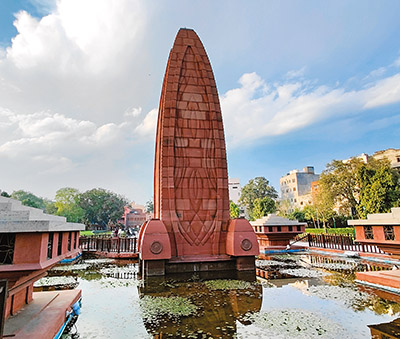
The sombre Jallianwala Bagh Memorial |
The 52 traders set up the first set of 32 shops known as the Battisti Hatta. The Golden Temple was built by the fifth Sikh Guru, Guru Arjan Dev, in 1604 after which the city grew by leaps and bounds. Amritsar was attacked many times by the Mughals and Afghans, prompting Maharaja Ranjit Singh to fortify the city with 12 gates in the 19th century. It was occupied by the British in 1846. It has witnessed some of the most tumultuous events in India’s history including the horrific Jallianwala Bagh massacre in 1919 and the Partition of 1947.
Museums and a fort
Located in close proximity to the Golden Temple, the Jallianwala Bagh Memorial is one of the most compelling sights of the city. It honours men, women and children killed by the British when they opened fire on a large crowd of unarmed Indians on April 13, 1919. A poignant and haunting reminder of India's hard-fought battle for independence, this massacre site is now a revered memorial and a national monument. The memorial is replete with insightful museum galleries, information about the events leading to the tragedy and its aftermath, a bullet-ridden wall and a well into which people jumped to escape the barrage of bullets.
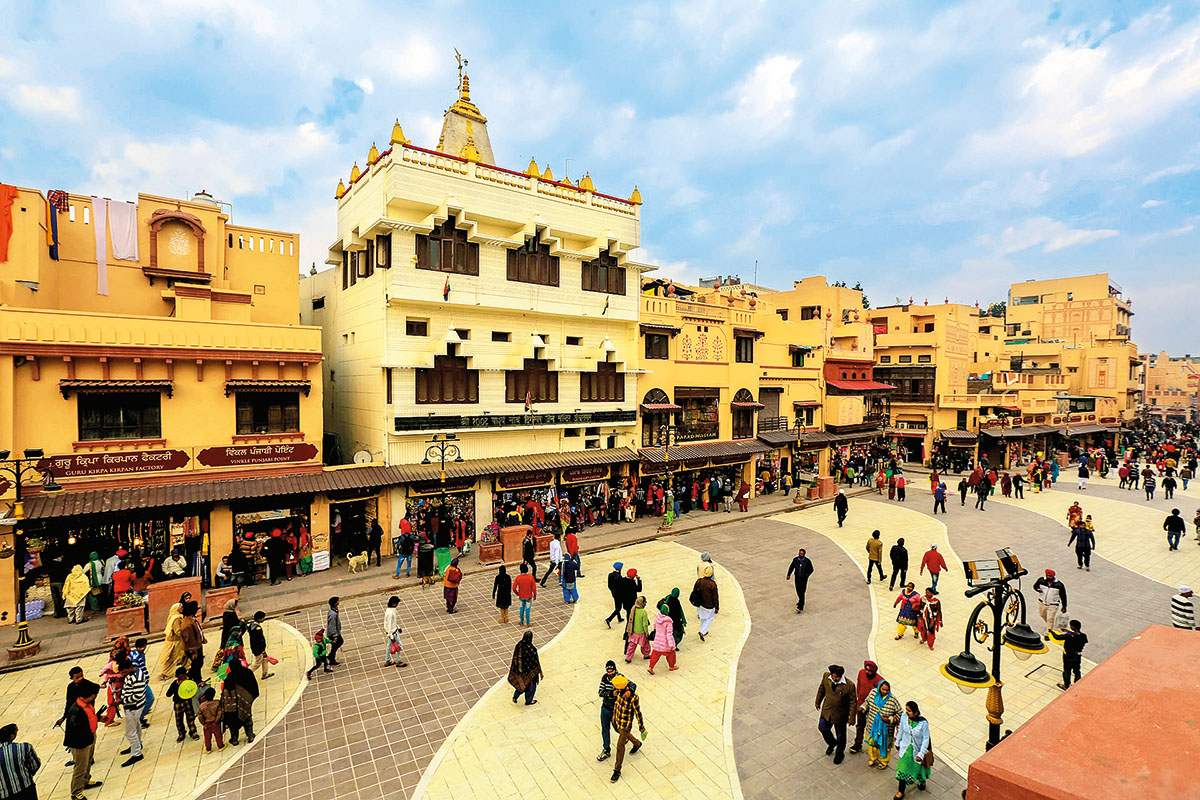 Take a walk down Amritsar’s heritage street
The Partition Museum is another moving site. It is housed in the erstwhile Town Hall of the city. It chronicles one of the most defining events of India’s journey to independence. It is a people’s museum, including as it does the voices of ordinary people affected by the largest migration in human history. Apart from first-hand narratives, photographs and detailed archives, the museum displays several artefacts such as vessels as well as books and personal items like trunks, watches and even clothes donated by those who became refugees overnight in 1947.
On the outskirts of Amritsar is the Punjab State War Heroes Memorial and Museum, a pageant of Sikh history, culture and heroism. The museum has eight galleries and depicts Punjab as the sword arm of the country. The galleries form a comprehensive collective, from displays of rifles, arms and Sikh artillery to the rise and evolution of the Sikh empire, the 12 Sikh Misls and the concept of Miri Piri. The display spotlights how the people of Punjab fought wars from the time of Alexander, during the British rule and includes even the Kargil war.
 |
|
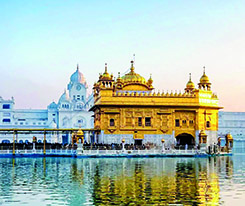
Pray at the wondrous Golden Temple |
The Maharaja Ranjit Singh Panorama tucked inside the picturesque Ram Bagh Garden in Amritsar is yet another place that you can visit if you want to learn more about the history of Punjab and Amritsar. The highlight of this attraction is an awesome painting, a whopping 100 metres wide and 12 metres tall, which displays the major battle expeditions led by the feisty Maharaja.
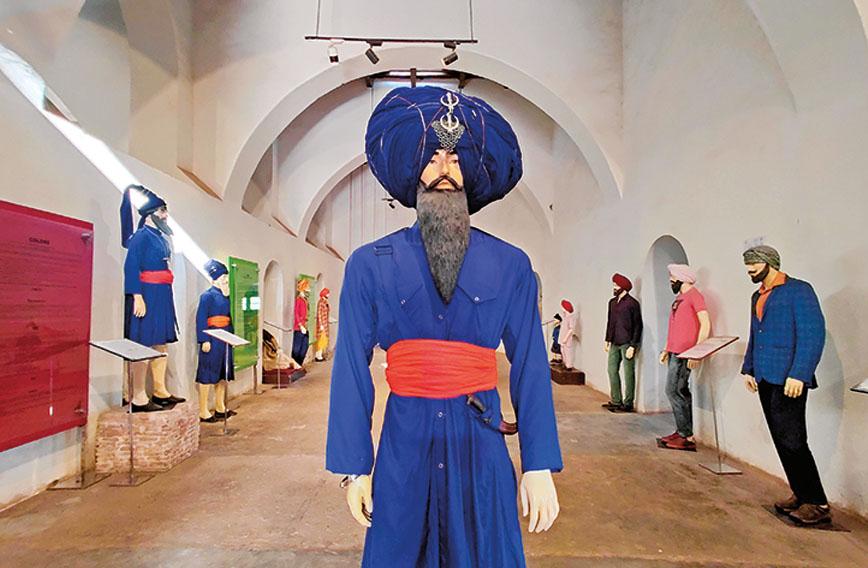
Do visit the Gobindgarh Fort, a historic military fort in the city. Located here is the quirky Pagdi or turban museum that spotlights the different kinds of turbans worn by both Sikhs and non-Sikhs in Punjab. It explains the science and significance of the turban, commonly used colours and fabrics, and many types of turbans like the dumala, the parna and the Akali turban.
Streets, markets, foods
A heritage walk through the city’s crowded streets and markets helps you discover its age-old katras, havelis, hattis and more. Start by admiring Amritsar’s Town Hall, a key colonial structure. Then head to Gurdwara Saragarhi Sahib, built in honour of 21 Sikh soldiers who died fighting the invasion by Afghans in 1897.

Enter the narrow lanes of Qila Ahluwalia where heritage buildings with ornately carved balconies stand, rather dilapidated, as if frozen in time. Visit one of the city’s oldest akharas, the Udasin Ashram Akhara Sangal Wala, which was used as a centre for religious studies. Walk farther into the market of pots and pans, brassware and mace makers and get a glimpse of life as it existed in a bygone era.
And, of course, do sample the city’s gastronomical delights. This includes the famous Amritsari kulcha, a crispy, flaky tandoori naan stuffed with potatoes and spices and served with chole and flavourful chutney. Try thick creamy lassi as well as the Amritsari fish tikka. If you are visiting in winter, try makki di roti and sarson da saag (fresh mustard greens). Pick up some aam papad and wadiya as perfect food souvenirs. Do shop for phulkari fabric and juttis which are sure to remind you of your time in this multifaceted city.
Comments
Currently there are no Comments. Be first to write a comment!