



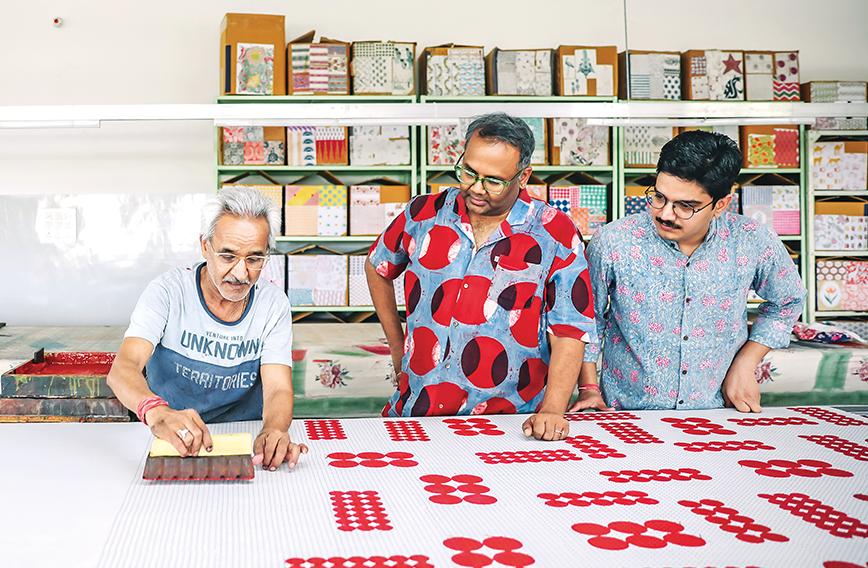
Karthik Vaidyanathan (centre) with artisans: ‘We are a land of colour and stories’
In toy town, a family of characters takes over
Aiema Tauheed, Kolkata
In 2011, when Karthik Vaidyanathan visited Channapatna, India’s toy town, its craft of making lacquered wooden toys, was languishing. Despite the town’s hoary past and a Geographical Indicator tag for its toys, sales were sliding, buyers were ambivalent. Artisans were quietly slipping into other professions.
Instead of just trying to rejuvenate the town’s toy industry, Vaidyanathan gave Channapatna’s craft a whole new language. He expanded the repertoire of artisans to include a plethora of inventive products — home products, apparel, fabric, jewellery and, of course, toys with an unusual twist.
Vaidyanathan was 38, an engineer with a degree in management. Over the years he had worked with Sony Music, Tata Interactive, and Tanishq. With no formal design training, except a passion for craft, he founded Varnam Craft Collective, a social enterprise, to merge design with emotion, stories and intent.
“At the end of the day, we’re from India,” he says. “We’re a land of colour and stories.” Drawing from his background in radio and communications, he realized that emotional investment doesn’t come from form alone, it comes from narrative.
When he first exhibited his products at a Bengaluru store called The Ants, they drew unexpected attention. Instead of toys there were lights and home products with Channapatna’s distinct stamp. Word spread and orders followed. What began as a stopgap gathered momentum, eventually taking shape as the Varnam Craft Collective.
The initial reason Vaidyanathan chose to create a gamut of products was to combat imitation, a common problem in craft. Instead of waging legal battles in a system where copyright protection is thin, he designed his way out.
He asked himself, how do you own a visual language? He found the answer in textiles. Channapatna’s toy motifs — ducks, elephants, birds, caterpillars — were converted into block prints. This allowed Varnam to anchor its identity across categories. Textiles also made business sense through steadier revenue, essential when running physical stores with rents and overheads. “Not everyone will come in just to buy a toy,” he admits.

The collective’s recent collection, The Snugglewalas —Storytellers of Handmade India, which breaks new ground, was a collaborative effort with craft clusters across India, from Kashmir to Karnataka.
The outcome was the creation of 13 new striking toy characters, crafted by hand. They were printed strategically on clothing, home accents, jewellery, and collectibles — attracting both children and adults.
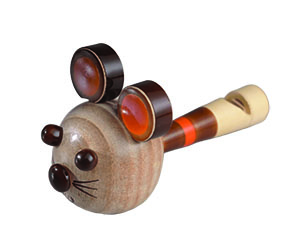 |
| Pawston whistle |
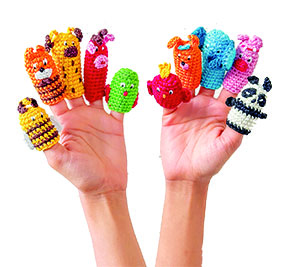
Toys were redesigned into practical products: the Nibbles sharpener, the Pawston whistle, the Bumbledore rattle, the Hopzy Money Bank, the Oinkston Pencil Box and so on. Ten crochet finger puppets were conjured, perfect for cooking up stories and pretend play.
New board games were introduced like the Chakkars Memory Game, and Mind over Might. Ludo, snakes and ladders, and chess were redesigned with an Indian accent. The mat for the classic ludo game, for instance, has been crafted by Lambadi women from Sitlingi in Tamil Nadu. For the home, toy characters appear on coasters, salt and pepper sets, plates, mugs, magnets, pen stands. And on eye-catching cushions, apparel, ceramics and more.
Each whimsical toy has its own identity and a story to tell. Miss Mooberry is a cow who loves musicals and berries, fancies herself a diva, and hums Western classical tunes. Miss Snappy, the unusual crocodile, dislikes snapping and prefers tending to lilies and blooms. Dawnold the Rooster is a maestro at dawn, celebrating each sunrise, and Pawston the Tiger shuns aggression. He’d rather unwind with a cup of masala chai.
 |
|
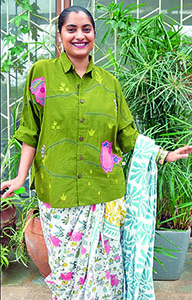
Karthik Vaidyanathan is the principal designer, but the concepts and ideas are collaborative |
Each character appears in the background of another’s story, gradually building an interconnected ecosystem. More characters are waiting in the wings, but Vaidyanathan is in no hurry. “We still have a lot to do with the current 13,” he quips.
Vaidyanathan long wanted his own equivalent of a Disney-Pixar universe, rooted in Indian ethos with global appeal. The characters have English names by design, sidestepping India’s language debates. Moreover, a large part of Varnam’s customer base is international.
Apart from artisans in Channapatna, the collective worked with artisans of Lambadi embroidery from Sitlingi, Tamil Nadu; handcrafted ceramics from Kolar, Karnataka; Naqqashi enamel art, Namda felt, and crewel embroidery from Kashmir; handcrafted jewellery from West Bengal; hand block printing from Sanganer and Mughal block printing from Amer in Rajasthan; Punja durries from Mirzapur, Uttar Pradesh; and crochet craft from Noida.
Today, Varnam works directly with about 20 artisans in Channapatna. Vaidyanathan’s intent, from the start, was to ensure that artisans earned a living wage from their craft.
The collective has invested in setting up two production units of its own, absorbing overhead costs so artisans don’t have to take loans to fund their work. Artisans often borrow money to set up units, only to find that their paltry earnings barely cover repayments. With the collective taking on these costs, artisans can focus on the craft, alongside maintaining quality in production. The income they generate goes towards their livelihoods rather than servicing debt.
 |
|
Snugglewalas finger puppet set |
In total the brand is directly reaching over 300 artisan families, across 14-15 craft clusters. “It’s not a one-off project, it’s a long-term livelihood initiative,” says Vaidyanathan.
Varnam now has four retail stores — in Bengaluru, Mysuru, and Goa — and a website that delivers nationwide. It also retails through partners, including the Museum of Goa in Goa, Jaipur Modern in Jaipur, and stores in Chandigarh, among others.
While Vaidyanathan is Varnam’s principal designer, he doesn’t come from a formal design background. The concepts and ideas, he says, are his but the process is collaborative.
For Snugglewalas, he realized early on that one person could not meaningfully engage with 13 craft clusters at once. So Varnam opened up the project to design schools. Over a six-month period, design students joined in batches as interns. In total, six to eight students collaborated on the collection. Students continue to be involved.
Young artisans and design students see craft not as a fallback but as a viable, exciting practice, believes Vaidyanathan. “The average age of most of our artisans is around 28 to 29,” he says. Vaidyanathan ensures they get recognition for their design work — at exhibitions, on social media, even in credits that are often denied to young designers.
 |
|
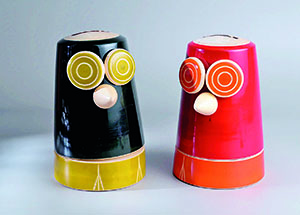
Hootley money bank |
“If you came to our show, every design student who worked on the collection was named, upfront,” he says. Social media reels also each carry attribution. The logic is simple: recognition travels. When students return to their colleges and say they were credited and acknowledged, others follow.
The same visibility extends to artisans. “I want young talent to find craft cool enough to work with,” he says, “instead of feeling they have to move straight into UI-UX design or tech.” Surrounded by young, enthusiastic collaborators, he is tired of the mainstream narrative that frames craft as a dying form.
Devika Krishnan, a respected name in the crafts sector and a National Institute of Design (NID) alumna who came on board during the Snugglewalas project, now works with Varnam on a pro bono basis. She shares Vaidyanathan’s conviction that there is a huge difference between design for aesthetics alone and design that improves livelihoods. “What good is design if it doesn’t go beyond form and aesthetics?” Vaidyanathan asks.
Having seen how design intervention improved livelihoods in Channapatna, he wants to apply the same model elsewhere. “We were very successful in Channapatna because design helped improve livelihoods. I wanted to take that same formula to other crafts.”

Some of these clusters, including those in Kashmir, were introduced by Krishnan because “they needed consistent work”. That need for continuity also shaped Varnam’s structure. “One of the reasons we have our own stores is constant revenue through the year,” he explains. “Because we sell through our own distribution, we can go back and give artisans reorders — so they keep getting more work.”
His process, however, can be disorienting for young designers. Interns often warn one another that working at Varnam requires a complete unlearning of what design school teaches. He tells them to come with an open mind and trust the process. Almost invariably, they leave with collections that stand apart.
 |
|
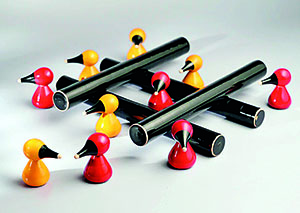
Kuruvi tic tac toe |
“I approach design from the lens of storytelling,” he says. That sensibility has shaped the brand’s distinct visual identity. There are no mood boards or software — only basic, simple sketches. An owl, he says, doesn’t need feathers to be recognizable; a pair of large eyes is enough. Less, for him, has always been more, a philosophy that suffuses his brand.
Some of the brand’s best-selling jewellery pieces — like a modest necklace of round wooden beads designed in 2013 — are still in circulation. When the colour fades, customers don’t replace the style, they replace the piece.
Toys continue to be Varnam’s biggest category, followed closely by board games, but over the years, certain products have taken on an almost iconic status — owl pen stands, kitchen towel holders, stacking toys, and the now-ubiquitous bird and owl series.
Vaidyanathan aims to grow Varnam into a `5 crore business by March 2027. “We could have done this many years ago,” he says matter-of-factly, “but I didn’t want growth for the sake of it.”
Comments
Currently there are no Comments. Be first to write a comment!