




KIRAN KARNIK
The media carries reports, almost daily, of new projects for infrastructure in cities, especially big and visible ones in metros and larger cities. These include new flyovers, tunnels and subways to facilitate vehicular movement, road widening and modernizing, and expansion of the Metro (rail) system. Less frequent but also announced are social infrastructure projects: hospital and health facilities, new schools, water supply and drainage, electric power substations, air and water pollution abatement measures, and so on.
Sadly, maintenance of existing assets like roads and footpaths, utilities and public facilities — being less glamorous and not “news-worthy” — gets short shrift, budget-wise, and little serious attention. As a result, while the aim of the new projects is to increase the efficiency of the cities, this is considerably impeded — if not nullified — by the shoddy and lethargic implementation of maintenance works. The construction-maintenance cycle always promises future benefits, though that future never arrives, and the reality is ever-increasing pollution through dust clouds and traffic snarls that add to vehicular emissions.
Cities are engines of economic growth: agglomerations that bring together talent, finance, and infrastructure — both hard (physical) and soft — which attract various industries, creating a conducive ecosystem. Their contribution to the GDP, the overall national economy, and jobs/livelihood opportunities is substantial. They also act as hubs for culture, art, and literature, even as migration into them creates a cosmopolitan culture, with a diversity of language, cuisine, and lifestyle. Such diversity is often the seed for innovation and creativity. Little wonder, then, that governments invest ever greater capital and attention in cities.
As a result, cities keep growing, evolving into megapolises, with over 10 million residents. However, except for Hyderabad and Ahmedabad, in no city have services and infrastructure development been able to keep pace with the growth. In most others, civic services — from garbage removal and waste disposal, to water, sewage and stormwater drains — have deteriorated to crisis level. The result is traffic jams, dirty cities, floods at the slightest rainfall, air pollution, and “difficulty of living”, making for an unattractive quality of life.
In a corrective effort, governments are investing ever more in these same cities. Yet, broader roads and more flyovers stimulate greater demand for personal mobility vehicles, causing continuing or longer traffic jams. Mass transport is focused on high-visibility but high-cost Metro-rail projects, rather than an expansion or modernization of the bus fleet. The former is also perceived as a showpiece for votes and — if the grapevine is to be believed — a good source for corruption. It is, doubtless, fast and efficient, but with no proper last-mile connectivity and poor planning (for example, insufficient parking for private vehicles and public transport, including taxis and autos; little thought for integrating Metro stations with shopping, markets, or entertainment complexes), this has mainly cannibalised commuters from other means of public transport.
Bus services, though more convenient and cheaper, are not as glamorous, resulting in their neglect (many cities now have fewer buses — often old and poorly maintained — than a decade ago). Yet, their potential ubiquity cancels the speed advantage of the Metro-rail, while the far lower investment (and, hence, cost) makes them the first choice for the poorest. Of course, in many cities, especially very large ones, the optimum solution will be a mix of the two. Wrong priorities have led to disastrous policies: for example, preference given to cars and two-wheelers has meant the neglect of cheap mass transport and quickly abandoning solutions like the bus rapid transit system (BRTS) — a proven success elsewhere.
At the macro level, policymakers now need to decide: looking ahead, should greater investments go into trying to increase the efficiency of big cities or should a substantial part be reallocated to improving the attractiveness of small towns? The former is likely to be a losing battle: better infrastructure and efficiency will only draw in more industry and migrants, adding rapidly to the number of vehicles (the NCR is already choking with 30 million!) and resulting in more congestion, greater pollution, unmanageable waste, worsening health, ecological degradation, and more rural-urban inequities. It may also worsen stress levels, drug addiction, and crime. Simultaneously, the demand for land/housing, water, electricity, drainage, and health care will not be met, leave alone open spaces for parks or playgrounds. Investing overly in the big cities is, therefore, a downward-spiralling cycle (inadequate infrastructure-investment-growth-inadequate infrastructure).
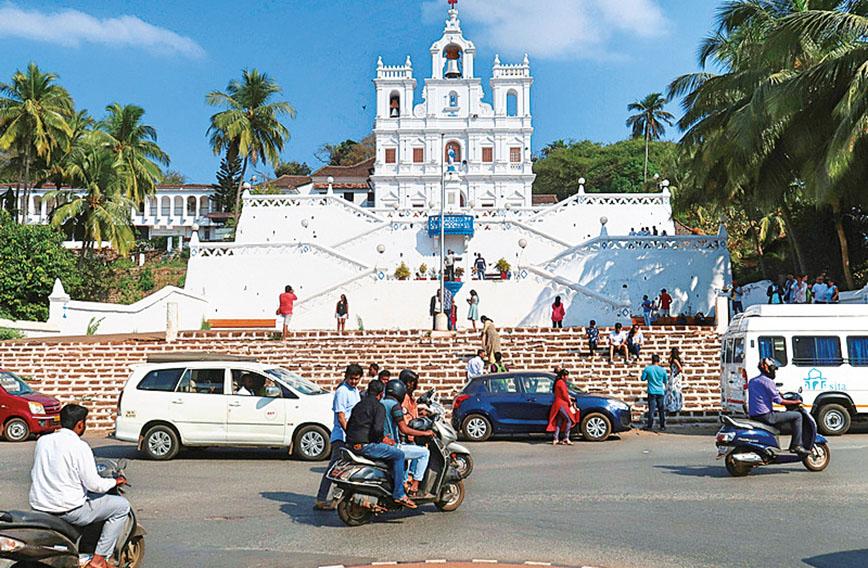
Technology now offers an alternative model: one of dispersal and decentralization, rather than large, centralized factories or mega-cities. The earlier paradigm, based on economies of scale, has led to ever-bigger, impersonal cities with little scope for resident involvement in governance, and a neverending appetite for large investments in infrastructure. Unsurprisingly, more people, unhappy with life and problems in big cities, are shifting base to their hometowns, or to places like Goa and Dehradun, where the quality of life is better. Already, the trend of outward migration from large cities — which seemed a Covid-induced temporary escape — is now attaining permanency. Small, selective investments in smaller cities, semi-urban areas, and ‘Tier 3’ cities can vastly and quickly improve their efficiency and quality of life. Making such places more liveable and better connected to the world (physically and electronically) could vastly amplify the exodus. One can foresee a reverse migration in future: from cities to rural areas and small towns.
To catalyze this trend and decongest the bursting-at-the seams big cities, we need both pull (better amenities and connections in small towns) and push (curtail large investments in infrastructure in big cities, which only result in bigger problems). The latter would free up funds for the former. The simple message is a radical mind-shift, a new model that stops pampering big cities and creates a new decentralized model of development. Are policymakers willing to at least experiment with this?
Kiran Karnik is a public policy analyst, author, and columnist. His most recent book is ‘Decisive Decade: India 2030, Gazelle or Hippo’.
Comments
Currently there are no Comments. Be first to write a comment!