




KIRAN KARNIK
How well do you get along with your co-workers? Certainly, many of us have gone through spells of frustration, when peers do not cooperate or your team members work inefficiently. A key junior taking a day off at a crucial juncture, that too with no advance intimation, can raise your temper — and your blood pressure. This may also happen when your colleague from another department delays sending you a much-needed report or some other input. Equally frustrating can be the experience of your boss unfairly reprimanding you for a lapse that was not your fault.
Each of us has our own strengths, weaknesses, and idiosyncrasies. We are prone to forgetfulness, slip-ups and moods. To others, our behaviour may sometimes seem unpredictable and incomprehensible; we see the same in others. This makes all humans — however likeable or warm they may be — occasionally inefficient, sometimes inconsistent, and hence unpredictable. Those who are intelligent may be loners and not team players, those who are amiable may be too pliant, never questioning or pushing back.
If you, like almost every other professional, have seen and suffered these problems for years, take heart, for help is on the way. The days of having difficult colleagues or juniors are over. This does not mean that someone has found a way of selecting the ideal human being for every position or job description in your organization. One day, new forms of genetic engineering and neuroscience may possibly do that, crafting or tailor-making humans to fit defined roles or job-slots. This prospect, one hopes, makes you uncomfortable!

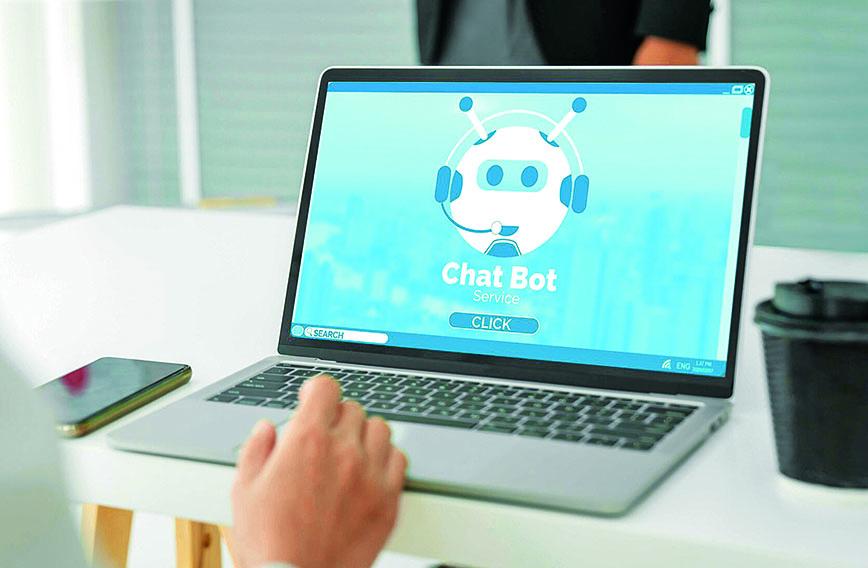
Fortunately, there is an alternative — and one closer at hand. You will soon have virtual co-workers. In fact, they are already here. Every large organization, and many others too, have automated certain functions. The clerical staff that used to create the organization’s purchase orders and handle the procurement process have now been replaced by automated software. So have those who used to prepare bills and tally accounts. The person who answered customer queries has moved on, as a chatbot now performs her role. The chatbot, the accounting package and procurement software are, in effect, your new co-workers.
For those in a factory, a car manufacturing facility, for example, your team may include — as your co-workers — robots that do the painting, the welding and assembly. Unlike in an office, here your co-workers have a physical manifestation, though of metal and electronics, rather than flesh and blood. In both factory and office, this is already a reality today, though you may yet have many human colleagues. Doubtless, the ratio will soon change substantially, with ever fewer humans. The rapid progress in AI (artificial intelligence), computers, robotics, and other related areas, guarantees this. Further, it also promises greater sophistication and capabilities, replacing ever-higher level jobs too.
Increasing automation is driven by many advantages. Robots don’t take leave or fall sick (malfunctioning is rare; preventive maintenance — based on predictive failure — makes it still rarer); they don’t take bio-breaks or doze off during work; they don’t waste time scrolling through hundreds of WhatsApp forwards or chat with friends while at work. Forget 90-hour work weeks, they can work (uncomplainingly!) 24x7. In addition, they work more efficiently, make almost no mistakes, and are less expensive than human employees. Little wonder that automation is proceeding apace in India too.
Depending on your level in the organization, not only your peers and subordinates, but your boss too may be a robot — in physical form or as a software package. Unlike a human boss, your virtual one will not vent his/her anger on you when she or he has quarrelled with the spouse or partner at home, or unfairly pull you up for his or her own mistake or that of someone else. Nor will you be subject to the unexpected mood swings of your human boss. Big pluses! On the other hand, you will not get the warmth or empathy that a human boss could offer and any mentoring you get will be mechanical. Your interaction will be purely transactional, and the chit-chat of casual conversations will be missing. Eventually, robots may be capable of all these too, but that may be a while away.
Your next job interview will ask not how you handle recalcitrant colleagues or lazy team members; instead, it will dwell on your ease in working with robots. Team-work skills and leadership were judged in terms of how well you handled inter-disciplinary teams; now, they will be assessed on your ability to work with composite teams that comprise both humans and robots. Very soon, your interviewer too will be a robot!

An important role and capability will be to identify and handle “hallucinations” in AI robots. These are rare — but sometimes dangerous — aberrations when AI throws up random, fictional, and completely erroneous information. In due course, preventive measures or correctives will be built into the software itself. Till then, possibly for a few years, human checking or intervention may be necessary.
Such oversight by humans — at higher organizational echelons — will mean that we are yet in overall control, though many at lower levels may have robots as their boss. Yet, one can foresee a reversal, with robots in overall charge. It may take five years or ten, but the inevitability of this does not seem in doubt. Might such intelligence, though “artificial” in name, be a part of “natural” evolution? Are we humans ourselves creating a new species that dominates our own?
These are issues that need to be pondered, and urgently. For, the future is here. Meanwhile, starting now, be prepared to work with ever more robots: your cognitive co-working colleagues.
Kiran Karnik is a public policy analyst, author, and columnist. His most recent book is ‘Decisive Decade: India 2030, Gazelle or Hippo’.
Comments
Currently there are no Comments. Be first to write a comment!