




KIRAN KARNIK
Legendary singer Bob Dylan, who was awarded the Nobel prize for literature for his powerful lyrics, sang “Forever Young” in 1974. Still popular after more than half a century, it was meant as a benediction, a blessing. Yet, for many adult Indians, “forever young” is often a curse: typical Indian parents continue to treat their offspring as children long after they have become adults. Parental rules, directions, and admonitions — meant for pre- and early-teen youngsters — are applied to adults, seeking ongoing control over their lives.
As if this is not bad enough, we have governments which treat citizens like children, mimicking domineering parents. Increasingly playing this role, our governments — in states and at the Centre — seek to dictate what we eat, drink, wear, watch on the cine, television or phone screen, who we befriend, where we celebrate, and much more. Like parents, governments too imagine this is in our best interest.
The nanny role of government may or may not be uniquely Indian. Many would attribute it to our colonial history and the rulers’ imperative to lay down laws for the control of their subjects. Yet, it derives from a longer past; then, too, it was the same ruler (king) and “pracha” (supplicant) relationship. Today, what drives it is the continuance of a feudal/hierarchical mindset. “Equality of status” is enshrined in our Constitution, with the aim of changing this deep-rooted societal structure. However, it is all but non-existent in so many day-to-day experiences; worse, regulations and practices are contrary to the goal of equality.
One example is in that most public space: roads. VIPs, preceded and followed by screeching-siren escort vehicles, push all others out of the way, reminiscent of Moses parting the waves of the Red Sea. Armed escorts, the size of the convoy, and — importantly — their visibility, are essential as signs of status.
Yet, since elected leaders, from the municipal councillor upwards, think of themselves as VIPs, there are now so many of these that they have had to introduce gradations — hierarchies — within their ranks. Going up to Class Z security is not enough; since there are no more alphabets, there is also a “Z+” class. The cascade of hierarchies is established by the number of vehicles comprising the security escort. We can only look with wonder and envy at pictures of leaders of some countries riding to work on a bicycle — or of President Macron going on a morning run on Marine Drive in Mumbai, with next to no visible security. Many of these countries are, like us, afflicted by the scourge of terrorism. Yet, their leaders go around with minimal visible or intrusive security. Sirens are for real emergencies — not to give priority to leaders to drive through unhindered, and certainly not as a status symbol.
On highways, large billboards list all those exempt from paying a toll — a list that might compete in number with the now-abridged electoral roll of an Assembly constituency. Wherever queues may form or crowds gather, there is always a formal priority for some, in addition to those who enjoy informal priority. I am told this includes access to God (darshan) at temples. A recent piece by author Santosh Desai notes many such examples, all contrary to the aim of equality.
Societal acceptance of this manifestation of inequality, of some people being at a higher perch, is but a continuance of traditional hierarchies. It marks the emergence of a new “caste” (encompassing political leaders and senior bureaucrats) which is now at the apex, superior to the traditional high caste. The common citizen, the proverbial “common man”, is at the bottom of the heap. S/he continues to be treated by a parental (and patriarchal) government as a child.
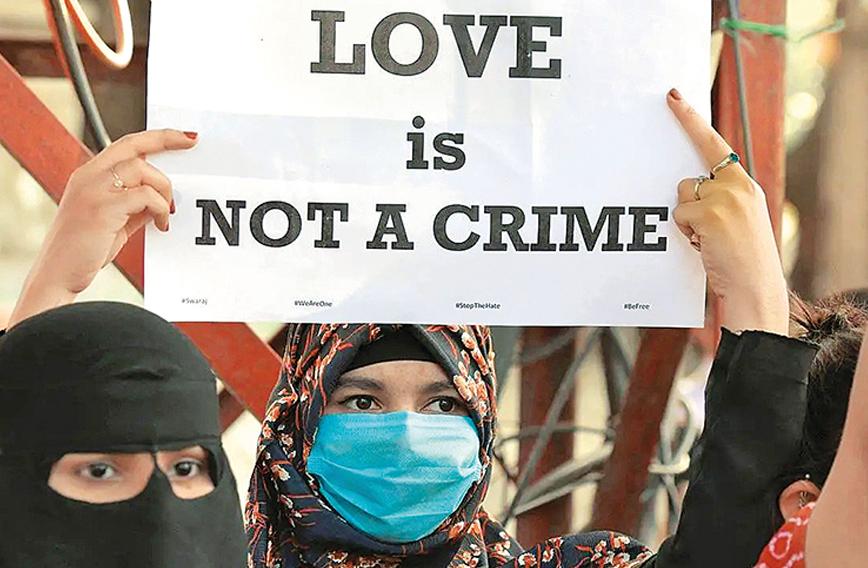
Adding to this are new nannies: the morality police, the caste custodians, and the communal caretakers. A young couple holding hands in a park, youngsters partying in a pub, even “inappropriate” dressing is objected to by the moralists, with punishments varying from beatings to police complaints (FIRs). Inter-caste friendships — leave alone marriages — are unacceptable to the casteists and banned by khap panchayats and “elders”. Inter-religious friendships amongst the young are definitely not permitted and such a marriage can trigger a riot. Sadly, many of these tormenters and rioters are themselves young, becoming nannies to other post-adolescents in a metaphorical replay of Saas Bhi Kabhi Bahu Thi (the badgered and suffering young daughter-in-law becoming, over time, the stereotypical oppressive mother-in-law).
Now, this is being codified in various states, through laws. Inter-religious marriages may require the permission of parents and of the government. Unmarried couples will have to jump through hoops to live together. Adults who can change governments through their votes will now revert to being children.
Nanny governments also seek to control your diet. Large areas in some cities have already been declared vegetarian (no meat shops, not even meat-serving restaurants), and some places have de facto banned meat sales on some days of the week. This, despite data which shows that a majority of Indians are, in fact, non-vegetarian. Some states have gone further and stopped eggs in mid-day meals for schoolchildren, denying them the ideal source of nutrition.
In a further example of a nanny government, dissent is not tolerated, with dissenters punished as would be rebellious children in households. This is ensured through a whole host of laws: from take-down rules for social media platforms, to draconian ones like UAPA (Unlawful Activities (Prevention) Act), AFSPA (Armed Forces (Special Powers) Act), and sedition, to various state laws. Often, dissent is nipped in the bud, through bans (on performances, movies, plays, protests), as nanny exercises her power. This writer first wrote of this about two decades ago. Sadly, as the country (and its population) has grown older, the control of the nanny has increased at an accelerating pace, stretching to more areas of life.
“Forever young” is how a nanny government looks at its citizens, probably drawing justification from Bob Dylan’s words, not knowing that he was a rebel, a voice of protesters. No wonder the same song also adds: “May you always be courageous/Stand upright and be strong.”
Kiran Karnik is a public policy analyst, author and columnist. His most recent book is ‘Decisive Decade: India 2030, Gazelle or Hippo’.
Comments
Currently there are no Comments. Be first to write a comment!