




KIRAN KARNIK
In the first few years of the new millennium, “India Shining” was the country’s calling card. It was to be India’s century, marking the rise of a resurgent India, a soon-to-be superpower, already in the limelight and soon to take the global centre-stage.
The democratic and peaceful rise of India was seen as the model for other developing countries. In corporate boardrooms around the world and in cabinet meetings in key countries, their “India strategy” was a high-priority agenda item. India’s jugaad, innovation and frugal engineering were widely applauded, as were its unique business models. Indian leaders were feted and warmly received around the world, even as a stream of top global CEOs visited India.
Sadly, the shine soon dulled, first domestically (the NDA government, led by Prime Minister Vajpayee, lost the parliamentary election in 2004), and then internationally. The years that followed did see high growth, with tens of millions pulled out of poverty each year; yet, the lustre had faded. By 2013, India transitioned from being the toast of the town and “favourite flavour” to the category of “Fragile Five” (the five countries with vulnerable economies).
The past dozen years have witnessed ups and downs. Demonetisation and Covid were key contributors to the downturns. The post-Covid recovery was badly hit by the war in Ukraine from 2022, followed by Donald Trump’s sanctions against Russia, and drastic tariffs for US imports. As a virtual trade war (almost completely one-sided) upended global supply chains and slowed global economic growth, the US-Israel attacks on Iran in June 2025 and the massive attacks this year further exacerbated the economic situation, with disruptions in oil and gas supply causing serious problems.

Now, foreign money is fleeing the Indian stock market, net foreign direct investment is hitting rock bottom, and oil prices are sky-high. The scarcity of gas is causing hardship to households and industry, the rupee is at a record low, and inflation is climbing. Predictions of a below-par monsoon threaten rural distress and more economic pain. Certainly not a shining scenario.
Earlier, in decades gone by, India’s projected image was of a moral, peaceful country that followed the rules, a friend to all, and bending over backwards to show it was not dominating small neighbours. Indians, especially in the West, were seen as hard-working, honest, amicable, talented: great co-workers and good neighbours. They were self-effacing, to the point of invisibility, and almost meek. Now, the image is of “India shouting”.
New India and Indians today are seen as boastful, arrogant, aggressive, bullying. Amongst the early transitions was the embargo against Nepal in 2015 following the ethnic problems there. This was perceived as attempting to bully a dependent and small neighbour. Earlier, incursions across other borders (surgical strikes) were never officially acknowledged; now, they were formally confirmed and boastfully announced.
India’s presidency of the G20 was publicized as a great recognition; in reality, it was only part of a routine rotational process. Unfortunately, the noise about our presidency submerged the accomplishment of a consensus-based final declaration. India’s self-anointed status of Vishwaguru, as also a unique Vishwamitra, were scoffed at in private. Such public chest-thumping hardly goes across well. When the US and President Trump do this, it draws dislike amongst people (and countries) across the world. Yet, they have the power — economic and military — to force acquiescence. We don’t. They can afford to ignore the backlash. We can’t.
If India is now sounding too brash, the new Indians are worse (certainly a minority, but perceived as flag-bearers). The contrast with the past is striking. Earlier generations of Indians who went abroad — whether to study or to work/settle or as tourists — were analogous to the traditional Indian housewife: meek, self-effacing, completely unselfish, hardworking, and efficient — melding into the surroundings, practically invisible.
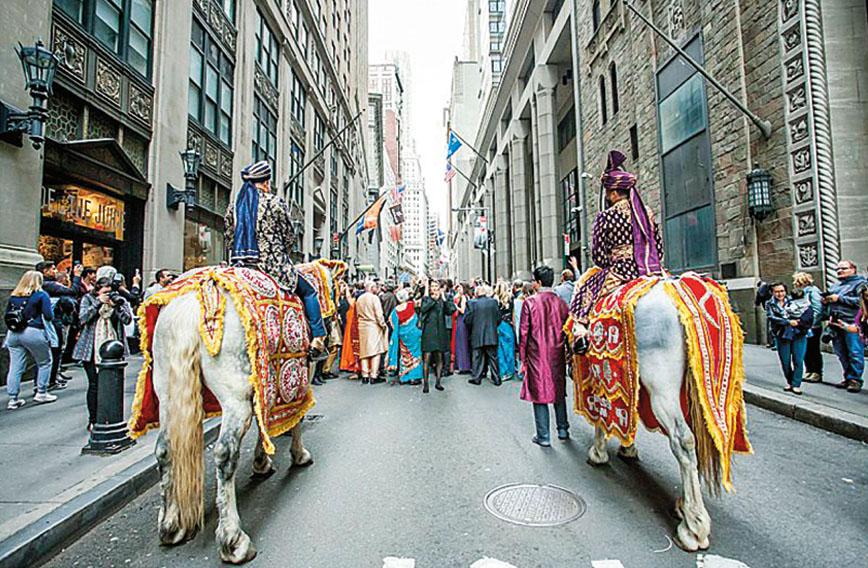
Now, their vastly greater number (in the US, the Indian diaspora is about five million) and prosperity makes for immediate visibility. Their success, rather than being an exemplar for other immigrants, is now a cause of envy and jealousy. Also, Indians abroad have moved from meek to self-confident to assertive to aggressive. Blocking New York’s Fifth Avenue or downtown San Francisco for baraats and celebrations adds fuel to the fire, as do Diwali fireworks in banned areas. Enjoying oneself without a care for local rules and behavioural norms, or not respecting the rights and sensitivity of others, are hardly signs of cultured behaviour. Now, Indians are loud, in the worst sense of the word.

If this is bad, we are seeing worse. Indian tourists begin their near-uncouth behaviour right from the airport departure lounges. The aircraft, the arrival tarmac, and hotel lobbies are treated as picnic spots. Unruly behaviour, children running amok amidst adults singing and dancing, treating public spaces as home drawing rooms. Toddlers are encouraged to show off their dancing skills in public, with restaurant tables serving as the stage. From the breakfast buffet, enough food is taken away to make for a full lunch. Little wonder that hotels in Switzerland have a set of instructions specifically for Indians. More recently, the media covered examples of crass public behaviour by Indian tourists in Vietnam, antagonizing locals in one of our few friendly neighbours. What a contrast with the Japanese!
For long, China followed the dictum “hide your power, bide your time”. Now that they are, in fact, a superpower, a new and aggressive China has emerged. We imagine we too can do the same as a country (or emulate a new role model, Israel). That we are in the same league — militarily or economically — is a delusion which self-proclamation will not make real.
The invisible Indian has been replaced by the loud, misbehaving, me-first ones who imagine that the world is at their feet, emulating the overbearing Americans, rather than the ever-polite Japanese. Ultimately, the question is our aim: just military and economic power, or a polite, caring, civilized people who take forward the heritage of a society that respects other sentient beings as much as oneself?
Kiran Karnik is a public policy analyst, author, and columnist. His most recent book is ‘Decisive Decade: India 2030, Gazelle or Hippo’.
Comments
Currently there are no Comments. Be first to write a comment!