



Studies indicate that a regular 20-minute meditation session can help reduce anxiety, stress, anger
Learning to embrace the moment
Kavita Charanji, New Delhi
Buddhist mindfulness meditation is catching on in a big way amongst the young, hooked on technology, and the old in their sunset years. Popularized in the West by the late Vietnamese Zen master, Thich Nhat Hanh, mindfulness meditation hinges on focused awareness of the present moment. There is no past or future, just here and now — mindfulness in breathing, walking, eating, driving and even mundane daily activities like cooking or washing up.
The elusive search for peace of mind draws the young to meditation. More than ever anxiety, depression, alienation, loneliness, family problems and medical conditions are preying on minds, affecting emotional and physical well-being. Driven to desperation, many turn to mind-body medicine. Meditation, scientifically validated, offers hope.
Studies also indicate that a regular 20-minute meditation session can help reduce anxiety, stress, anger, and the tendency towards depression. It can improve overall emotional balance and resilience.

Meditation techniques that have become the rage are mindfulness meditation, and meditation like body scan, mantra recitation, analytical meditation, transcendental meditation, visualization, object-focused and loving-kindness meditation.
Meditation is a proven stress buster. It also creates harmony within oneself, the family and society. And personal peace makes for a more peaceful and compassionate world.
Thich Nhat Hanh’s enduring legacy is Plum Village in France. The village brings together a community of global mindfulness practitioners. It has a string of practice centres that organize retreats and teachings on engaged Buddhism and mindfulness in daily life.
The Delhi-based Ahimsa Trust represents Thich Nhat Hanh and his community in India. The Trust’s regular mindfulness meditation practice sessions, retreats, talks and events are led by facilitators from India and abroad in Delhi-NCR and Dehradun.
“Mindfulness is the faculty of awareness, being aware of what is going on in the present moment both inside and outside of us,” says ordained teacher Dharmacharya Shantum Seth who leads Ahimsa Trust.
“Our goal is to expose young people to meditation, something we were not exposed to when we were young. In our focus on physical training there is very little emphasis on training the mind,” he adds.
At retreats, the volunteer-driven non-profit holds mindfulness meditation sessions, sitting meditation, walking meditation, deep relaxation and circle sharing which is akin to a dharma discussion.
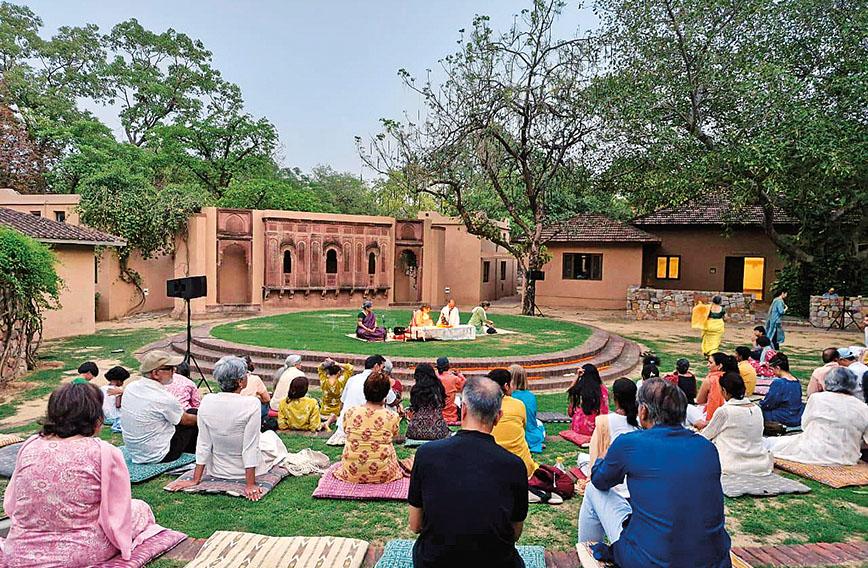
Ahimsa Trust has several sanghas in the NCR (National Capital Region) and Dehradun. The sangha or community comes together regularly to practise mindfulness. Online meditation sessions too are popular. An evening gathering of mindfulness practitioners on Buddha Purnima at the Bodhi sapling at Sanskriti Kendra in Anandgram, Delhi attracts many practitioners.
The Trust has spearheaded mindfulness training among schools, the police force, including the Central Reserve Police Force (CRPF), companies, social workers, and prisons, among other sections of society.
Much of the Trust’s promotion of mindfulness practice is centred in schools. Lately, educationists from all over India converged at Doon School in Dehradun where they were familiarized with mindfulness techniques and the importance of introducing the practice in schools.
Likewise, a three-day retreat in the tradition of Thich Nhat Hanh was conducted by monastics from Plum Village, Seth and Ahimsa Trust volunteers at Welham Girls School, Dehradun. The Trust has also conducted sessions in Shiv Nadar School, Vasant Valley School and Shriram School. A mindfulness session for doctors called Medicine and Meditation was led by Thich Nhat Hanh at the All India Institute of Medical Sciences (AIIMS). In February 2026, the Jamun Village, modelled on Plum Village, will hopefully open its doors in Dehradun.
There are other routes to settle a turbulent mind. For homemaker Sadhna Kumar, an early introduction to Buddhism by her father led her to the Tushita Mahayana Meditation Centre. The Centre, headquartered in Dharamsala, promotes the Tibetan Mahayana Buddhism tradition. Available are regular meditation sessions, teachings, lectures by the Dalai Lama, discussions, visualization, mantra chanting, films and studies on Buddhism.

Kumar learnt analytical meditation (vipassana) on subjects like death and impermanence, precious human life and tonglen (a practice that involves taking in the suffering of oneself and others with breathing in and exhalation to send out healing and compassion).
The Delhi centre of Tushita is steered by Renuka Singh, a retired professor of sociology at Jawaharlal Nehru University (JNU). She says she felt that His Holiness The Dalai Lama had a very rational, logical and scientific explanation of central Tibetan Buddhist tenets. He told Singh that her study of Buddhism was not enough, she needed to start meditation.
“We used to have a lot of elders coming to the Centre. Now there is a change. Mostly young people come because of lifestyle changes and rampant development. Life is more demanding and challenging. There is a lot of anxiety and depression because of increased competitiveness,” says Singh.
Familial problems brought Ashok Bery to the path of meditation. A retired lecturer of English Literature at the London Metropolitan University and the School of Oriental and African Studies (SOAS) in London, Buddhist meditation appealed to him. He had read several books on Buddhism and that sparked an interest. “Meditation allows me to step back a little from my problems, thoughts and emotions. But meditation is not like taking a pill and feeling permanently happy,” he says.
Comments
-

Vimala Ramachandran (Personal) - Aug. 24, 2025, 11:25 a.m.
Thank you for this article.... I have been meditating for many years now. Last year I discovered TWIM meditation - a loving-kindness meditation (Dhamma Sukha India) and attended a retreat in Dharmsala. Having read and practiced using videos / audios and books by Thich Nhat Hanh - I found the TWIM practice was quite close. Yes, many more people are attracted to meditation - both Buddhist as well as Advaita style... Guess all roads lead to greater peace of mind and equanimity.