



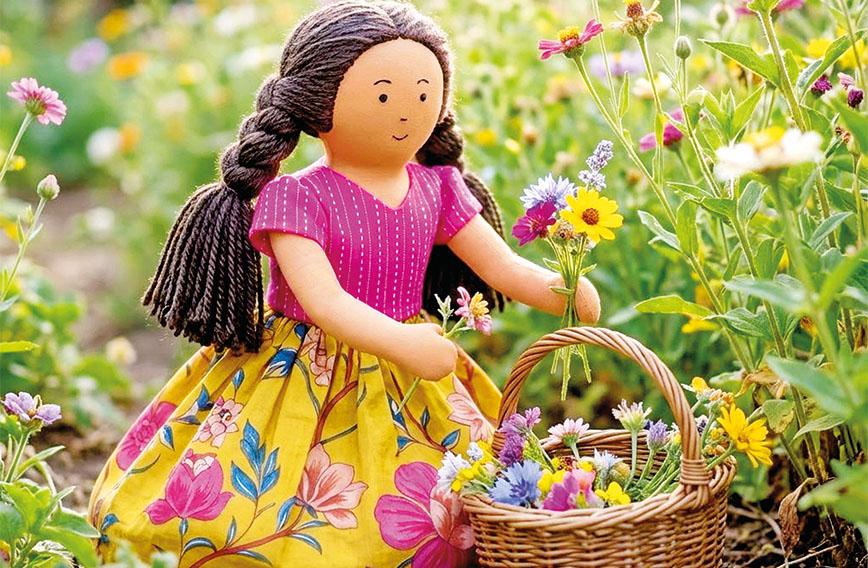
Nilah is every child's neighbourhood friend
Nilah from the Nilgiris is the Good Doll for all reasons
Rashmi Gopal Rao, Bengaluru
A child’s first bestie is her doll, soft, cuddly, someone to play with, whisper little secrets to, and tuck into bed at night. A faithful companion. Not a walkie-talkie plastic doll with a battery and a face that’s not familiar.
A doll named Nilah is The Good Doll — simple, safe, soft and relatable. She’s also ecofriendly since she’s made by hand from recycled material.
Sunita Suhas and her husband, Suhas Ramegowda, launched their enterprise, The Good Doll, in 2023 from their leafy home in the Nilgiris where they were leading a lifestyle in tune with nature.
“We started The Good Doll with the conviction that Indian children deserved a doll that looked like them and was set in a play universe that reflected their world. Nilah, our flagship character, is designed as a 10-year-old girl from the Nilgiris. The idea is to make Nilah every Indian child’s neighbourhood friend,” says Sunita.

The couple stumbled upon the idea by chance and then built on it. “Sunita had developed a hamper for a newborn,” explains Ramegowda. “It included a quilt with a rag doll as an accessory. The quilt didn’t sell much but the rag doll took off and within one or two months, the market started calling Nilah the Indian Barbie. That caught our attention. As we dug more into this space, we realised there was a gap in the Indian toy industry.”
 |
|
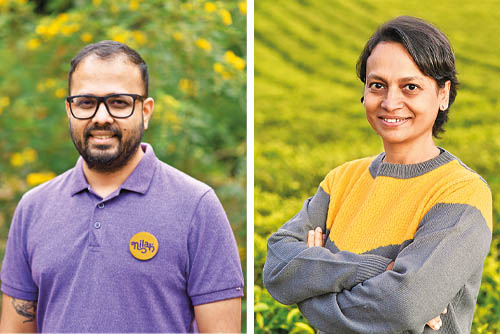
The creators: Suhas Ramegowda and Sunita Suhas |
In general, the toy industry followed a ‘cut-copy-paste from the West’ approach. Indian faces weren’t represented. Most dolls were fair, had blonde hair and followed the beauty standards of the West.
Sunita and Ramegowda spent some 15 years in the corporate world. They had travelled the globe, lived in multiple cities before deciding to give it all up for an alternative lifestyle ensconced in the hills.
“The last city we lived in was Bengaluru. We grew up in typical middle-class families in small towns so in some sense, that drove us to develop this urge to do well in life, earn well and acquire all the material that qualifies for ‘a good life’. We did well for ourselves and lived quite a comfortable life. Both of us have been in leadership roles in big corporations such as Royal Dutch Shell, Bank of America, Accenture, etc,” says Ramegowda.
However, around 2015, the couple began to introspect and question their true purpose. “We started to ask ourselves existential questions and that led to an inward journey. We began to understand what gave us true happiness and in pursuit of that we decided to move to the rural parts of India,” says Sunita.
 |
|
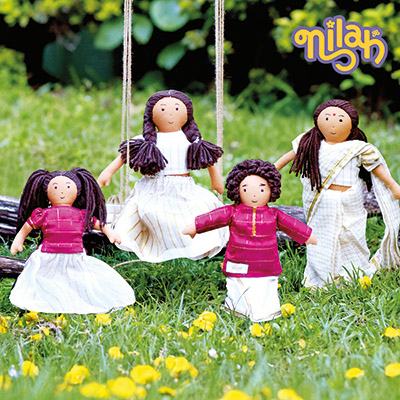
Nilah and her family |
In 2016 they undertook an adventurous road trip across 14 states in two and a half months. They stayed in villages for the experience and switched to a more minimalistic lifestyle.
“Our son was unschooled. So, we went through this journey between 2015 and 2017. In 2017 we figured we did not want a city life and that prompted us to quit our jobs and move to the Nilgiris in Tamil Nadu. The choice of the Nilgiris was simply because we wanted to be in the mountains and live off the grid,” says Sunita.
And for two years they did just that. “We built ourselves an earth home, grew our own food, drew water from mountain streams and used solar electricity. During this time we closely interacted with local communities living around us. We began to understand the lack of livelihood opportunities they had. In our attempt to provide them with a solution, we started an upskilling programme in the course of which we taught them patchwork and quilt making,” says Sunita.
The couple then began Indian Yards Foundation. Apart from quilt making, they upskilled women in crafts like sewing, embroidery, crochet and macrame. They incorporated a start-up in September 2021. Till May 2023, they designed and sold a variety of products in the home and living category.
 Until Nilah entered their lives. The Good Doll now has eight other characters including Nilah’s parents, siblings, grandparents and friends. The doll set comes with accessories such as sets of clothes, a cozy bed and more.
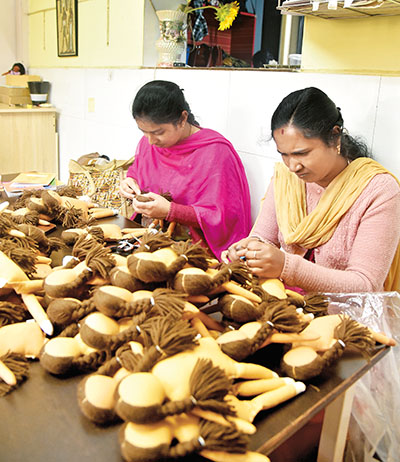
The dolls and accessories are all crafted from natural, recycled materials.
“We realised that since the doll garments and the doll itself is a miniature, we do not need to buy yardage of fabric which we would eventually cut up into small pieces. Instead, if we worked with textile factories, we could upcycle pre-consumer textile waste. We are BIS-ISI certified. Our dolls are also tested by US and EURO safety standards,” says Ramegowda.
Over the years the couple has painstakingly built infrastructure and a supply chain. It hasn’t been easy given the difficulties of operating an enterprise in the mountains. It is, they say, the price they pay to stay true to their purpose which is to create more jobs in the Nilgiris.
“We have meticulously developed a semi-assembly line with different teams working on different stages of the production process. We now operate out of a centralised unit that employs 40. Our decentralised teams engage over 60 people. We produce roughly 5,000 units every month and we are looking to scale this number to 15,000 units per month by the end of this financial year,” says Ramegowda.

Ninety-four percent of their total workforce comprises women from local rural and indigenous communities. “About half the women earn more than their husbands,” says Ramegowda. “Also, 70 percent of them say they now have financial freedom and 80 percent participate in household decisions.” Their goal in the short term is to create 20,000 jobs for women from this region.
The Good Doll has sold to over 75,000 families till date. Growth is impressive at 63 percent from year one to year two and then 100 percent from year two to year three. The Good Doll is leading the market in the rag doll segment in India. Nilah is arguably a comforting companion and a dear friend for children, who’ve let her into their hearts.
Comments
Currently there are no Comments. Be first to write a comment!