



SANJAYA BARU
Ethics and morality have never been the stuff of politics. Chanakya and Machiavelli are often quoted as authorizing amoral realism in the conduct of affairs of state. Chanakya’s approval of pragmatism over principles referred only to the king’s pursuit of national interest, not his personal ones. Chanakya’s advocacy that a king use any means necessary — including bribery, betrayal, and violence — to defeat rivals, was done in the larger interests of the state and the kingdom. Political parties in India have, however, often deployed Chanakya in their pursuit of amoral politics.
Very few political formations in India can claim to have resisted the temptation of using amoral means to claim and retain power. Of all the political parties in play in contemporary India only three formations have claimed that they are constructed on an ideological platform. The communist, Dravidian and Hindutva parties have always claimed superiority over political parties that have no rigid ideology defining them. The Indian National Congress claims its ideology is defined by secularism and pluralism but few today view it as an ideology-based party. The split in the Dravidian movement has also exposed the fact that all the Dravidian parties are also into seeking power rather than pursuing an ideology.

That leaves us with only the communist parties and the Bharatiya Janata Party (BJP) as ideology-based parties. When the communist parties had to compromise on their ideology to make alliances with non-communist parties and form or support coalition governments, they came up with a new ideology based on ‘Left and democratic unity’. Elaborate theorization preceded pragmatic politics. The BJP too has tried to justify its alliances on such pretence. Be it when it supported the Janata Party, the Telugu Desam Party and other regional parties to form or participate in governments.
What has, however, changed since 2024 is that such ideological pretence has been thrown away in the pursuit of power. The BJP’s defeat in 2024, winning only 240 seats while expecting to win close to 400, must have come as a shocker. The party was quick to ally with Nitish Kumar and Chandrababu Naidu, political frenemies, to form a government in New Delhi. However, after 2024 the BJP appears to have become desperate to recover and retain lost space.
While means are always justified by ends in politics and tactical somersaults are par for the course, what is disturbing is the increasing resort to amoral politics and deliberate subversion of systems to secure power. Much has been written and said about the revision of electoral lists and the disenfranchisement of voters. In many constituencies the number of disenfranchised voters has far exceeded the margin by which BJP candidates won. This certainly raises questions about partisanship on the part of the Election Commission of India.
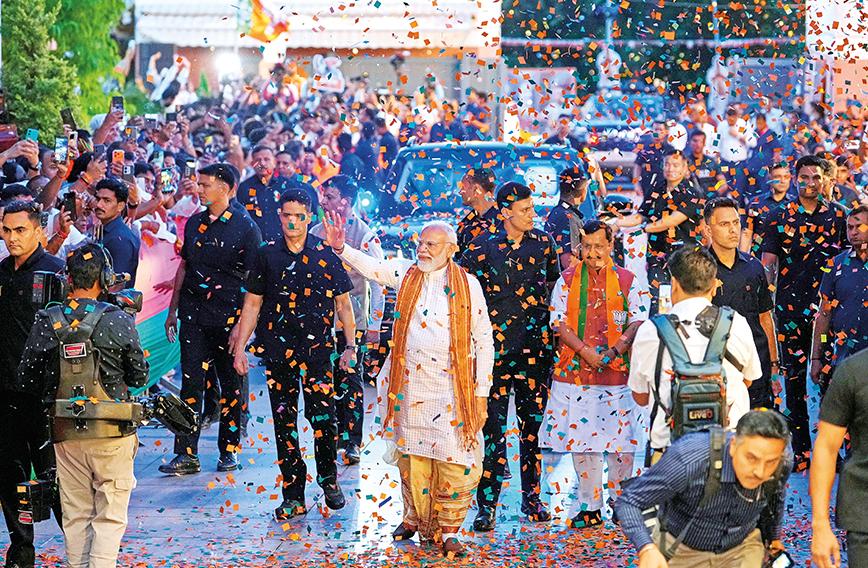
What is equally disturbing is the cynical justification of political corruption in the name of an ideology. Consider just two examples. The late Ajit Pawar of the Nationalist Congress Party was directly charged by Prime Minister Narendra Modi with using his political power to amass thousands of crores of rupees worth of wealth. Modi accused Pawar of corruption in political campaign speeches. A few months later Pawar was welcomed as an ally to prop up a BJP government in Maharashtra.
In West Bengal, the prime minister similarly attacked Suvendu Adhikari on corruption when the latter was a member of the Trinamool Congress. The same Mr Adhikari has since been sworn in as the BJP chief minister of West Bengal.
The media has, understandably, dubbed the BJP a ‘political laundry machine’ that cleanses politicians of their black deeds. The examples of Pawar and Adhikari demonstrate a disturbing turn in politics. In the strategic pursuit of a larger ideology tactical amoralism is easily justified. After all, the BJP seeks power to promote Hindutva. There can be no loftier political ideology than one that claims to be rooted in a great religion. Every political act is justified in the name of Hindutva. Even whitewashing corruption.

What is amazing is how few truly religious persons object to this tactical use of a great religion. The BJP has widened its political footprint in the name of Lord Ram, a personification of morality in public life. Yet, evidence increasingly suggests that morality and ethics do not define the party’s political choices. The pursuit of power and wealth is all that matters.
When President Donald Trump began defending his power play in the name of Christianity, the Pope condemned him. Christianity and Christian virtues, said Pope Leo XIV, cannot be used to defend corrupt politics, immoral personal life and the killing of innocents. It was a rap on the knuckles and the United States Secretary of State, Marco Rubio, had to visit the Vatican to make amends. Some Hindu leaders have also been critical of the cynical exploitation of Hindu gods in the pursuit of political power. We have long seen how Islam has been used by corrupt and repressive regimes in West Asia to secure power and seek wealth.
The problem with all religion-based politics is that sooner rather than later the moral foundations provided by religious ideals wither away with the superstructure of power politics finding other means to remain in place. Just as Christianity cannot defend the corrupt politics of a Trump and Islam cannot defend the repressive regimes of West Asia, Hinduism too cannot absolve those who seek political power in its name but condone corruption and resort to repression. All religions are based on moral foundations. All politics is increasingly prone to resorting to amoral tactics in the pursuit of power and wealth.
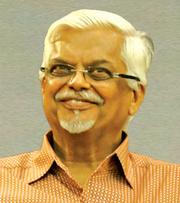
Sanjaya Baru is an economist, former newspaper editor and author. His most recent book is ‘Secession of the Successful: The Flight out of New India’.
Comments
Currently there are no Comments. Be first to write a comment!