



SANJAYA BARU
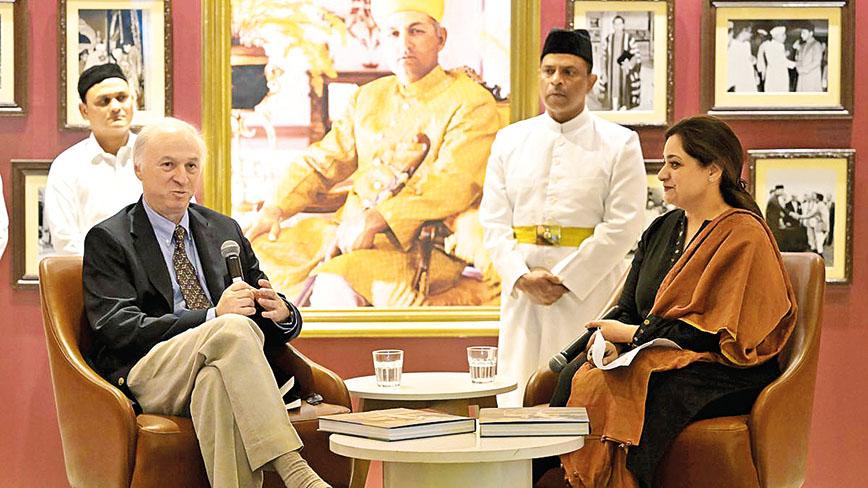
The Indian Express and the Taj hotels recently sent out invitations for an evening with Radhikarajae Gaekwad, described as the ‘Maharani of Baroda’. The Hyderabad Literary Festival saw the launch of a coffee table book on the ‘Nizam of Hyderabad’. The media routinely informs us that the Dassehra festival in Mysuru is hosted by the Maharaja of Mysore. And, Air India would still like us to join the Maharaja Club.
Over half a century ago, in 1969, Prime Minister Indira Gandhi decided to withdraw these titles and stopped the government’s financial contribution to the erstwhile heads of Indian states — called a ‘privy purse’. A bill introduced in the Lok Sabha in 1969 was eventually passed in 1971 as the Constitution (Twenty Sixth) Amendment Act, stating its objective as follows:

“The concept of rulership, with privy purses and special privileges unrelated to any current functions and social purposes, is incompatible with an egalitarian social order. Government have, therefore, decided to terminate the privy purses and privileges of the Rulers of former Indian States. It is necessary for this purpose, apart from amending the relevant provisions of the Constitution, to insert a new article therein so as to terminate expressly the recognition already granted to such Rulers and to abolish privy purses and extinguish all rights, liabilities and obligations in respect of privy purses.”
What the withdrawal of titles meant in simple terms was that the erstwhile Maharaja of the Indian state of Gwalior would no longer be addressed as His Highness Ali Jah, Umdat ul-Umara, Hisam us-Sultanat, Mukhtar ul-Mulk, Azim ul-Iqtidar, Rafi-us-Shan, Wala Shikoh, Muhtasham-i-Dauran, Maharajadhiraj Maharaja Shrimant Madhav Rao III Scindia Bahadur, Shrinath, Mansur-i-Zaman, Maharaja Scindia of Gwalior but simply as Mr Madhav Rao Scindia.
It is a sign of the social regression since then that the late Mr Scindia’s son, the former Congress party leader and now a member of Narendra Modi’s council of ministers, Jyotiraditya Scindia, still expects to be referred to as “Shrimant” and “Samant”, titles inherited from his feudal past.
The photo display at the Hyderabad Literary Festival did not mention the fact that Mir Barkat Ali Khan, the last Nizam of Hyderabad, inherited the title ‘Rustam-i-Dauran, Arustu-i-Zaman, Wal Mamaluk, Asaf Jah VII, Muzaffar ul-Mamaluk, Nizam ul-Mulk, Nizam ud-Daula, Nawab Mir Osman Ali Siddiqi, Khan Bahadur, Sipah Salar, Fateh Jang, Faithful Ally of the British Government, 10th Nizam of Hyderabad and of Berar GCSI, GBE, Royal Victorian Chain’. I guess it is quite understandable that inheritors of such titles feel cheesed off that democratic India no longer permits them to use them. Worry not, we may say, the feudals are back in fashion in the Indian media and corporate world.

Today’s modern urban generation, the millennials and Gen Z as they are referred to, often do not understand why we of the post-Independence generation feel so strongly about feudal titles being back in fashion. There are at least two reasons, in my view.
First, all the Kings and Queens of the colonial era had compromised with British imperialism and arrived at a modus vivendi. In return the British imperial government humoured them with titles, multiple gun salutes and a comfortable lifestyle. The Nizam of Hyderabad and the Maharaja of Gwalior were accorded a 21-gun salute, which is what the President of the Republic of India is now accorded.
After Independence, many of the feudal kings, queens, zamindars and jagirdars tried to retain their power and pelf, joining active politics and sabotaging attempts at land reforms and imposition of land ceilings. Many sought to regain their lost public status by entering democratic politics. In the very first general election of 1952, as many as 45 former heads of erstwhile princely families contested elections — with around 70 percent contesting elections to assemblies. By the elections of 1967, the number went up to 75.
Interestingly, through Nehru’s tenure, three-fourths of all MPs from princely families were members of the Congress party. However, with Indira Gandhi deciding to abolish princely titles and purses many quit the Congress to join the Swatantra Party or the Jana Sangh.
Many of them continue to enjoy the benefits of wealth secured and inherited as a consequence of their feudal rule. A kind of governance that perpetuated poverty, did not invest in the empowerment of the citizenry and allowed a small elite to corner all the benefits of whatever development there was.
Thus, for example, even though the Nizam of Hyderabad was the richest feudal potentate in the world in his time, his kingdom was a relatively backward region and the peasantry was oppressed and impoverished. Many feudal families live in luxury even today thanks to wealth inherited through oppressive feudal governance. Only a few Indian kings were enlightened enough to invest in their people’s welfare and education.
A second reason one objects to the celebration of the feudals is the fact that democratic India has still not wiped out feudal practices and social mores even after three-quarters of a century of republican rule. With the celebration of feudal vestiges, palaces and lifestyles, the newly rich and the aspirational middle class now seek to imitate and befriend the feudals.
An invitation to a wedding of a “Maharaja’s” son or daughter is much sought after by the new elites. Fashion designers are catering to this by creating ‘regal’ couture to make middle class professionals look like a prince or princess. Five-star hotels will boast of a ‘darbar’ as a meeting place for corporate executives a nd the nouveau riche offer patronage to palaces that have been turned into hotels. All of this tends to normalize the feudal in republican life.
Sanjaya Baru is an economist, former newspaper editor and author. His most recent book is ‘Secession of the Successful: The Flight out of New India’.
Comments
Currently there are no Comments. Be first to write a comment!