



SANJAYA BARU
Blame it on Xi Jinping. In 2012 he urged his people to look to a great future and called it the ‘China Dream’. A decade later Narendra Modi promised a bright future for India with his Amrit Kaal and Viksit Bharat slogans. Donald Trump said he would ‘Make America Great Again’. Not to be left behind in this celebratory futurism, Vladimir Putin promised his people to repair Russia’s wounded pride through conquest. Closer home, Revanth Reddy promises a Future City.
It’s all about tomorrow. Forget Omar Khayyam’s Rubaiyat — “Unborn tomorrow and dead yesterday, why fret about them if today be sweet?” Today ain’t sweet. So, think tomorrow. The Bharatiya Janata Party (BJP) in fact wants us to dream both about an unborn tomorrow and the dead yesterday. The distant past was glorious, damaged by the nearer past. The future is ours to take, so why obsess about our unhappy todays?
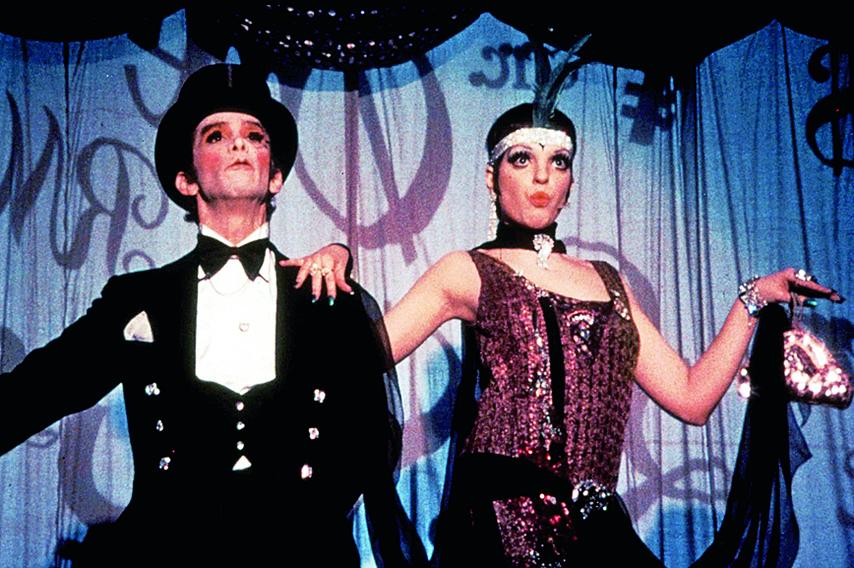
Xi’s Dream, Modi’s Viksit, Trump’s MAGA and Revanth’s Future City reminded me of a song from Bob Fosse’s 1972 movie Cabaret, based on Christopher Isherwood’s anti-fascist novel Goodbye to Berlin (1939). In the movie young customers at a beer garden outside Berlin join members of Hitler Youth standing up, with an arm raised forward, singing “Tomorrow Belongs To Me”.

“Now Fatherland, Fatherland show us the sign / Your children have waited to see / The morning will come / When the world is mine / Tomorrow belongs to me.” That was Hitler’s rallying call that helped mobilize a sullen Germany.
The promise of tomorrow is an old political trope that politicians have used to enthuse cadre and the public, partly to mobilize their support and partly divert attention from the anxieties and miseries of today. It goes to China’s credit that it has at least created a today that few would have even dreamt a generation ago. At home, however, the promise of a better tomorrow — Viksit Bharat — does not as yet sound credible given the magnitude of the task ahead.
As we enter yet another New Year, when we wish each other a “happy, peaceful, prosperous” year ahead, the news was all about death and destruction. Christians attacked for celebrating their festival, Muslims attacked for partying with Hindu friends and people of different faiths dying after consuming contaminated drinking water. Indore’s water supply did not discriminate between religions.
Let me not make much of a muchness. It is in the nature of democratic politics that politicians seek support based on promises. After all every political party goes into an election with a manifesto of future performance. Rarely do they in fact seek support based on performance. Sometimes they do, pointing to one big achievement — like K. Chandrashekhar Rao seeking office after the creation of a separate state of Telangana or Narendra Modi going into the 2024 general election after consecrating the temple at Ayodhya.
Sometimes voters reward performance, sometimes they don’t. In 2009 the electorate rewarded Prime Minister Manmohan Singh for his performance in his first term, in 2014 it did not. In 2024 Modi’s BJP lost majority in the Lok Sabha, despite delivering in time on the temple promise. In any case, rarely do politicians in power want too much attention paid to the present or the immediate past. It is always the distant past and the distant future that politicians prefer to invoke.
But celebratory futurism can become counter-productive. So, for example, Xi no longer speaks about the China Dream and when was the last time one heard Modi speak about ‘Achche Din’ or Make in India or Swachh Bharat. Today talk does not go down well because one evaluates it against performance. So, keep the focus on tomorrow. Which is why it is important that the media remind politicians in power about their promises of yesterday.
On August 15, 2024, Prime Minister Modi announced from the Red Fort that he would constitute a “national mission for ease of living”. Sixteen months later we still await the setting up of that mission, not to mention delivery on the objective.

After reading my new book, Secession of the Successful: The Flight Out of New India (Penguin, 2025) many have asked me what the government can do to discourage brain and wealth drain — the flight of human and financial capital — and encourage overseas Indians to return home. The answer is quite simple. The government — in New Delhi and in state capitals across the country and in every panchayat and municipality — has to deliver on the promise of ‘ease of living’.
Simple things. End the tyranny of KYC — Know Your Customer — that banks, cooking gas dealers and a whole lot of others harass people with. Provide potable drinking water. Affordable healthcare. Better schools. Roads without potholes. The municipality collecting garbage. The list can go on. It is a list of simple demands. Nothing big, like Viksit Bharat or making the country a Vishwaguru or making Hyderabad feel like Manhattan, or enabling every Indian a life from “Hawaii chappal to hawai jahaz” (remember that one?).
Just the day to day stuff. Returning home to Hyderabad every now and then all I now seek is better roads, cleaner streets. Hyderabad, or at least the part I live in and usually drive around, has more fancy cars — from BMWs to Lamborghinis — than where I usually reside, i.e. South Delhi. But the roads are a torture. As one drives through Cyberabad looking at tall glass and steel buildings with fancy names my back is punished by bumpy roads.
Indore has been winning accolades for its performance on Swachh Bharat parameters. And then we enter the New Year with people dying drinking just plain water. Not hooch, but water. Swachh Bharat indeed! But, tomorrow belongs to me!
Sanjaya Baru is an economist, former newspaper editor and author. His most recent book is ‘Secession of the Successful: The Flight out of New India’ (Penguin, 2025).
Comments
Currently there are no Comments. Be first to write a comment!