



SANJAYA BARU
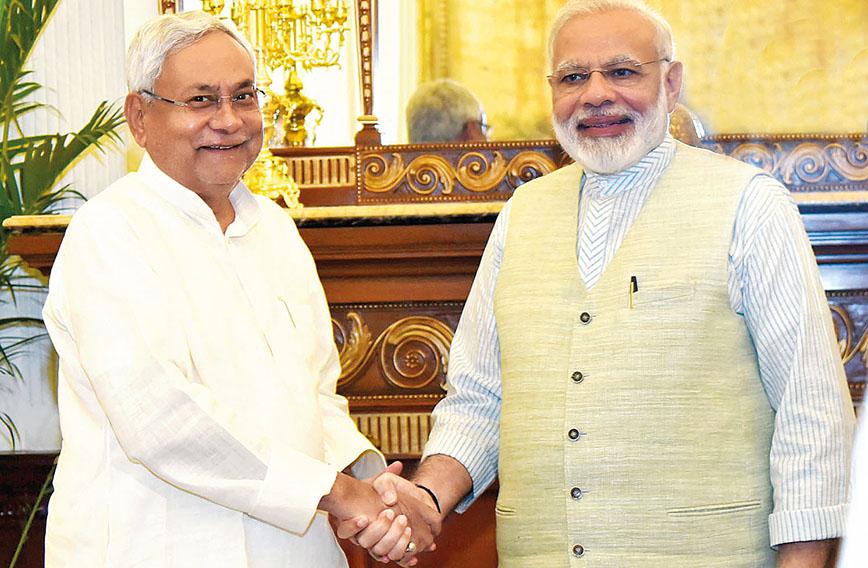
Futurism is the latest trend in Indian politics. If the Bharatiya Janata Party and Narendra Modi promise us an ‘amrit kaal’ and assure us of a ‘Viksit Bharat’ by 2047, the Congress party’s Revanth Reddy has unveiled plans for a ‘Future City’. Politicians in power who feel they may not be able to sustain their popularity based on today’s performance are quick to shift the focus to tomorrow.
During the recent elections to the Bihar legislature it was curious to see a chief minister who has been in office for two decades seek votes based on promises for tomorrow. Returning to power in the new Andhra Pradesh of 2014, Chandrababu Naidu promised a new capital city and hoped that would help keep him in power for a decade but he was ousted in 2019. I guess the future in such political promises has to be far away for hope to be sustained.
This new trend reminded me of Prime Minister Manmohan Singh’s first visit to Mumbai as PM. He famously declared that Mumbai would become “India’s Shanghai”. That was two decades ago. It was also a promise for the future. That future arrived soon enough for Mumbaikars to realize what a premature, and perhaps empty, promise it was. Anyone visiting Shanghai would be amused recalling Singh’s promise.
Of course, in a democracy politicians seek office based on a manifesto about their plans for the future. However, such manifestos and promises have to be about here and now so that they can be evaluated against them at the next election and not by the next generation. Politicians who have been in power for a term or two or more have to also seek popular support on performance. Yet, it would seem that voters in India do not care about past per-formance and are willing to repose their trust in politicians based on the latter’s promises for the future.
When the Congress party lost an election in 1996 despite the impressive record of the P.V. Narasimha Rao government on a range of domestic and external fronts, political analysts were quick to conclude that his government’s economic policies, which placed the Indian economy on a new and higher trajectory of growth, were not enough to secure a second term. It was a lesson that Chandrababu Naidu did not learn when in 2004 he sought re-election based on his creditable economic performance and was soundly defeated.
After those two episodes the dominant opinion among political analysts is that perfor-mance does not guarantee power. One has to keep the focus on the future and make prom-ises of better days. Such as ‘Achhe Din’, as Narendra Modi famously promised in 2014. When he was unable to deliver the promised ‘good days’ he shifted focus to a range of new vote mobilizing issues mostly focused on future delivery. In 2017 Modi promised that India would be a $5 trillion economy by 2020. Very quickly, the goal post was shifted to 2022 and then to 2025. We are now a $4 trillion economy.
Realizing that short-term goals pose a challenge, he has now promised to make India ‘Viksit’ by 2047. Revanth Reddy’s focus on ‘Rising Telangana’ and the building of a ‘Future City’ are ideas drawn from the same playbook: boost popular support with feel-good prom-ises. So what if today’s cities have pot-holed roads, inadequate municipal services and poor traffic management? All will be well in the future.
Futurism in politics is about brand building. Every politician in power wants to be remem-bered by an idea, an initiative, a policy or a project. It has replaced what I have often termed as the ‘Taj Mahal Syndrome’. The Taj Mahal syndrome in public life is represented by foundation stones. Politicians build monuments, buildings, public works projects and so on and ensure that the future will remember them by their name appearing on the foundation stone.
Shah Jahan is not remembered for any policy or acts of governance during his tenure as emperor but by the edifice he erected in memory of his beloved. Every politician in power wants to put in place an edifice that he or she would be remembered by. Consider how many projects Modi has sought to be associated with, ranging from the Sardar Patel statue in Gujarat to a road bridge in Assam and a tunnel through the Himalayas.
But projects, once completed, are often easily forgotten and voters do not always reward politicians for projects completed. So ideas and proposals for the future have to be put in place. These have to be adequately long-term so that any shortcoming does not deprive the author of the idea of the image she seeks. Modi, for example, would have realized that his ‘Achhe Din’ slogan was misplaced. He promised good days ahead in 2014. By 2019 he was unable to deliver on that promise. An attack on Pakistan came in handy.
So the goal of Viksit Bharat is sufficiently far-off to keep anyone from asking if he has delivered on the promise. He would, however, be remembered by that term. Just as Indira Gandhi is remembered by her slogan ‘Garibi Hatao’. But Indira Gandhi did not manage to banish poverty. In fact, poverty rates came down sharply in the decade after Narasimha Rao unleashed economic growth through policy reform.
It was during the tenures of Narasimha Rao and Atal Bihari Vajpayee that poverty levels fell sharply and continued to do so during Manmohan Singh’s term in office. However, the idea of ‘garibi hatao’ continues to recall to memory the leadership of Indira Gandhi. Modi must hope that when ‘achhe din’ finally arrive for a majority of Indians and India becomes ‘viksit’, he will still get the credit.
Sanjaya Baru is an economist, former newspaper editor and author. His most recent book is 'Secession of the Successful: The Flight out of New India' (Penguin, 2025).
Comments
Currently there are no Comments. Be first to write a comment!