



SANJAYA BARU
He took a bet in 1997 investing in innovation, research and development. After thirty years it is beginning to pay off. At a time when there is widespread concern about inadequate investment in R&D and new product development in India, and how China is miles ahead on this score, the news of Zaynich’s launch by the pharmaceutical firm, Wockhardt, deserves celebration.
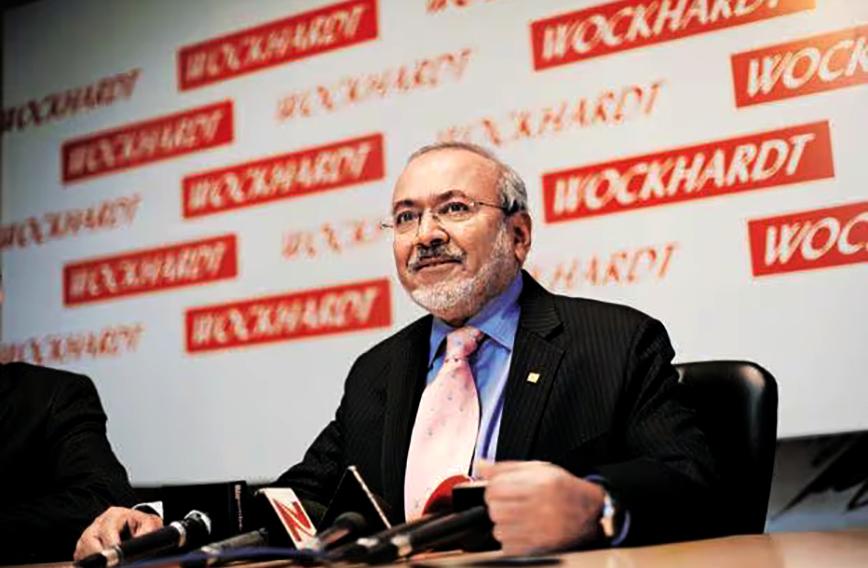
I must begin with a confession. I joined the board of Wockhardt as an independent director in 2012 when the company was in a difficult financial situation. The management was under pressure to cut costs and wind up projects. The company’s chairman, Dr Habil Khorakiwala, was willing to do whatever it took to sail through turbulent times but he would not give up on a major research programme that he started in the late 1990s. By 2023, when my term on the board came to an end, Wockhardt’s research team had already seen the light at the end of a long tunnel.

Last month, Dr Khorakiwala announced that a new drug, Zaynich, an antibiotic aimed at dealing with antimicrobial resistance, had secured all required approvals, especially from authorities in the United States. A senior scientist at the Indian Council of Medical Research observed, “Zaynich symbolizes the maturation of India’s life sciences ecosystem and demonstrates that Indian innovation can address global health challenges at the highest level.” When launched globally, Zaynich will fetch several billion dollars in revenue.
New drug discovery is a long-term game. It requires consistent financing and investment in research. As Khorakiwala mentions in his fascinating autobiography, Odyssey of Courage: The Story of an Indian Multinational (Rupa Publications, 2017), it was in September 1997 that he first met Dr Mahesh Patel and invited him to head Wockhardt’s R&D team. Dr Patel had by then worked for more than two decades with Hoechst and Ranbaxy. Inspired by the examples set by pioneers like Parvinder Singh of Ranbaxy and Anji Reddy of Dr Reddy’s, Khorakiwala decided that “the future lay in antibiotics” and this required product innovation based on original research.
Dr Patel warned Khorakiwala that a firm’s R&D effort can only succeed if it is led by the man at the top. The R&D team would report only to the company’s chairman and managing director. The latter would have to be prepared to offer sustained support over a long period of time to achieve meaningful results. That is what finally helped deliver results.
The Indian pharmaceuticals industry has long established its global competitive and innovation credentials and yet Zaynich’s development and global approval is a major milestone for novel antibiotics development in India. The saga of Zaynich has its ups and downs. Indian firms engaged in R&D-based new product development have to face both external and domestic challenges.
External challenges are understandable in a competitive global economy, especially in the highly profitable drugs business where American, European and Japanese multinationals have long dominated the market. Western regulatory agencies are rarely supportive of Third World firms. The entry of Indian firms into the highly competitive drugs market is not easy. The exit of multinationals from antibiotics also created an existential challenge. Should an Indian company invest in novel antibiotics when global firms are quitting? Khorakiwala was convinced it was worth staying the course.
What is regrettable is the fact that Indian firms have to also deal with domestic regulatory challenges. Government bodies engaged in regulating drugs research, production and marketing have been wooden in the exercise of their supervisory and approval functions. Many Indian companies have opted to shift their R&D units out of India and conduct Phase 1 and Phase 2 trials outside the country because of difficulties in doing this at home.
The willingness to invest in R&D is a function of many factors. Commitment of a company’s leadership to R&D is only the first of many requirements. Securing funding is the next challenge since it is often not easy to convince a banker that a particular project may yield adequate results. Even setting aside funds from a company’s profits is difficult if shareholders are not convinced about the likely success of an attempt to innovate, invent or discover. Khorakiwala’s shareholders were incredibly supportive and kept faith in the R&D team’s ability to deliver.
Finally, in the pharma business, the regulation and approval process and the quality of regulatory institutions is a major hurdle that firms have to cross. Being able to overcome all these hurdles and deliver is a Herculean task requiring considerable patience and commitment on the part of corporate leadership.

It is interesting to note that the Indian pharma industry had its initial spurt of growth in the highly protective environment provided by the Indian Patents Act of 1970. Indian industry welcomed the protection it received and large parts of it sought to seek extension of such protection. When the World Trade Organization was formed, sections within the pharma industry lobbied against trade-related intellectual property rights and investment measures.
However, by the end of the 1990s leaders such as Parvinder Singh, Anji Reddy and Habil Khorakiwala changed their view and understood that Indian companies too could become multinationals in this business and required a global level playing field to be able to compete against established multinationals.
In 2000 Khorakiwala prepared a Vision 2020 for the pharma sector that has withstood the test of time. Indian pharmaceuticals, biotechnology and information technology sectors are today well recognized as comprising globally competitive firms. The Covid pandemic of 2019 established the global credibility and value of Indian research. Protecting this reputation will be as difficult as securing it. The global market is a highly competitive arena. Entry is difficult but survival is even more so.
Sanjaya Baru is an economist, former newspaper editor and author. His most recent book is ‘Secession of the Successful: The Flight out of New India’.
Comments
Currently there are no Comments. Be first to write a comment!