




SANJAYA BARU
In the book I wrote on the changing character of India’s power elite (India’s Power Elite: Class, Caste and a Cultural Revolution, Penguin Random House, 2021), I devoted the last chapter to a brief consideration of an important and emerging aspect of the Indian power elite — their emigration. I called it ‘the secession of the successful’, borrowing that term from the radical American professor and politician, Robert Reich.
My fellow columnist in this magazine, the distinguished Kiran Karnik, observed at that time that in all the discussions and reviews of the book then there was little focus on the last chapter. Mr Karnik went on to observe that while the elite may be beginning to secede from the country through emigration they had already seceded by living within gated communities with private security and dependent on privately provided water, power, healthcare, education and other needs. The only way in which the outside world intervened was through pollution!
It is the growing numbers of elite emigration that continued to attract my attention and so I decided to write an entire book on the subject, taking forward the last chapter of my previous book. What is interesting about the initial reaction to the new book (Secession of the Successful: The Flight Out of New India, Penguin Random House, 2025) is that most of the remarks on social media have been about a relatively minor point I make regarding India’s taxation rates.

In response to a question on whether lower taxes on the wealthy would encourage them to stay home rather than emigrate, I had said two things. First, that the flight of the wealthy was not merely on account of taxation but mainly due to their pursuit of the ‘ease of living’, a term given currency by Prime Minister Narendra Modi himself. They seek ‘first world life’ not in the Third World (the phenomenon Mr Karnik drew my attention to when he referred to ‘gated communities’) but in the First World itself.
My second point is that India’s taxation rates are based on the structure of Indian society that is highly unequal with the top five percent of the population accounting for the bulk of national income and ownership of assets. India’s wealthy must contribute to the national exchequer, enabling some transfer of income from the rich to the poor. The reaction of many non-resident Indians to this on social media is interesting. Many justify not wanting to pay tax on the grounds that their needs — in terms of various public services — are not being addressed by the government.
This may well be true in the sense that the needs and wants of the wealthy are now increasingly provided by the private sector and not government. However, the point is that few who have emigrated have in fact done so because of Indian tax rates. The real reasons range from their pursuit of ‘first world life in the First World’, which they can now afford, to better opportunities for whatever they are equipped to do in the global market rather than at home.
Non-Resident Indians (NRIs) of various vintages and class and social background, a feature that I have elaborated on in my book, have all become ‘Non-Returning Indians’. There is as yet little evidence to suggest that overseas Indians are in fact returning home. Even if some are, the numbers emigrating and giving up Indian citizenship far exceed the minuscule number of returning Indians.
What is interesting is that the economic and social clout of ‘non-returning Indians’ is such that they are able to secure access to a range of their needs through the marketplace. Many businesses and services have come up that make non-resident Indians not have to return home to address their needs at home. Everything from spices and vegetables to temples and priests are now available overseas. The world has become an oyster for the Indian elite.
An important aspect of elite emigration that many talk about in the privacy of their homes but rarely in the media is the fact that the next generation of the power elite in India increasingly lives overseas. From children of business leaders, government officials, diplomats, armed forces leadership to academics and opinion makers, the next generation is increasingly seceding from home.

What is also worrisome is the fact that while emigration was till recently largely a family or individual decision, the government is increasingly getting involved in this by in fact facilitating it. When hundreds of thousands of working-class Indians went to the Arab/Persian Gulf countries they did so at their own instance. Their departure was facilitated by touts and agents. The government stepped in merely to authorize such exit through various permits and laws.
What has been happening over the past decade is that the government is actively intervening in this process by facilitating emigration. The bilateral deals with Israel and Taiwan are examples of such government-sponsored labour emigration. If this is at the lower end of the emigration market, at the upper end too there is official endorsement of the flight of capital and wealth. The Indian political leadership celebrates the wealth and success of overseas Indians and they in turn mouth nationalist slogans without ever meaning to return to the home country.
Prime Minister Modi has made it an integral part of his foreign travels to meet and greet overseas Indians, praise them and celebrate their success. Indians watching all this on their home television screens must think that getting away from India is an achievement in itself that gets prime ministerial approval. Few among these overseas Indians are ever going to return home. They have all become non-returning Indians.
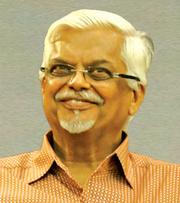
Sanjaya Baru is an economist, former newspaper editor and author. His most recent book is 'Secession of the Successful: The Flight out of New India' (Penguin, 2025).
Comments
Currently there are no Comments. Be first to write a comment!