



SANJAYA BARU
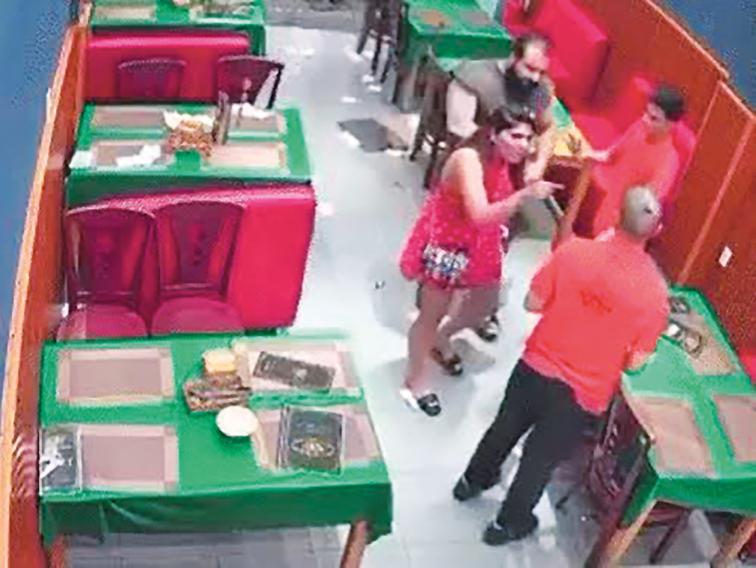
Vietnam is the latest stage on which a newly rich, aspirational Indian middle class is demonstrating to the world how badly brought up it has been. First, a clip went viral on social media showing a group of Gujarati tourists staging garba on the tarmac in an airport in Vietnam, as if this is the norm back home. More recently, another clip went viral showing a family from Maharashtra misbehaving in a restaurant and picking a fight with the staff when the latter objected to bad behaviour by what clearly appeared to be a badly brought up child. Rather than admonish the brat, the father began beating the staff. Don’t be surprised if friendly Vietnam joins a growing list of countries that are blacklisting Indian visa seekers.
Socially unacceptable behaviour by the newly rich is not new. What is new is that many feel empowered and entitled enough to behave badly with impunity. In the past, Indian tourists were generally known to be low-profile, polite and reasonably well behaved. In many countries, Indian immigrants have earned the reputation of being good citizens. This is not to say there were no exceptions. I recall viewing a video on a Singapore television channel that showed an Indian litter the street and many I met after that was aired protested that such behaviour was the exception, not the norm. It seems to have increasingly become the norm.
After all, how can an Indian travelling overseas suddenly acquire good civic manners if these values have neither been ingrained nor their transgression punished at home. At home, throwing stuff out of a vehicle is the norm. How can such lifelong habits change overnight merely because one is overseas!
An increasingly important reason for this growing trend of bad behaviour is the sense of entitlement among upper caste, upwardly mobile middle-class Indians. Socially, bad behaviour is not a trait one associates with the old elite, the third-generation upper classes. However, even first- and second-generation upper classes behave no differently from the upwardly mobile middle classes. Airlines routinely ignore such behaviour, especially when such behaviour is not by an individual but by a group. We have seen communal elements chant slogans on board planes, disturbing fellow passengers, without being reprimanded.
In a country where social mores are rapidly changing, many do not even recognize that speaking loudly on a mobile phone in an aircraft is just bad behaviour. While the media highlights Indian bad behaviour overseas, at home such behaviour has become so routine that it is no longer viewed as news worthy. This is how we are.
While most Indians have come to accept such behaviour at home, people in other countries are objecting. The resultant backlash is hitting home. Recently, industrialist Harsh Goenka posted on X a notice he saw at a Swiss hotel some years ago. It was meant for Indian guests! It was explicit. Do not carry food away from a buffet table. Eat as much as you want and can, but don’t make your buffet breakfast also your packed lunch! At least pay for it.
When the hotel in question was approached by an Indian journalist for more information on this matter, the staff chose to be diplomatic. They said such incidents happened in the past and Indian guests were always welcome at their premises. Clearly this was no low-cost restaurant of the kind seen in the Vietnam tweet where the Indian tourist was seen bashing up the staff. If its guests were wealthy Indians they wanted more coming.
Will the desire to attract money spenders from India make other societies more tolerant of bad behaviour by Indian tourists? Unlikely. In Kyoto, Japan, some hotels and restaurants no longer accept Indian customers. Japan has raised visa fees threefold as a signal. It seeks to discourage inward tourism. This trend has impacted Indian tourists visiting Thailand. The discerning wealthy who like to go on a cruise now routinely avoid tours where noisy, boisterous and badly behaved Indians are likely to be the largest group on board.
My generation was required to take a course at school called ‘civics’ which, as I recall, included such topics as how not to litter streets and how to behave towards elders. I find a civics course these days is more about social institutions than personal habits. Good behaviour is, of course, taught at home. How does one deal with this task when a society is rapidly including in its ranks first-generation educated, first-generation urbanized, first-generation tourists and so on. Parents have no experience either of urban life or foreign travel. If parents cannot teach and schools do not, who educates this new generation of upwardly mobile Indians about what civic behaviour ought to be?
This is a particularly big challenge for families that come from highly structured rural or semi-urban environments in which even upward social mobility is highly regulated and carefully managed. A first-generation educated person within a rigidly hierarchical social structure is unlikely to be cocky on becoming financially better-off. In an alien urban setting her only social identity is her income status that entitles her to privileges not accessible in the traditional rural or semi-urban environment from which she comes.
The problem is going to become bigger if a conscious effort is not made to educate newer generations as to what constitutes good social behaviour. How one should behave in public places, on public transport, while driving, and so on. The failure of the Swachch Bharat Mission, led by none other than the prime minister, to inculcate respect for cleanliness in public places is not a hopeful sign for any movement to improve social behaviour.
Sanjaya Baru is an economist, former newspaper editor and author. His most recent book is ‘Secession of the Successful: The Flight out of New India’.
Comments
-

Jayasree Devineni - Aug. 6, 2026, 6:20 p.m.
Felt extremely shameful while reading this article, despite knowing the reality. Indian passport, whose Global Passport Index at 125th also reflects where we stand. Let all of us readers of this magazine spread this across with the known schools/ educational institutions and other forums. Small beginnings, small change, for the cumulative effect.