




A performance at Bangalore Creative Circus, a warehouse converted into an arts hub and community centre
Bengaluru blooms as the city of multiple choices
Rashmi Gopal Rao, Bengaluru
From edgy art to rhythmic music, the city of Bengaluru has it all. Over the years India’s tech hub has morphed into a cultural powerhouse with a galaxy of spaces promoting a variety of arts as well as ideas for sustainable living.
Take, for instance, the Bangalore Creative Circus, an industrial warehouse over 20,000 sq ft converted into an Urban Living Lab using upcycled material. Its purpose is to promote conscious living using art and science and by offering alternative solutions.
“Bangalore Creative Circus is an experience centre for sustainable solutions. We have a creative arts hub, a farm-to-table restaurant, edible gardens, and a community centre for events, workshops, and performances. The centre serves as a platform for changemakers to experiment and collaborate,” says Manisha Vinod, co-founder of Bangalore Creative Circus.
For aficionados of music, India’s first interactive music museum, The Indian Music Experience Museum, is located in the city. This is the only institution dedicated to showcasing Indian music in the country.

Apart from it, there are eclectic museums, multiple galleries, art collectives, cultural spaces, including theatre, for cultural buffs to visit, experience and appreciate.
“The city’s cosmopolitan population seeks intellectual and aesthetic engagement beyond the workplace. It is this aspiration which has fuelled Bengaluru’s rise as a cultural powerhouse,” says Preema John, museum director of The Indian Music Experience. “Such curiosity has been sated by new institutions and cultural initiatives which aren’t just repositories of the past but active participants in the city’s daily life.”
Deep-rooted traditions blended with a contemporary global outlook have created an environment where art and culture can blossom, was John’s opinion.
 |
|
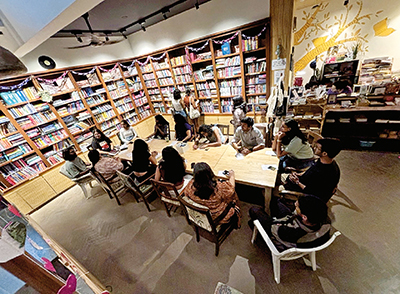
Atta Galatta, an unusual Indian language bookstore |
Bengaluru’s open-minded culture and its diverse population makes acceptance of the offbeat and experimental quite effortless. A combination of demography, philanthropy and a strong sense of civic ownership has helped the evolution of the city into a cultural hub.
Besides, Bengaluru offers more opportunities to emerging artists compared to other cities. The scene here is open, non-cliquey, with artist residencies, collectives, and tech patronage — all of which reduces isolation and encourages co-creation.
It is no surprise then that in 2023 Bengaluru became the first Indian city to become part of the World Cities Culture Forum (WCCF).
MIDDLE CLASS EXPANSION
“Over the past decade, the rapid expansion of the professional middle class has created a demand for curated cultural experiences. This demographic shift, paired with a growing recognition of the arts as a vital component of urban life, has fuelled a sustainable ecosystem for arts in the city,” says Arundhati Nag, artistic adviser, Ranga Shankara, one of India’s premier spaces dedicated to theatre.
 |
|
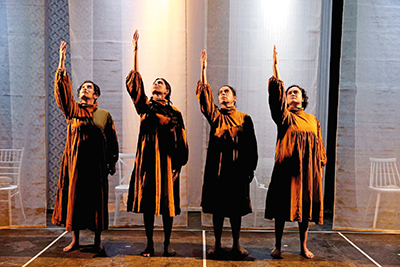
Ranga Shankara, an expansive space for theatre, |
Founded in 2004, the institution, located in J.P. Nagar, has adhered to a meticulous ‘Play a Day’ philosophy, ensuring the stage is never an empty space without an audience.
Ranga Shankara, which is managed by the Sanket Trust, is a non-profit designed to provide world-class facilities to theatre groups at subsidized rates, thereby ensuring high-quality performing arts remain accessible to citizens.
“Public events and festivals are essential for audience development,” says Nag. “Cultural spaces like ours act as gateways, introducing the arts to a broader, diverse demographic. Festivals create a sense of civic pride and establish a recurring rhythm in the city’s cultural calendar, making art a communal rather than an isolated experience.”
Another impressive space is the Museum of Art & Photography (MAP), located in the heart of Bengaluru. It opened its doors to the people of the city on February 18, 2023.
Spread across seven storeys, the museum has art galleries, an auditorium, a library, a multimedia gallery, a technology centre, a sculpture courtyard, a learning centre, a specialized research and conservation facility, a gift store, a café, a members’ lounge and an after-hours bar.
MAP’s mission is to use the transformative potential of art to enrich lives, ignite creativity, and connect people. MAP makes art accessible and engaging for everyone through innovative experiences, meaningful dialogue and building communities.
For bookworms and literary enthusiasts, there is Atta Galatta, a unique Indian language bookstore and a venue for literary and artistic events. The store stocks Indian writing in English and books in all the South Indian languages, as well as in Hindi, Bengali and more. It specializes in genres such as translation, poetry, and, curiously, curates its fiction collection.
Over 14 years of its existence, Atta Galatta has grown to be more than just a bookstore. It has become a community hub, and has hosted over 3,000 events like storytelling, book launches and art workshops.
“We have a unique culture here. It embraces things that are different and does so without judgement. Most Bangaloreans do things because they want to, and not because they want to be seen doing it. This allows for a variety of things — activities, causes, art and culture — to receive generous patronage,” says Subodh Sankar, co-founder of Atta Galatta.
 |
|
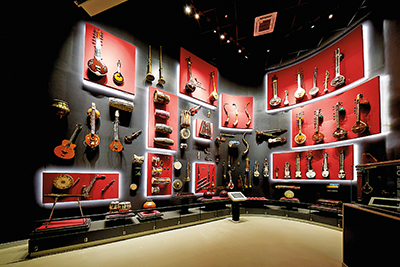
The instruments gallery at The Indian Music Experience Museum, India's first interactive music museum |
The city, he believes, offers more opportunity, and supports a wider range of the arts as compared to other cities. “Bengaluru offers space and support for virtually every type of creative endeavour and my reasoning for this is the sheer diversity of its citizens,” adds Sankar.
Take the Prestige Centre for Performing Arts in Bengaluru. It is a multi-venue, multi-arts centre which comprises a 1,000-seat state-of-the-art auditorium with a 3,500-sq.-foot stage, a 300-seat open-to-sky amphitheatre, a dance studio, and several other spaces for small-scale performances.
“Residents here have just the right mix of cultural exposure, a multiplicity of perspectives, and an openness to savour multiple experiences,” explains Dipti Rao, DGM, auditorium operations, Prestige Centre for Performing Arts.
For dance there is the Attakkalari Centre for Movement Arts which is dedicated to contemporary movement arts and pedagogy. “Our activities include performance production, professional contemporary dance training through a Diploma in Movement Arts and Pedagogy and community classes as well as international collaborations. We curate the Attakkalari India Biennial which is South Asia’s most prominent contemporary dance festival,” says Jayachandran Palazhy, founder, Attakkalari Centre for Movement Arts.
The Indian Music Experience Museum, on the other hand, is a deep dive into the touch and feel of music.
“Our vision has always been to create a space that transcends the traditional ‘look but don’t touch’ museum model. Instead we offer a sensory journey through India’s vast musical landscape,” says John. “At our Sound Garden, visitors can physically engage with the science of sound along with our immersive galleries. We have a community-focused initiative, Project Svaritha. Our museum is committed to preserving our heritage and providing a platform for contemporary expression. We’d like to ensure that music remains a living, breathing part of the community’s identity.”

Project Svaritha makes music education accessible and inclusive to neurodiverse children and those from disadvantaged backgrounds.
The Bangalore International Centre (BIC) in Indiranagar brings together a diverse community of thinkers, artists, academicians and professionals. “BIC is a privately-enabled public purpose institution. We host over 40 events a month, all of which are free and open to the public,” says Sandhya Kannan, programmes manager, BIC.
Bengaluru also hosts several festivals like UnboxingBLR, WHAM (Women’s History, Art & Music), Chitra Santhe, the Linear Festival, Bangalore Art Weekend and BLR Hubba.
“Events like these take art and culture out of specialized enclaves and place it directly in the public consciousness. These gatherings act as public festivals for the 21st century, breaking down social and economic barriers to entry. By making art a shared public experience, we cultivate a sense of belonging and ensure that the city’s cultural wealth is accessible to every resident, regardless of background,” says John.
From theatre to music, dance to fine arts and even immersive culinary events like workshops and food pop-ups, Bengaluru’s ecosystem has it all.
Comments
Currently there are no Comments. Be first to write a comment!