



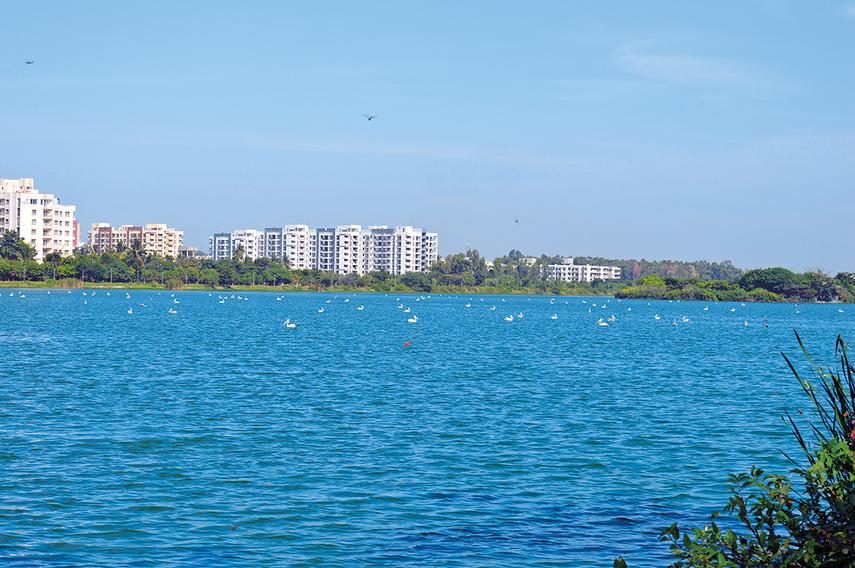
The Jakkur lake now has a rich population of fish and 197 species of birds
Residents keep Bengaluru’s troubled lakes thriving
Rashmi Gopal Rao, Bengaluru
In recent years some of Bengaluru’s silently suffering lakes, full of filth and pollution, have transformed into thriving ecosystems. While government agencies have done their bit, the champions of the city’s lakes are local citizens who keep an eye on each restored lake, ensuring its waters are pristine and its banks green.
The task of rejuvenating languishing lakes might not have been achieved without people pitching in.
“When I shifted to Bangalore in 2006, I could not bear to see the sight of the Puttenahalli lake, filled with construction debris and sewage,” says Usha Rajagopalan, founding trustee and chairperson, Puttenahalli Neighbourhood Lake Improvement Trust (PNLIT). “In 2008, I took the help of my neighbour and approached BBMP (Bruhat Bengaluru Mahanagara Palike) to include the lake on their rejuvenation list. It was done by them by 2010.”
PNLIT signed a Memorandum of Understanding (MoU) with BBMP for the maintenance of the Puttenahalli lake in May 2011 and since then the lake has been flourishing. It boasts of more than 125 species of birds including spot-billed pelicans, spot-billed ducks and Indian darters.

In fact, PNLIT became a model for several citizen groups and NGOs working with lakes. Jalaposhan, another citizen group, signed an MoU for maintaining the Jakkur lake in 2015. The fishing community is also an active stakeholder in this endeavour. The lake now has a rich population of fish and 197 species of birds, including pelicans and peafowl.
Saviours, agencies, courts
It was around 2005 that the state began the task of reviving the city’s dying lakes. From thousands of thriving lakes, Bengaluru had been left with just 40 restorable lakes due to the relentless march of urbanization. Offices, homes, malls, roads, IT Parks had buried the lakes.
Lake rejuvenation efforts began in 2008, led by the Bangalore Development Authority (BDA) which began the task of cleaning, desilting, de-weeding, development of wetlands, installation of Sewage Treatment Plants (STPs), fencing and so on.
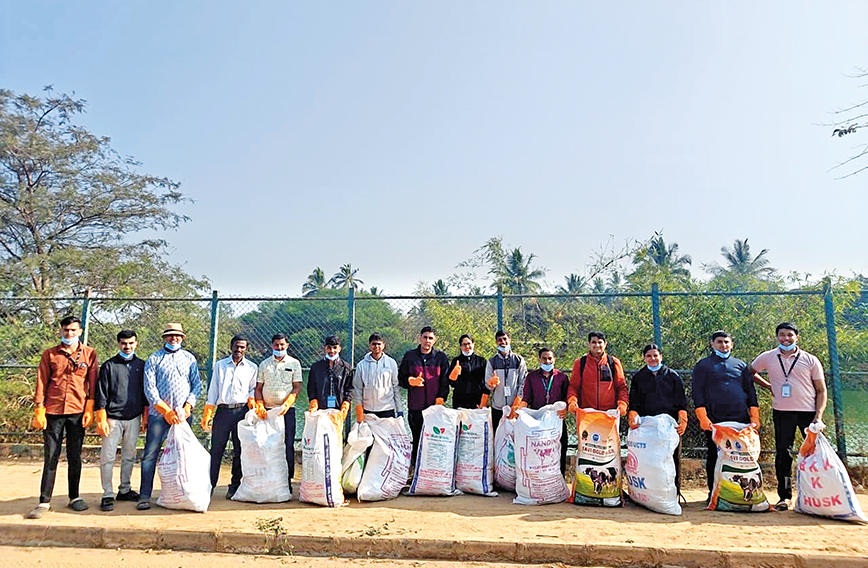 Spirited residents at the Jakkur lake
Many lakes were also handed over to the BBMP in 2011 with a formal budget allocation of `150 crore. Some of the lakes that were restored were the Rachenahalli, Sampigehalli, Puttenahalli and Jakkur lakes.
However, once a lake is restored, it needs maintenance and here the role of citizen groups, and fishing and farming communities is crucial.
“It isn’t always possible for government agencies to do everything. Usually citizens who live close by are more aware of ground realities,” says Dr Annapurna S. Kamath, founder-trustee of Jalaposhan — “Nurturing the Jakkur Lake”.
“Government agencies are the custodians of the lake. They have been vested with the authority of doing development work. But activities like raising awareness, educating the general public, garnering support and attracting volunteers can be done by us.”
 |
|
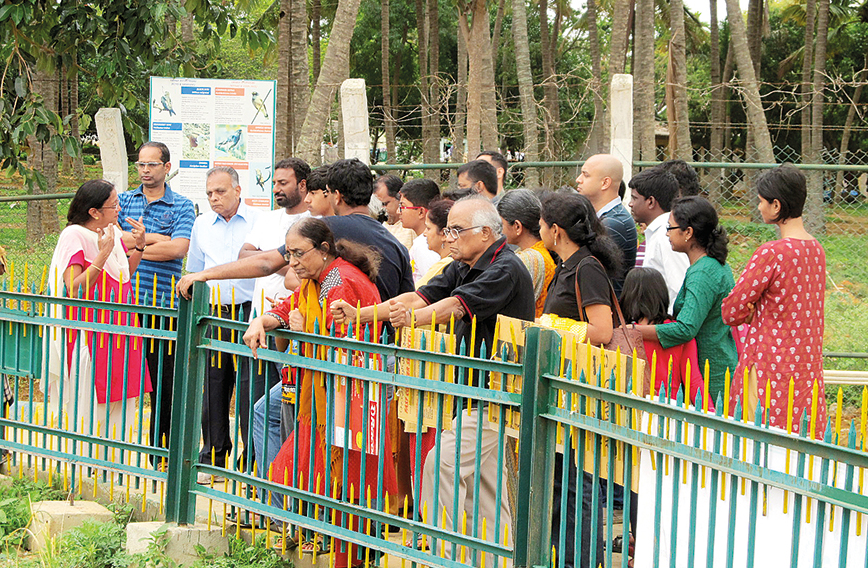
Citizens’ walk at the Puttenahalli lake |
From 2011 itself the BBMP began outsourcing lake maintenance to local citizen groups and non-governmental agencies. The latter shouldered the responsibility of maintenance and garnered community support, raised funds and created a vibrant cultural hub and recreational area around the lake.
However, on March 4, 2020, the Karnataka High Court passed an interim order in response to a Public Interest Litigation (PIL) filed by the Citizens Action Group. The court ruled that the BBMP and the state government should not enter into or renew MoUs with private corporate entities for lake maintenance. Chief Justice Abhay S. Oka observed that, with maintenance MoUs, “the state is virtually parting with the lakes to private corporate entities”.
“While citizen groups are not corporate entities, BBMP chose caution. As a result, MoUs even with citizen groups have not been renewed since the order,” says Rajagopalan. “We have stopped our maintenance work since July 2025 which is very disheartening. We have not been able to repair the aerator fountain and pumps which require immediate attention. We have been trying to get a meeting with the Greater Bengaluru Authority (GBA) to chart our future course of action.”
The GBA is now the apex governing body for Bengaluru. It formally replaced the BBMP in September 2025.
 |
| Usha Rajagopalan |
As Rajagopalan points out, citizens too have a primary responsibility towards the lake and when citizen groups are involved, they are able to achieve a great deal more.
“Apart from soliciting local support and raising CSR funds, we did a lot of research. With the help of experts we were able to divert the excess treated wastewater from the STP of a nearby apartment complex to the lake. This helped supplement rainwater and we were able to water the 125 saplings we had planted in the first year itself by drawing water from the lake. We also installed an aerator fountain in the lake,” says Rajagopalan.
The lake people
A spate of NGOs and individuals have been very active in lake rejuvenation. United Way Bengaluru (UWBe) launched the Wake the Lake Campaign in 2011 and has partnered with the BBMP, gram panchayats and minor irrigation department to undertake lake rejuvenation projects in areas like Hebbal Nagawara, Challaghatta, Vrushabhavati, Arkavathi, Koramangala and Suvarnamukhi Hills.
Sparking a novel trend of sustainable and ecologically friendly conservation since 2017 is Anand Malligavad, also known as the ‘Lake Man of India’. He played a pivotal role in rejuvenating the Kyalasanahalli lake outside Bengaluru city with the help of CSR funds from his employer, Sansera Engineering, and local volunteers who planted a whopping 18,000 native saplings on the lake bed.
Anand, who heads the Malligavad Foundation, is committed to rejuvenating lakes across India in an ecofriendly, cost-effective and self-sustaining manner which includes the planting of native species of trees, enhancing biodiversity and engaging the local communities.
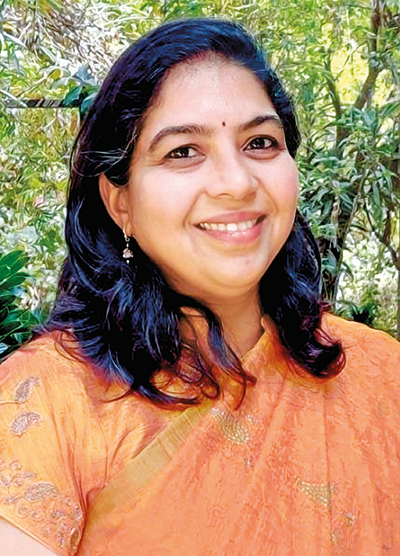 |
| Dr Annapurna Kamath |
The restoration of the famous Lalbagh lake in South Bengaluru is another example of a scientific, nature-friendly approach which includes biological and mechanical treatments. Lake rejuvenation here was headed by Gurunandan Rao, founder and president of HandsOnFoundation.
Wetlands or floating gardens were installed on platforms on the lake which acted as bio filters that helped remove toxic elements like excess nitrogen and phosphorus and improved oxygen levels of the water. A high-impact cascading aerator fountain and submersible aerators were installed to augment the supply of oxygen deep inside the lake. The entire exercise was supported by Teva Pharmaceuticals’ CSR initiative.
Before a lake is adopted for rejuvenation it is important to study key aspects related to feasibility of rejuvenation, details of the lake profile, level of water contamination, hydrology, catchment landcover, detailed maps and so on.
“It is vital that decision-makers have access to all crucial information so that they can arrive at an informed decision based on scientific data and evidence,” says Khushbu Birawat, an environmental engineer based in Bengaluru who has worked extensively with Paani Earth Foundation, an organization that focuses on water-related research.

“Earlier, with the MoU in place, we would not need permission for every activity or event we conducted at the lake but now we liaise with the local corporation. We still organize educational, volunteering and clean-up drives for which there has been no resistance. We are following a conservative approach until we get a clear directive on the matter from the relevant authorities,” says Dr Kamath.
After the order, many lake groups did argue that they were not corporate entities and should be allowed to continue. The Karnataka Tank Conservation & Development Authority Act, 2014, permits community involvement in conservation.
The citizen groups have been seeking clarification and the legal battle over who can maintain the lakes has continued for years. The BBMP had been working on a new “Community Involvement for Lake Conservation Policy” since 2024, to formalize how private parties can contribute without ownership being handed over. People are waiting patiently for new policies to emerge.
Comments
-

Geeta Wahi Dua, Co Editor, LA Journal - May 8, 2026, 11:20 a.m.
Whether natural ecosystems such as rivers, forests, hills, and wetlands, or constructed landscapes such as lakes, parks, gardens, and farmlands, all are living systems. In a rapidly developing country like India, these ecosystems are under tremendous urban pressure and require regular care, maintenance, and stewardship, much like our own physical bodies. In this context, the case of the lakes of Bengaluru emerges as a beacon of hope. The participatory and professional approach adopted there—with the involvement of local bodies, NGOs, citizen groups, and environmental professionals—is leading the important task of cleaning and rejuvenating these water bodies through scientific and sustainable methods. Thank you for bringing this inspiring story to the forefront. The approach demonstrated in Bengaluru has the potential to become scalable and adaptable for similar contexts in other cities facing ecological stress and rapid urbanisation. It is hoped that both the executive and the judiciary will extend their support to such meaningful environmental initiatives and movements