



Can the Yamuna be revived?
Venkatesh Dutta
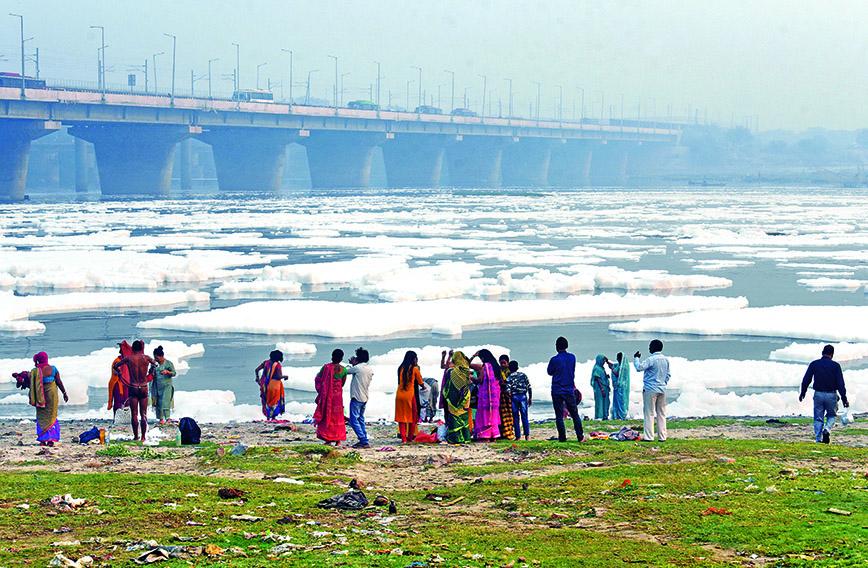
The Yamuna is one of India’s most sacred rivers. But on its 22-km stretch through Delhi, the Yamuna gets reduced to being a polluted drain. Four decades of efforts to restore the river have mostly ended in failure. Delhi, one of India’s richest cities, does to the Yamuna what Indian cities generally do to their rivers — which is to swamp them with wastes, diminish their natural flow, occupy precious floodplains and destroy wetlands and aquifers.
Rivers thrive much beyond their courses. To be in health and serve cities well, they need the freedom to flow. Those marshes, tanks, ponds, canals and water-filled layers underground all make up a river’s being. To take them away through urbanization is to suck the life out of a river.
A time there was when turtles used to bask in the sun on the banks of the Yamuna in Delhi — so we are told by Kapila Vatsyayan, the scholar. Fish were abundant in the river during the 1960s. There were sightings of crocodiles. The Yamuna gave to Delhi vast scenic beauty, rich vegetation. The clean water offered a thriving riverine economy with cultural festivals, fairs and swimming competitions.
The Yamuna of those times is no longer visible even in part. Instead, some 30 million people make up its stressed catchment as it flows from Wazirabad to Okhla. The decline has been relentless and especially noticeable since 1990. The Yamuna’s water became stagnant, black, and polluted. Many drains carrying sewage emptied into the river untreated. Delhi expanded and attracted people from all over. Many colonies came up without sewerage systems. The natural drains became sewage-carrying canals.

The river ecosystem and floodplain dynamics along the Delhi stretch have already been significantly impaired by extensive infrastructure development and construction activities. It is therefore essential to initiate measures to mitigate, to the extent possible, the adverse hydromorphological and ecological impacts of these interventions.
A comprehensive policy framework is needed to enhance the flood passage capacity of the Yamuna by restoring its lateral (river-floodplain exchange), vertical (surface-groundwater interactions), and longitudinal (upstream-downstream continuity) connectivity, thereby reinstating key ecohydrological functions of the river-floodplain system.
It is also very important to learn from past mistakes and put in place a strategy that works on the ground. Can we impose a moratorium on new projects that dissect the floodplain and constrict the river channel? Can we prioritize ecological restoration over ‘cosmetic interventions’ that further concretize and privatize the floodplain? A lot of money has gone into meeting compliances and ‘administering’ court directives — a reactive approach that muddles through ad hoc measures.
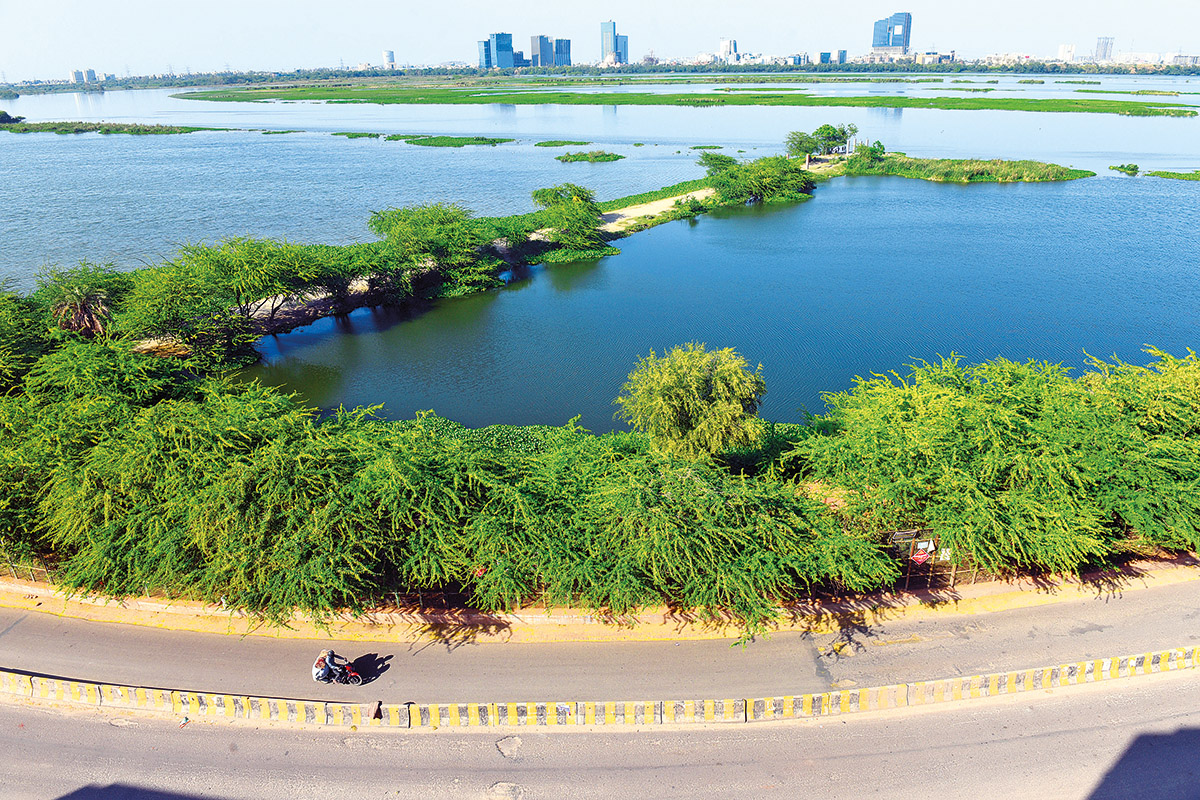 Infrastructure has impaired the floodplains
Instead, an eight-fold path of revival should be adopted with sincerity after due introspection to restore the river to its earlier splendour and greatly enhance the quality of life in Delhi and its nearby areas. Here is what can be done:
STATUTORY PROTECTION
Legally designate river zones and floodplains as protected ecological spaces to prevent encroachment and degradation.
STRICT RIVER ZONING
Implement clear zoning rules that respect natural river dynamics and maintain connectivity with wetlands and aquifers.
ENSURING FLOWS
Restore minimum flows by revising water release schedules and modifying barrages to mimic natural hydrological patterns.
UPGRADING SYSTEMS
Upgrade and maintain the urban sewerage infrastructure (drains, pumping stations, pipes) to prevent leakages, backflows, and untreated discharges.
BETTER SEWAGE TREATMENT
Expand and optimize infrastructure to match or exceed actual sewage load across all urban zones.
REUSE OF TREATED SEWAGE
Deploy advanced treatment technologies to ensure treated water meets reuse standards and reduces nutrient loads.
IDENTIFY HOTSPOTS
Focus clean-up efforts on critical stretches by removing sludge, desilting beds, and rehabilitating flow channels.
INVOLVE EXPERTS, ACTIVISTS
Make them part of the solution. Institutionalize inclusive governance by involving local stakeholders in planning, monitoring, and awareness efforts.
All are doable and require not just infrastructure and enforcement, but a paradigm shift in our action, towards river space, ecological sensitivity and a long-term commitment.
 |
|
Infrastructure has impaired the floodplains |
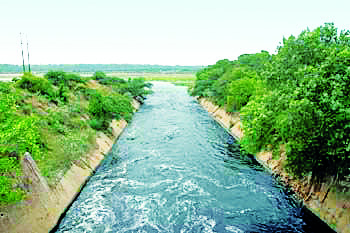
Today 22 drains outfall into the Yamuna in Delhi. Ten drains have been tapped, two are partially tapped and almost 10 are yet to be tapped. The Najafgarh drain itself contributes 70 percent of the wastewater discharge in the Yamuna. This drain is actually a tributary to the Yamuna known as the Sahibi river, but now carries wastewater and filth. The next and bigger source of pollutants is the Shahdara drain that contributes 16 percent of wastewater discharge. These two drains are very difficult to tap and manage. Although the city has 37 Sewage Treatment Plants (STPs) to treat the wastewater, many of them do not meet prescribed water quality standards post-treatment. There are 13 Common Effluent Treatment Plants (CETPs) specifically designed for collective treatment of effluents from industrial facilities. The utilization capacity of these CETPs was merely 30.7 percent in February 2005.
In 1999, the CPCB (Central Pollution Control Board) estimated that Delhi produced over 2,550 MLD (million litres per day) of sewage, three-fourths of which flowed into stormwater drains and ultimately into the Yamuna untreated. In late 2004, a committee was set up under the direction of the Supreme Court to prepare an action plan for the Yamuna under the chairmanship of Anil Baijal, then secretary, Union ministry of urban development.
This committee recommended expansion of sewage treatment capacity from 2,880 MLD in 2008 to 3,758 MLD by 2015. According to the Delhi Pollution Control Committee (DPCC) data of June 2025, sewage flowing untreated into the Yamuna is about 30 percent of the sewage that Delhi generates. The Yamuna Action Plan (YAP) was launched in April 1993.
Anil Agarwal, founder of the Centre for Science and Environment (CSE) in New Delhi, called it the ‘sanitary engineer’s dream’ that lacked a comprehensive ecological, economic, technological and social dimension.
TURNING TO THE COURTS
 |
| M.C. Mehta |
The first major legal case on the Yamuna river was initiated in 1985 by noted environmental lawyer M.C. Mehta. His petition reached the Supreme Court, marking a turning point in laws related to river pollution in India. The petition reported serious ecological degradation in Delhi’s stretch of the Yamuna river, including discharge from hazardous industries.
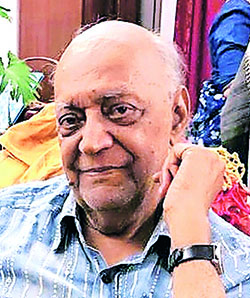
The Supreme Court, after a decade in 1996, ordered installation of 15 STPs and CETPs in industrial areas to control factory effluents. This case led to decades of follow-up action on the Yamuna. In 1992, Cdr Sureshwar Sinha, heading a Delhi-based NGO, Paani Morcha, filed a petition stressing the need to stop the high rate of pollution in the river and maintain free flow, furthering the legal push (the ‘minimum flow’ case, ensuring at least 10 cubic metres per second of water flow in Delhi).
In 1994, an article headlined “And Quiet Flows the Mailee Yamuna" appeared in a newspaper in Delhi. The Supreme Court, taking suo moto cognizance, filed a case against the CPCB and others for failing to fulfil their duties in cleaning up the Yamuna. In this case, the Supreme Court ordered in April 2001 that it was “imperative that at least by March 31, 2003, the minimum desired water quality of the river is achieved….” This landmark case is still going on and has delivered several directions and orders.
 |
| Manoj Mishra |
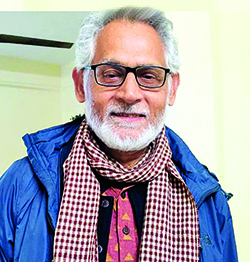
After 2007, landmark litigation like Baldev Singh Dhillon vs. Union of India and Manoj Mishra vs. Union of India led to stricter directives on sewage treatment, industrial discharge, and protection of the floodplains. The National Green Tribunal (NGT) vide judgment dated January 13, 2015, in the matter of Manoj Mishra vs. Union of India & Ors, issued various directions, including directions to the Delhi Jal Board (DJB) to operationalize existing STPs, construct new STPs, maintain and upgrade existing STPs and other directions for prevention and control of pollution and rejuvenation of the Yamuna in Delhi. Since then, various orders have been passed by the NGT from time to time.
In 2018, the Yamuna Monitoring Committee (YMC) was constituted by the NGT in response to the case filed by Manoj Mishra, popularly called the ‘Mailee Se Nirmal Yamuna’ Revitalization case. Mishra’s case brought unprecedented transparency and urgency to Yamuna restoration. Unfortunately, he passed away in 2023.
The YMC reported that 23 major drains in Delhi were still discharging untreated or partially treated sewage and construction debris. Also, illegal encroachment was rampant on the floodplains, STPs were often underutilized or non-functional, and inter-agency coordination was severely lacking. As a result of the YMC report, the NGT ordered the Delhi Development Authority (DDA) to erect fencing, demarcate floodplains, and establish biodiversity parks by April 2020 — or face `5 lakh per month as fine.
 |
| Sureshwar Sinha |
The tribunal also banned new construction on the floodplains and imposed fines for illegal dumping. In January 2021, the NGT disbanded the YMC, stating that most of the work had been transferred to the National Mission for Clean Ganga (NMCG), and the Delhi government’s framework.
A High-Level Committee (HLC) was constituted by the NGT vide order dated January 9, 2023 in the matter of Ashwani Yadav vs. Govt. of NCT of Delhi with the chief secretary, Delhi as convener and the secretaries/heads of departments of various ministries/departments of the governments of India/Delhi as members for prevention and control of pollution and rejuvenation of the Yamuna in Delhi.
An NGT order on July 11, 2024 directed the Ministry of Jal Shakti (MoJS) and the Central Water Commission (CWC) to pay `50,000 each for the non-demarcation of the floodplains in Agra. Unfortunately, the execution of this direction has not happened. In Delhi, the DDA has taken no action against levelling of around 19 ha of the floodplain near Shastri Park. Sadly, the river floodplain is yet to be mapped and demarcated in Delhi despite NGT orders and the River Ganga Authorities Order, 2016.
WATER FLOWS
The river needs a minimum quantum of flow for self-rejuvenation and healing. This flow of water that a river must have in order to preserve its own ecosystem and for dilution of polluted water is called environmental flow (e-flow in short). A study was assigned by the NMCG to the National Institute of Hydrology (NIH), Roorkee, in December 2018 to assess the e-flow of the Yamuna between Hathni Kund and Okhla. According to the NIH report, an e-flow of 23 cumecs (437 million gallons per day) in the lean season (May) has been recommended. The flow in the lean season drops to less than 10 cumecs. Even the release of the deficit amount (13 cusecs) will not make the Yamuna fit to bathe in as the current load of wastewater requires a large volumetric discharge of freshwater, which is not possible in the current scenario.
REGULATING FLOODPLAINS
The continuous abuse of the Yamuna floodplains is part of the larger problem of river pollution and neglect of the river. Many court decisions have pointed out that land development and regulatory agencies have not done much in their mandated role to protect the river’s floodplains. By changing the land use of the river’s natural floodplains, its periodic inundation is badly impacted which further hinders the crucial process of groundwater recharge and other ecosystem functions.
In September 2025, the Yamuna repeated the 2023 flood-like situation. In July 2023, the river breached its Highest Flood Level (HFL) of 1978 by a huge margin of 1.17 metres and set a record of 208.66 metres as its new HFL. In September 2025 too, its flood level was short by a mere 0.01 metre of the 1978 HFL. With each passing day, the flood pathway of the river is getting reduced, making the region even more vulnerable to flooding in the future.

There are 26 bridges and three barrages in the 22-km stretch of the river in Delhi, and some more bridges are under construction. Even new roads have been built and widened along the floodplains. The embankments and guide bunds have further fragmented the floodplains. Throughout the year, large quantities of silt and sediments enter the Yamuna system through the river and multiple drains. However, due to inadequate flow, these materials accumulate behind barrages and around bridges in Delhi, leading to a gradual rise in the riverbed level.
The restoration of floodplains by the DDA includes landscaping, wetland construction, public utilities — such as pedestrian pathways, cycling tracks, bio-toilets, entrance plaza, and signages. Many projects are underway for the creation of biodiversity parks inside the floodplains. These projects also came under submergence during some of the recent floods.
The South Asia Network on Dams, Rivers and People (SANDRP) extensively documents and advocates the protection of the Yamuna floodplains from encroachment, illegal levelling, and dumping of construction and demolition wastes. SANDRP has raised concerns about the DDA and Forest Department raising and levelling Yamuna floodplain land for projects like compensatory plantation, which is a permanent loss of floodplain area. The levelling of floodplains reduces the natural space available for river water to spread during floods, which can worsen the situation in urban areas like Delhi.
The DDA has been proposing changes to the ‘O Zone’ status — designated floodplains where no construction is permitted — in order to regularize unauthorized colonies within the floodplain. However, despite a High Court order, it has failed to remove construction waste scattered across the riverscape in Delhi. Further, despite recommendations from a Parliamentary Committee, neither the DDA nor concerned agencies have developed guidelines or rules for dumping of construction and other waste into the Yamuna, nor have they created a common portal to record and update data on sand mining, floodplain and wetland encroachments.
Venkatesh Dutta is a Gomti River Waterkeeper and a professor of environmental sciences at Ambedkar University, Lucknow
Comments
Currently there are no Comments. Be first to write a comment!