



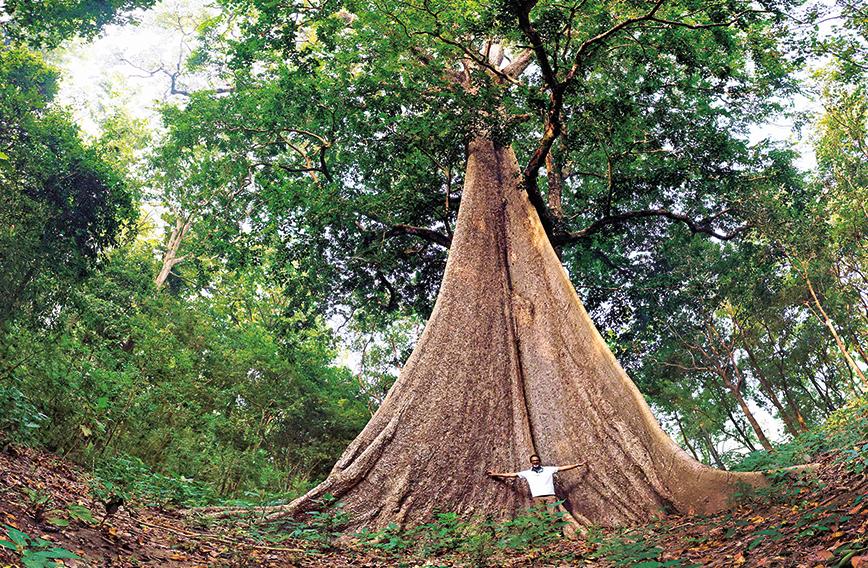
Uday Krishna Peddireddi at the base of a 500-year-old tree in Uttarakhand
Putting trees on the map
Civil Society News, New Delhi
For the past two years, Uday Krishna Peddireddi has been getting behind the wheel of his Isuzu V-Cross pick-up and going in search of ancient trees that should be saved.
He has identified 150 rare trees and placed them on a digital map of India so that they can be easily traced and their unique features remembered.
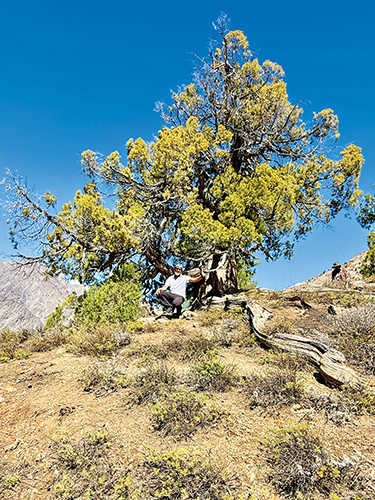
Among his finds is India’s oldest tree — a juniper that dates back 2,042 years, and is high up in Spiti in Himachal Pradesh. He spent one and a half years locating this juniper, driving from Hyderabad to Spiti twice and finally flying down to Chandigarh to reach the tree just in time before the onset of winter.
Peddireddi, 57, saves trees pro bono through his Vata Foundation. He earns a living from wildlife tourism, which he stumbled into while pursuing wildlife photography and conservation. Earlier he was a database administrator in the US. His family used to be in defence-related businesses which were shut down over time.
He believes trees reach out to him and circumstances conspire to take him to them. Prompted by this subliminal connection, he has travelled thousands of kilometres across seven states. Placed on a digital map, the locations of these trees are now known as are the stories about them.

A mere 150 trees is a fraction of the tens of thousands of trees that need to be identified and thereby saved. But Peddireddi is no flippant dendrophile. He is a man with a larger mission: to change the way trees are treated.
Peddireddi’s The Big Tree Quest, as he calls it, is his personal counter to thoughtless human expansion at the cost of nature. As cities grow and roads and bridges get built, trees are in the line of fire and keep falling. It is an expanding conflict and the number of dead and injured trees has been rising.
|
| India’s oldest tree, carbon dated to 2,042 years old, is a juniper in Spiti and took one and a half years to find |
Perhaps things could be different. Trees may not be so easily sacrificed if their presence were documented and their social and ecological value acknowledged. This is what Peddireddi seeks to do through his digital map.
Trees need recognition and nurturing. In a TikTok world of short attention spans, younger generations tend to move on and don’t have the same steady reverence for trees that their forebears had. Lore around a tree is easily forgotten and with urbanization community life no longer revolves around a tree as it once did. There is neglect and tree abuse.
Communities which at one time revered a tree now ignore its existence. Pulling trees out of anonymity, therefore, is important. It is easier to cut down an unknown tree than a celebrated one.
When Peddireddi sets out on his tree hunts, he invariably travels alone. He packs a small bag and uses an iPhone to shoot pictures. It is important to travel light because there could be nights spent at remote locations.
“I go on my own because who will share in my madness. I don’t carry equipment or anything valuable because I have to be in unknown places and pass through lonely stretches. Also, these trips are not tourism. When I’m on the move there is no time. You could be in Lucknow, but there is no time for kebabs,” he says.
|
|
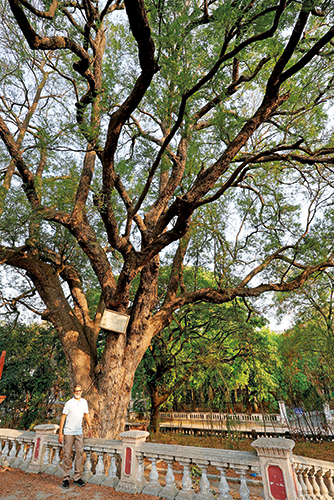
| A tamarind tree in Hyderabad was the first in his quest. |
But how does he know where to find a rare tree in the first place? Where does he even begin looking? Peddireddi is adept in beginning from scratch.
“If you get on Google and type ‘oldest tree in Maharashtra’ or ‘largest tree in Maharashtra’ you will obviously get a few results. The search would also throw up interesting descriptions like ‘100 crore tree’ and I would ask myself, What is that? Or ‘Passport Baba tree’ and ‘Hanuman Mace’ tree. You could also search for ‘married a tree’. People do marry interesting trees,” says Peddireddi.
Such online searches have led to trees with an interesting local presence and stories around them. There are trees where people have been hanged. Others are remembered for providing shelter. Trees become famous also for their medicinal uses.
Invariably, he has had to find his own way to trees. Directions have been vague. At times only the district may be known. Getting to a tree is challenging.
SHORT TRIPS
In the beginning, Peddireddi made short trips out of Hyderabad to get a feel of things. The first tree he went to was in fact in Hyderabad itself. It was a tamarind tree on to which 150 people clambered during a massive flood in 1908.
“The Nizam had celebrated the tree, built a nice park around it and all of that. But when I went and saw the tree, it was a disaster. Well, the tree itself was beautiful, but it was totally neglected. The area around it was a mess. No one seemed to have cared for it,” says Peddireddi.
“So, I said, okay, then I have to do this thing quickly. I will go visit trees personally. You know, see their condition, take a picture and document their stories. My thought was that I would do a book with pictures and give it to the government, saying this is the condition of our most valuable trees,” he remembers.
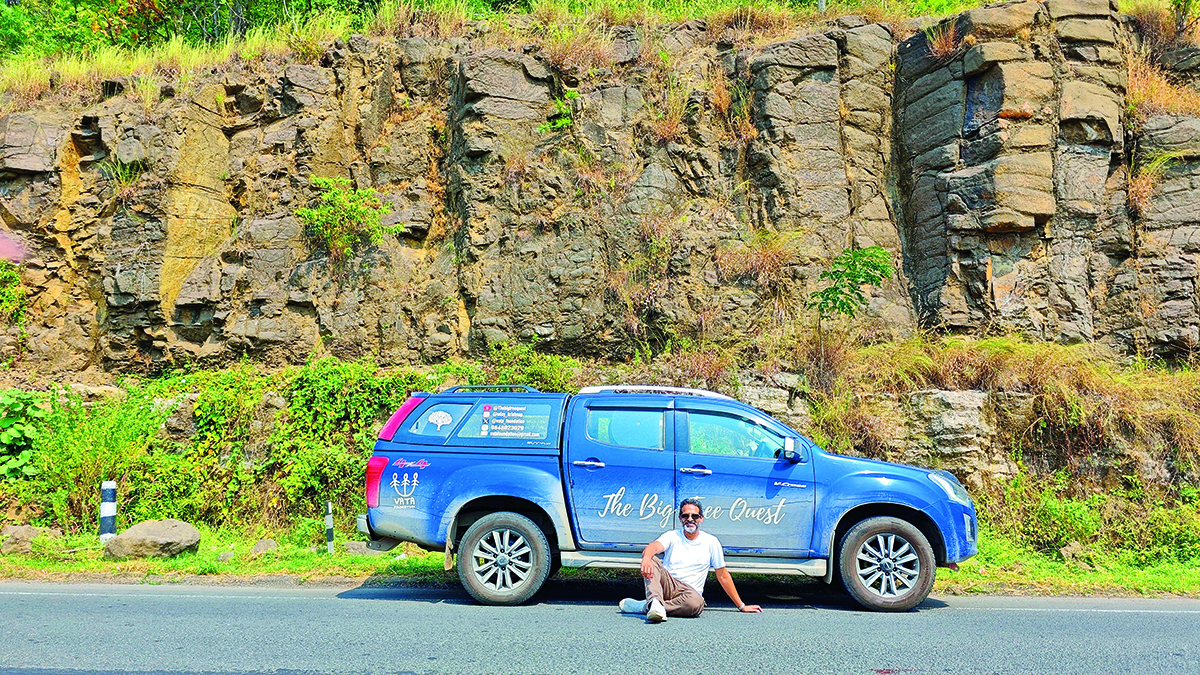 Peddireddi poses with his V-Cross
“Trees are given heritage tags and then abandoned. For instance, there is an 885-year-old tree in Karnataka which has been given heritage status, but it has been abandoned on a roadside. No one bothers,” explains Peddireddi.
“The day the heritage status is given, a function is held. Budgets are made, money is spent and then the tree is forgotten,” he says, expressing anguish over government bureaucracies.
“The wealth of the city is standing quietly in its trees. I want people to recognize this so that trees move from the background to the foreground,” explains Peddireddi.
Peddireddi found that a professor of botany and a committee of well-meaning residents had at one time identified 11 heritage trees in Mysuru. The municipality had done the right thing by giving them formal heritage status.
|
|
| The peepal under which the Wadiyars would pray in Mysuru |
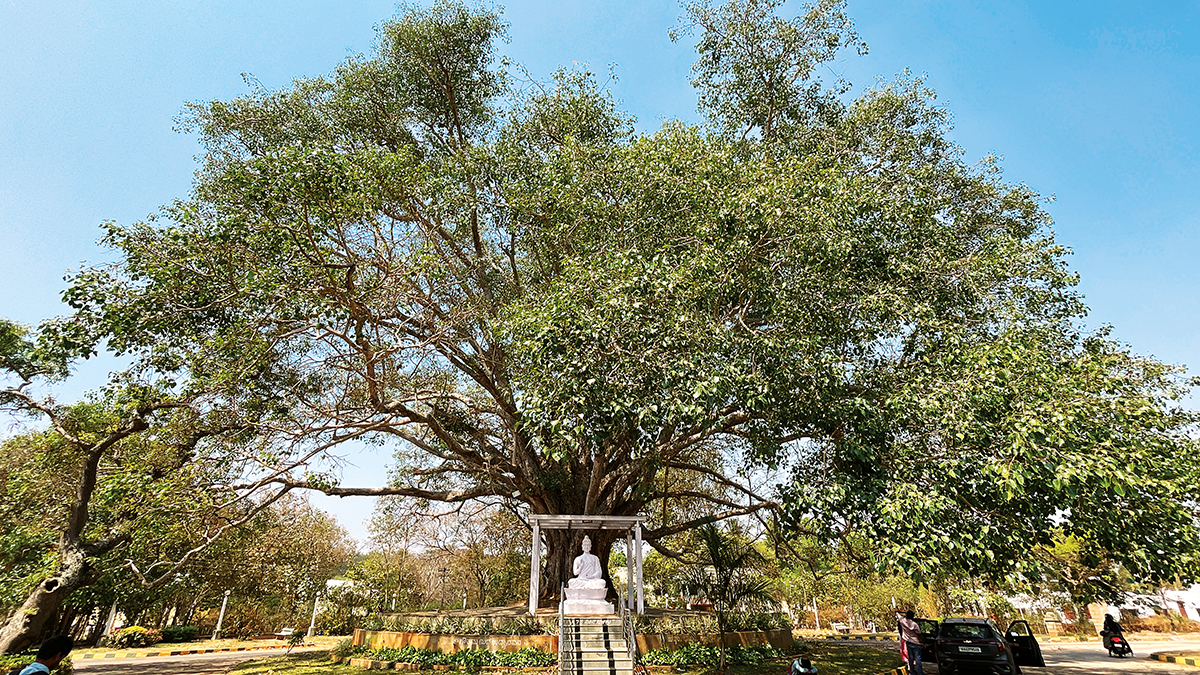
Years had passed when Peddireddi drove down to Mysuru in search of these trees. He found the trees neglected and forgotten. Even the teachers in the university’s botany department couldn’t locate the trees.
He was particularly interested in finding a 156-year-old tamarind tree and an ancient peepal tree in Mysuru. Asking around proved futile. Finally, a gardener took him to the tamarind tree. He found the peepal tree in the middle of a road and people sitting in its shade didn’t know it was a heritage tree.
So it is that even trees which have been given recognition, in this case by a professor of botany, fade from public memory over time. There is no system for protecting the status of a tree.
Peddireddi says he responds to the ‘call of a tree’. Trees find him and circumstances conspire to help him find his way to them. It is an energy that puts him at the wheel of his pick-up to drive hundreds of kilometres.
It is how he spiritedly drove twice from Hyderabad to Spiti to locate the juniper which ranks as India’s oldest tree. Carbon dating places the age of this tree at 2,042 years. Peddireddi had come across the ancient tree in a research paper published in 2012. He says he couldn’t trace the members of the research team, but they had included a picture of the tree in their paper.
|
Hatiyan jhad or Elephant Tree next to the Golconda Fort. Local lore has it that robbers would hide in this tree. |
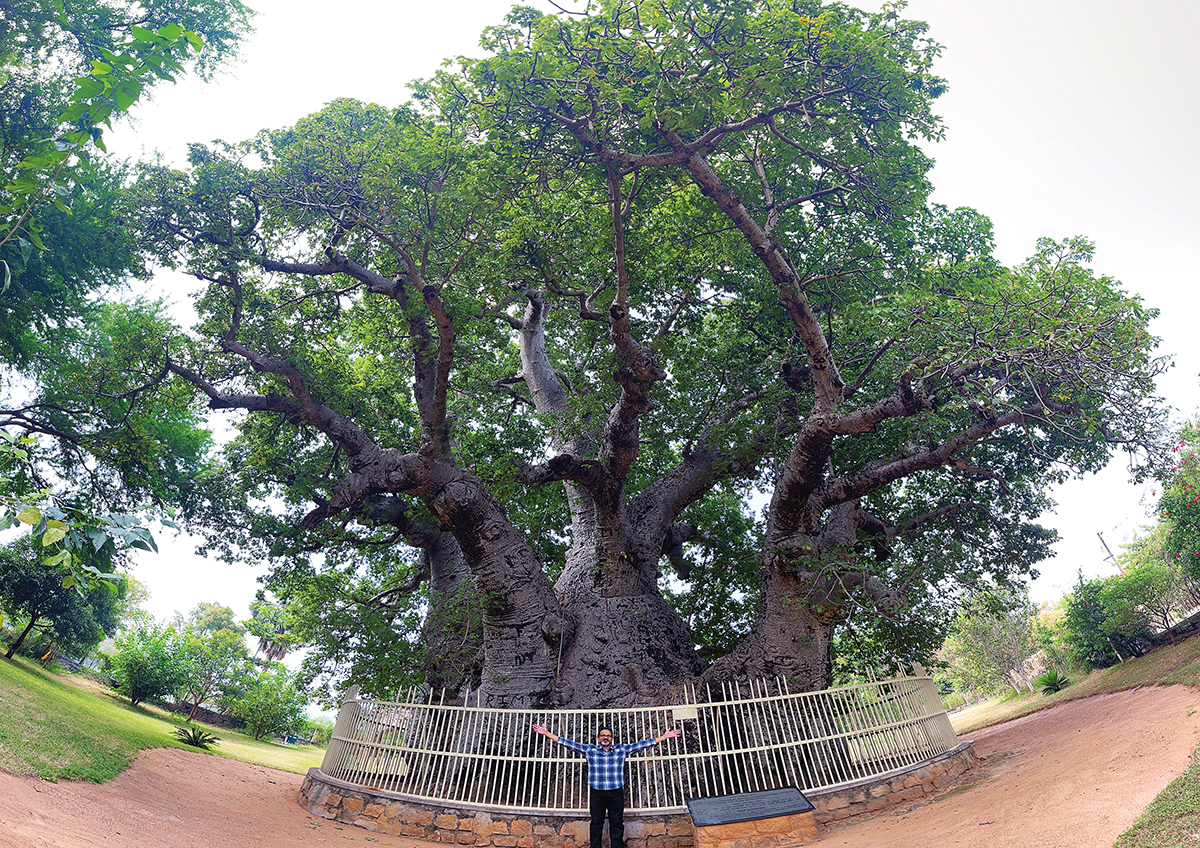
Armed with the picture, he sought out the tree in Spiti only to be told by forest officials that no such tree existed. They said the background against which the tree had been pictured didn’t exist in Spiti.
After persisting and passing the picture around, a local watchman got back to say he knew where the tree was in Spiti. There were only four days to get to Spiti before the weather changed and Spiti became inaccessible. So, he flew to Chandigarh, taking his son along, and borrowed a car to drive up.
After he reached Spiti, getting to the tree itself wasn’t easy. It meant climbing up a steep mountainside, especially treacherous because it was muddy, and negotiating debris from a landslide.
When he reached the tree, it was exactly as in the picture the researchers had taken. The background, however, was different, which is why it was difficult to trace it from the photograph.
“I don’t know why the researchers changed the background. Maybe they didn’t want others to find the tree,” says Peddireddi.
But things just happen when you have to reach a tree, he says. The last lap was exciting and the final connections couldn’t have been anticipated.
“I got the feeling the tree was calling. When a tree calls, everything falls into place,” he muses.
“It was a night watchman who phoned and said, ‘Sahib, come over quickly.’ After landing in Chandigarh, we drove to Manali by evening. We then spent a second night in a place called Udaipur in Himachal,” he remembers.
“On the third day, we were walking up. But what we thought would be a one-and-a-half-hour casual walk, turned out to be a climb on a slippery mountainside. It was a 50-degree mud wall. One mistake and we would have been gone. There was avalanche rubble. We were not prepared for this but it was the route to the tree,” says Peddireddi, recalling the challenge.
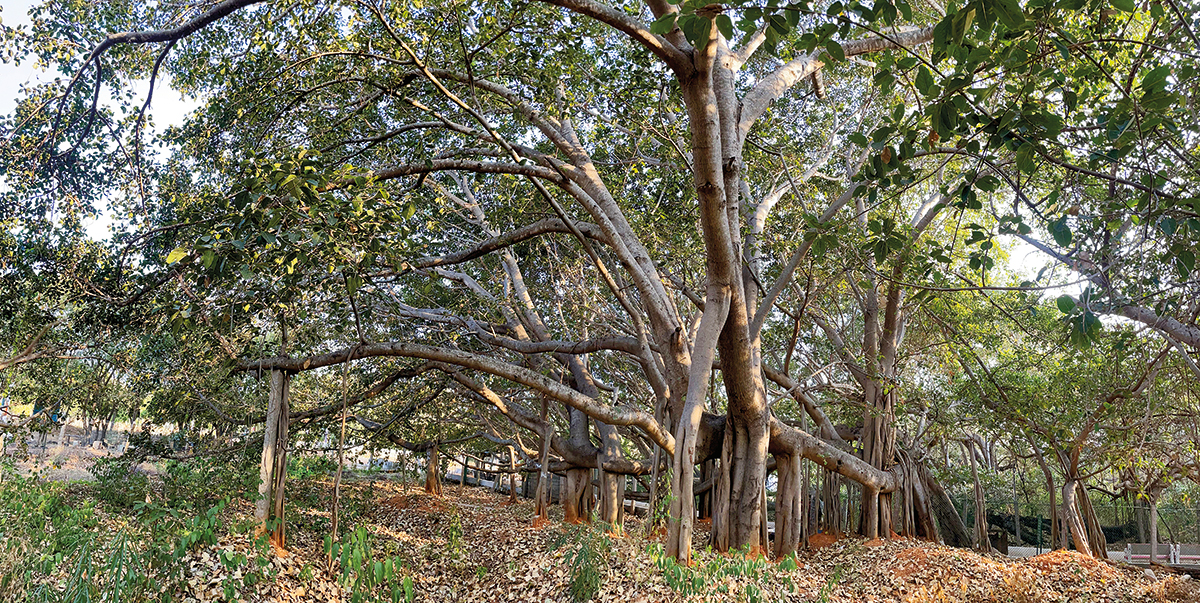 A 450-year-old banyan near the Narora Power Plant in Bulandshahr district of Uttar Pradesh. It spans 4,000 sq m.
“When we got up there, local people said, ‘Sabse purana pedh hamara yeh.’ But they didn’t have many stories about the tree except to say shepherds would shelter under it.”
The locals did recall that a team of researchers had come and examined the tree and “done this and that”. At the time of departure, they told the villagers that it was the oldest tree in the country.
With 13 years having passed since the photograph was taken in 2012, the juniper’s main branch had twisted.
“Trees actually twist as they grow,” explains Peddireddi.
Eventually, Peddireddi succeeded in getting in touch with the professor who had led the research. The latter sought to know in some detail how they had got to the tree.
Okay, did you go through this? Yes, sir.
Did you go through that? Yes, sir.
Did you go through avalanche rubble?
Yes, sir.
Was it all mica? Was it all shining? Yes, sir.
Yeah, that is the tree.
“It is India’s oldest known tree but there was just a single research paper on it which I chanced upon,” says Peddireddi. “It is sad but this is generally the plight of India’s trees.”
TRANSPLANTs
He got some sense of the plight of trees and how easily they get chopped down when, as a contractor, he was building a foot overbridge for the municipality in Hyderabad.
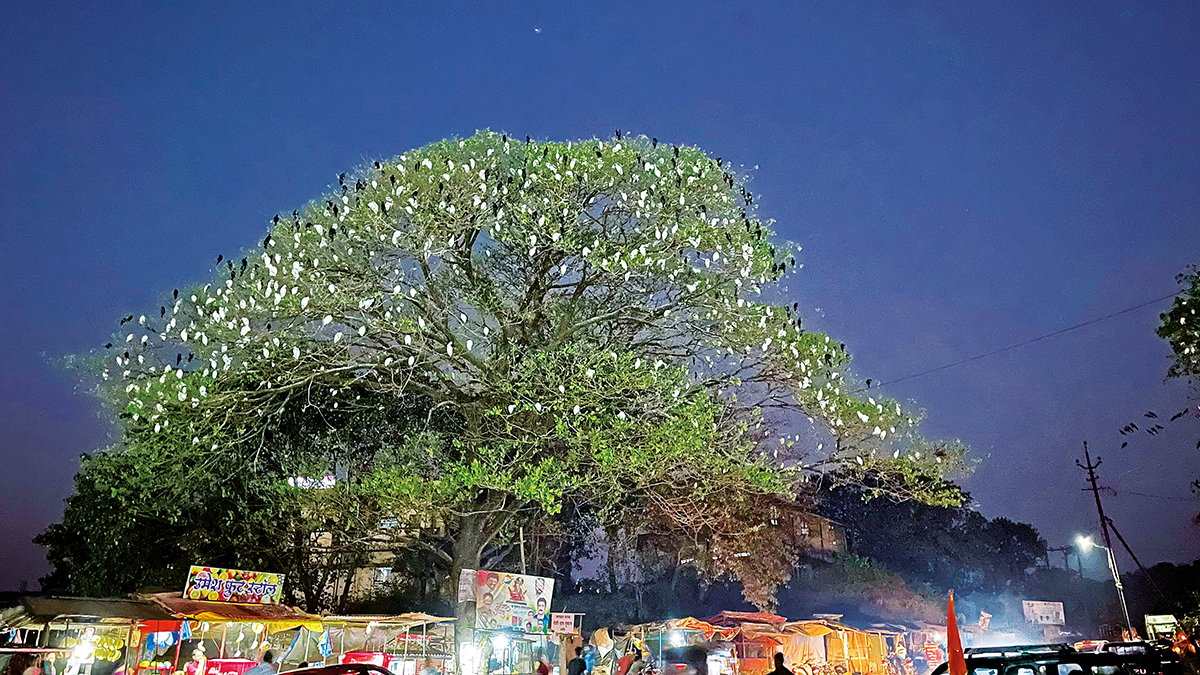 A picture of a tree which was cut down for the Samgameshwar flyover in Ratnagiri district of Maharashtra. Peddireddi’s offer to save it was turned down
There were 13 trees which were to make way for the overbridge. Peddireddi decided to transplant them at his own cost instead of allowing them to be felled. Ten of the trees survived at new locations.
Peddireddi was enthused by the result and decided to take up translocation to save trees. Since then, he has successfully translocated more than 5,000 trees through his Vata Foundation.
Trees get chopped down because they are not taken into account when a project is being planned. No value is accorded to a tree. It could quite easily be translocated. But chopping it down is easier. There is also money to be made from the wood.
At times, when tree lovers protest loudly, a tree is left standing in the middle of a widened road or pavement. This is neither good for the tree nor motorists and pedestrians.
Peddireddi has been doing translocation without charging because he knows government departments will say that they don’t have the budget.
When he translocates a tree, the cost is met by the Vata Foundation, which has donors. At times, the people adopting the tree meet part of the expense.
The main cost of shifting a tree is the money spent on hiring a heavy vehicle with a crane. If there are several trees to be moved at once, the cost per tree comes down. Several factors matter such as the size of the tree and the distance over which it is to be transported.
On average, the cost of a transplant is `1,500. But there is no definite figure. At times one may need to spend lakhs of rupees.
How should a tree be translocated so that it survives? For one, it is important to move the whole tree. Peddireddi points out that translocation has been failing because trees are routinely denuded before being shifted. Irreversible damage is done to them by this.
Second, it is important to shift the tree to a nearby location rather than carry it over long distances. Peddireddi has found that there are any number of villages which are happy to receive a tree because they have been experiencing a loss of green cover.
Third, it is important to act quickly to replant a tree. Keeping a tree in limbo results in its death. The process of translocation must be smooth and completed over a short period.
“The cause of all of this is basically tree blindness. We think of a flyover, we think of a home, we think of a road — we think of all of these, but we don’t think of the tree. And it’s not that complicated. I translocate complete trees as they are,” says Peddireddi.
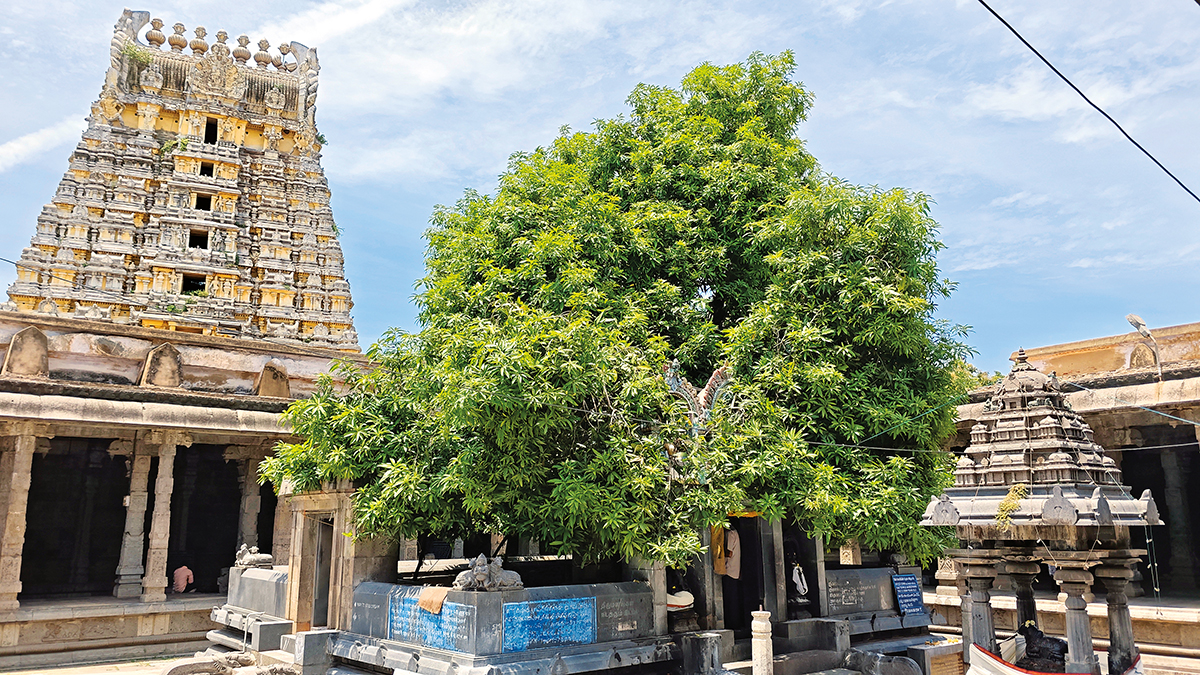 A mango tree, 3,500 years old, at the Ekambareswarar temple in Kanchipuram, Tamil Nadu
In his experience there is no shortage of people who want to adopt trees. After almost 15 years of working in and around Hyderabad he says he can find at least 100 people anytime who would be ready to adopt a tree.
“Everybody wants trees — farmhouses, guesthouses, schools,” says Peddireddi. “The only thing that is needed is the intention to first save the tree and then build that highway or bridge.”
“The National Highways Authority of India (NHAI) was cutting down about 900 banyans for a highway in Telangana. I stopped them. These were 100-year-old trees. Almost every village around that area wanted one banyan tree because they had lost the tree under which they would sit in the evenings,” he says.
Currently living in an urban flat, he grew up in a village. His grandfather would ask him to get the sap of a banyan from which he would make an Ayurvedic eye ointment. He remembers his aunts gathering under trees. There was a happy continuum in the way his family related to trees. He remembers an aunt losing a ring under a tree and it just couldn’t be found. A month later, it surfaced.

For people in rural communities, trees are part of their lives. They have different uses for different trees at various times during the day.
“You know, in villages in Telangana and Andhra there is the rachabandha which is a community platform under an old tree where all the elders go and sit in the evening. All the gossip happens, all the updates happen there,” says Peddireddi. “And I’ve seen, in the interiors of Chhattisgarh, you can go to any village, there are particular trees around which life revolves.”
For tree enumeration to be truly meaningful, a much bigger effort would be needed. In the style of a true frontrunner, Peddireddi seems least bothered. He believes he is being a catalyst and that is more important than cold numbers.
People who get to know about him are already reaching out with lists of trees they would want included on his digital map. Of his 150 trees, 40 have come from local people all over the country. It may be early days for his quest, but it seems to be taking root — like the trees whose call he hears.
Comments
Currently there are no Comments. Be first to write a comment!