



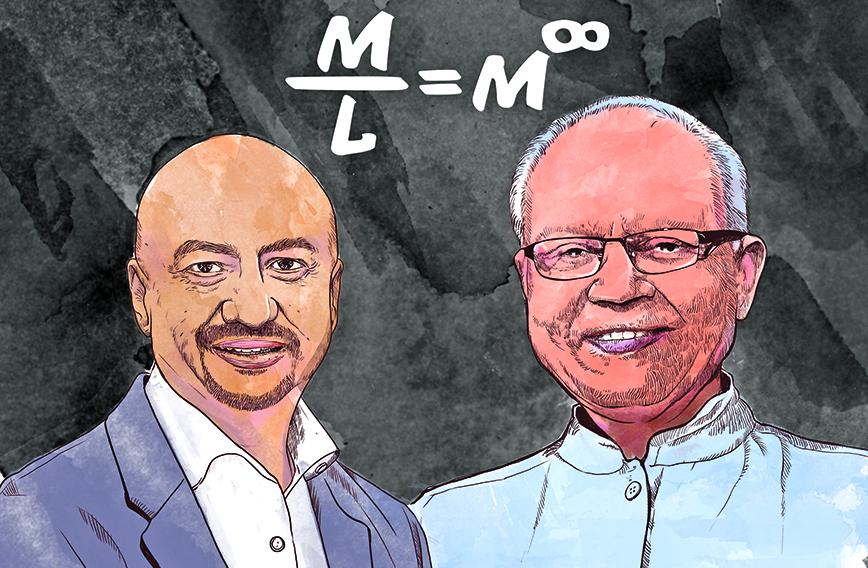
R.A. Mashelkar and (left) Sushil Borde, co-authors of More From Less For More
Great quest: The inclusive innovation
By R. A. MASHELKAR & SUSHIL BORDE
We’re living in unprecedented times. Some might call it an age of uncertainty — of wars, trade disruptions, climate volatility, and social unrest. But we belong among the believers. For us this is, in fact, the best era to be alive.
We see humanity standing more empowered than ever before. Breakthroughs in science and technology are accelerating and what was once unimaginable is now possible. Artificial intelligence redefines human capacity. Life expectancy has increased. Polio and smallpox have been eradicated. Global literacy has never been higher.
But looming over these huge successes, a major challenge now presents itself — of how to deal with inequality. A rising tide doesn’t lift everyone equally. How then should those who get stranded be carried along?

India, for instance, has achieved milestones in poverty reduction, literacy and infrastructure. It is the fifth largest economy in the world, but it is also the most unequal among major economies.
 The World Inequality Lab 2023 indicated that the richest Indians (top 10 percent of the country) owned 58 percent of national income share and 65 percent of the national wealth. The income and wealth share of the bottom 50 percent was 15 percent and eight percent, respectively, the lowest in India’s recorded history.
In 1991, India had one billionaire; in 2022, there were 162. Indian billionaires now account for 25 percent of net national income.
AN IDEA WHOSE TIME HAS COME
How can equality be achieved? The answer lies in ‘Gandhian Engineering’ or the philosophy of more from less for more. It is an idea whose time has come in the 21st century when the planet struggles with achieving equality with sustainability.
To the question “What kind of engineering is the most crucial for the twenty-first century? Chemical? Computer? Electronics?” the answer is ‘Gandhian Engineering’ which derives More from Less for More.
Mahatma Gandhi’s two tenets were: “I would prize every invention of science made for the benefit of all” and “The earth provides enough to satisfy every man’s need but not every man’s greed”.
These Gandhian tenets were intended to save the world and are especially relevant to a planet experiencing rapid technological change. The first tenet referred to affordability; the second to sustainability. They address the challenges of the 21st century.
The five words — More from Less for More (MLM) — hold the key to the world’s sustainable future. They combine three compelling priorities — Equitability, Profitability, Sustainability.
This unique platform is humankind’s response to enhancing prosperity for the largest number of people, increasing wealth for innovators and protecting environmental integrity. These three attributes hold the key to a new world.
In the pursuit of innovation, two dominant paradigms have emerged, both of which exacerbate inequality:
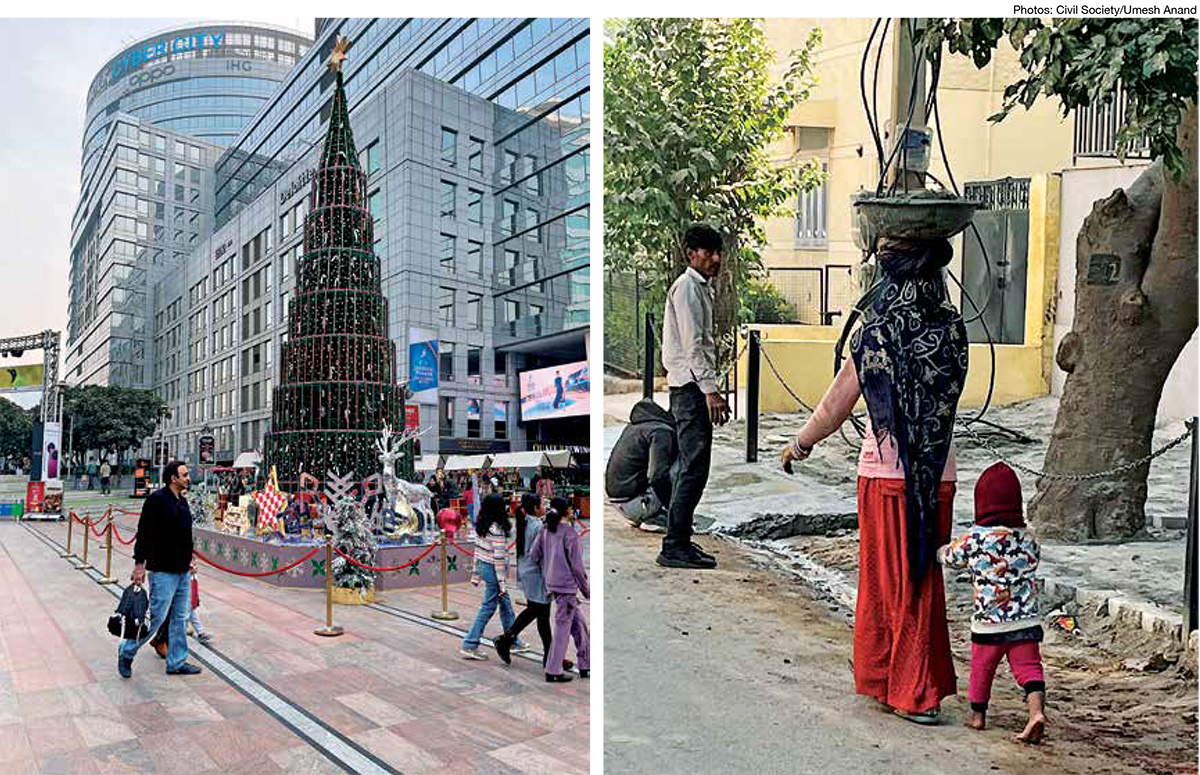
Same city, two worlds: Upmarket Cyber Hub with its offices and shops in Gurugram. And a women labourer with her child at a construction site
More from More for Less (MML):
This MML strategy focuses on creating high-end, feature-rich products that are only affordable to the wealthy. It breeds exclusivity, creating a world where the inequalities of access rise exponentially.
Less from Less for More (LLM):
This LLM approach caters to the masses but compromises quality, offering substandard products to the poor. While it increases accessibility, it denies dignity, aspiration and happiness to those who deserve better.
Both paradigms fail to address the fundamental need for equality — not just economic equality but the deeper, more profound equality of access, opportunity and respect.
On the other hand, the More from Less for More (MLM) strategy offers a transformative solution:
• More from Less:
Leveraging technology, creativity and efficiency to reduce resource usage while enhancing quality.
• For More:
Ensuring that the benefits of innovation reach the widest possible people, transcending economic and social boundaries. This strategy is grounded in the belief that excellence should not be the privilege of a few but the right of all.
MLM is not confined to innovators, scientists, startups or systems operating under “resource constraints”. It empowers established businesses as well. It is about maximizing efficiency and serving a large population with few resources.
The difference lies in its focus: instead of focusing on profits, MLM prioritizes a larger and wider impact. The approach prioritizes inclusion and sustainability, demonstrating that it is possible to cater to more people without enhancing resource consumption.
MLM is the radical change in approach and the potential we hold today to use technology and innovation to solve inequality.
MLM breakthroughs
An MLM revolution struck our country a few years ago and spawned a new era of growth and inclusion like never before with a bold bet to make high-quality mobile internet as common as electricity and as cheap as a cup of tea.
The internet is a basic need these days in addition to food, clothing and shelter. It is a basic medium for access to information, education and a range of services.
It wasn’t so a few years ago in India. Data prices were soaring and the majority in the world was excluded. Today the internet is accessible to people who might or might not have shelter. It is a necessary “highway” to essential services.
A conservancy worker and a corporate executive have a huge difference in income. But when both watch YouTube on their phone or make a video call to their family, the network they use is exactly the same — the same speed, same quality, same reliability. That’s access equality in action, made possible through affordable excellence. And that is More from Less for More!
Jio, the mobile phone company, is one of the biggest MLM revolutions that happened at scale in recent times. When Reliance, the petrochemicals behemoth, announced its entry into India’s telecom market, the industry was in decline. Most players were debt-ridden, voice telephony had been commoditized, and the future looked bleak.
Analysts called it a mistimed move that would erode Reliance’s balance sheet. But Reliance saw opportunity where others saw saturation. Its insight was simple yet radical: the future of telecom was not voice, it was data — the new oil.
Reliance decided to democratize access. Rather than “playing the game better”, it changed the game altogether. The guiding idea was MLM: generate more value, using less resources, for more people.
The company reversed the traditional sequence of business growth. Instead of starting with high prices and then reducing them gradually, it began with an ultra-low price — one that competitors could not match.
In 2016, Jio launched 4G LTE services free for six months, then offered data at less than $0.10 per GB, just five percent of prevailing rates. Voice calls were made free forever. The result: the world’s steepest price crash, not to gain short-term market share, but to unlock a vast under-consumed market.
Jio’s philosophy was that affordability fuels inclusion, inclusion drives scale, and scale sustains profitability. The company backed this conviction with innovation and execution. It built the world’s largest all-IP 4G network, developed proprietary software replacing 95 percent of imported systems, and laid 150,000 miles of optical fibre using indigenous horizontal drilling technology. It engineered low-cost towers, automated customer onboarding using Aadhaar e-KYC, and achieved activation in under five minutes — onboarding millions of customers each day.
Every decision reflected “more from less”: modular network architecture, local manufacturing, rapid scalability, and automation at scale. In less than three years, Jio turned India into the world’s largest data consumer, slashing data prices by 95 percent. Monthly consumption soared from 0.15 GB to over 10 GB per user. Jio became the first exabyte network in the world, carrying nearly eight percent of global mobile traffic and connecting over 400 million subscribers — more than the population of the United States.
Jio’s impact went far beyond telecom. It accelerated digital banking, e-commerce, online education, and startups. Rural internet users more than doubled, artisans reached global markets, and millions gained access to digital services once considered a privilege. By making internet access nearly free, Jio bridged India’s digital divide and redefined connectivity as a human right.
Mukesh Ambani calls Jio “the philanthropy of the internet”. Indeed, Jio transformed India from a voice-poor, data-starved economy to a digital powerhouse — achieving MLM at a scale that lifted millions.
Another of history’s greatest technological breakthroughs is being witnessed in Artificial Intelligence (AI). It is transforming how people, businesses and entire nations operate. While AI has existed for decades, generative AI, which creates text, images and more, has elevated AI to unprecedented heights. However, AI comes today with a huge cost. AI models demand enormous computing power, electricity and money to develop and run.
DeepSeek, the Chinese start-up, disrupted the global AI industry by building a GPT-4-level model at a fraction of the cost. While others spent billions, DeepSeek used smarter design and resource optimization to deliver More from Less for More.
Priced nearly 90 percent lower than OpenAI or Anthropic, its open-source model democratized AI for startups, researchers, and developing nations. DeepSeek proved that even in the world of trillion-parameter models MLM can power inclusive innovation.
MLM in healthcare
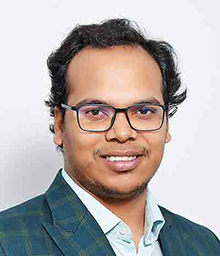 |
| Mudit Dandwate |
The Anjani Mashelkar Foundation was established in 2011 to improve the lives of disadvantaged individuals through science and technology.
The foundation gives a prize each year to innovators who come up with affordable, high-technology devices that take the benefits of modern science to the poor and marginalized.
The foundation further connects these innovators to funding so that they can develop their products and market them on a large scale.
The foundation’s efforts have resulted in several innovations being recognized and adopted. These have been medical devices that make diagnostics simpler, cheaper and easily accessible.
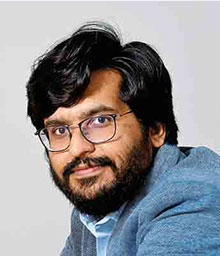
The Dozee, for instance, makes it possible to monitor a patient through a mat with sensors placed in a hospital bed.
 |
| Gaurav Parchani |
It is based on vehicle dynamics by which a car is tuned by feeling the vibrations on a steering wheel. The idea came to Mudit Dandwate, a graduate of IIT Bombay, when he would worry about the health of his aged parents. How could he be instantly alerted if they were having a problem?
Dandwate was joined by Gaurav Parchani, also an engineer. They pooled their savings to develop the idea. Thus, the Dozee was born by repurposing automotive intuition into human care.
They started with a thin sensor mat to read thoracic micro-vibrations and infer heart and respiration. Then Mudit’s puppy, Pi, kept chewing prototypes. The founders hid the sensor under a mattress, serendipitously discovering that the signals still came through. The Dozee would now be continuous, contact-free, remote. Place the mat, connect, and the system streams vitals to a central dashboard.
 |
| Dozee |
At its heart lay ballistocardiography — reading the mechanical forces of each heartbeat across time. Where ECG captures electrical spikes in short segments, BCG senses continuous micro-movements: heart rate, respiration, variability, even tremors and posture shifts. Algorithms learn patterns, clinicians set triggers, alerts arrive early.
The potential for the Dozee is enormous. India has two million beds for 1.4 billion people. There are just 125,000 ICU beds and the nurse to patient ratio is way below international standards.
The Dozee converts ordinary beds into step-down ICUs in minutes. It centralizes monitoring so that nursing time shifts from routine measurement to timely intervention. During COVID-19, when corridors became wards, the Dozee’s sensors helped identify early deterioration, improved triage and reduced periods spent in the ICU. Hospitals monitored patients from command centres and apps, reducing exposure for staff.
The Dozee has provided medical-grade accuracy to disprove sceptics. It has surprised clinicians. For instance, Anjali, 22, was given a clean chit by her doctors. But the Dozee flagged an abnormal respiratory pattern. Further evaluation revealed asymptomatic tuberculosis which could then be treated before it turned visible. Each year she now blows a candle, whispering, ‘For Dozee!’
 |
| Rahul Rastogi |
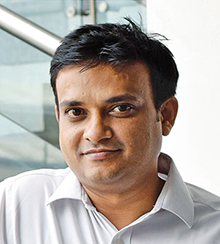
The Dozee has been adopted by hundreds of hospitals for thousands of beds. Experience with the Dozee in collaborations with cardiac institutes and universities has shown that wrist movements mislead while thoracic vibrations are more accurate.
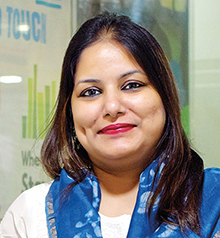
SanketLife is the name of a heart monitor which is the size of a matchbox. Rahul and Neha, both engineers, were living out the Indian middle-class dream of secure jobs, savings, home EMIs and good schools for the children.
They were on course till 2013 when Rahul’s father felt a tightness in his chest. Forty minutes to the hospital felt like 40 years. Angioplasty in the golden hour saved him. Relief arrived with a question that wouldn’t leave: the next time pain strikes, how to know whether it is a heart attack or just indigestion?
What if ECGs could be done at home — simply, affordably without having to rush to the hospital? They searched for a solution but none existed.
 |
| Neha Rastogi |
The chest pains recurred. Four-hour hospital cycles became a ritual. One evening Rahul decided to make that small and affordable heart monitor that would serve his family and countless others.
In a home lab and with a frugal budget, Neha and Rahul used their skills in coding to create a prototype. It took all of two years, but doctors rejected the prototype saying it didn’t have the 12 leads which would qualify it to be regarded as a dependable device.
 |
| Sanket |
They went back to the drawing board, but soon money ran out. They were lucky to get a grant from the Tata Trusts. From their efforts finally came SanketLife: a palm-sized, 12-lead, medical-grade ECG that mirrors hospital output — without gel, wires, or the wait. Touch, record, transmit; a report and doctor review follow in minutes. Clinical studies showed high concordance.
They had shrunk the ECG machine to a device that could sit in your pocket at the cost of a family dinner. Miniaturization unlocked a new business model — testing anytime, anywhere; cohorts and cloud analytics; preventive triage before the ambulance.
The impact is tangible. Over 25,000 devices across more than a dozen countries; one million+ ECGs run outside traditional labs — on rigs, ships, remote outposts, homes that are far from hospitals but now close to care.
For Rahul’s father, Sanket meant dignity: daily vigilance without dependence. For millions living with uncertainty, it means the difference between panic and a plan. And for a health system stretched by queues and geography, it means shifting scarce clinical time from measurement to decision-making.
Sanket’s engineers kept pushing to reduce complexities, improve use of the cloud and keep cost down. In 2023, Sun Pharma acquired a strategic stake in the company, making it possible to widen distribution and step up manufacturing. The roadmap now reads Sanket 360 — a palm-sized device tracking SpO2, blood pressure, beats per minute and more with 12 leads. It is clinical-grade anywhere.
 |
| iBreastExam |
What began as a son’s concern for the health of his father became an innovation and then grew into an enterprise. The more miniaturized the device the wider is its use, allowing more people to benefit. With compression intervention time also comes down.
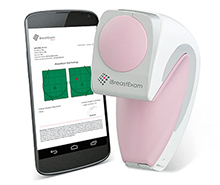
There are dozens of such great stories under the Anjani Mashelkar Foundation. SaveMom was created to solve mother and child problems in the tribal regions of Kerala. iBreastExam is a portable hand-held device to screen for breast cancer painlessly.
 |
| SaveMom |
Swaasa is an AI-based solution for analyzing cough sounds to screen for respiratory disorders.
So, what is the key to getting MLM right? In our foundation, we have been using the ASSURED framework that stands for:
A (Affordable)
S (Scalable)
S (Sustainable)
U (Universal)
R (Rapid)
E (Excellent)
D (Distinctive)

MLM is not just a mantra — it is a revolution born of creativity, compassion and courage. It dares us to build a world where dignity and excellence transcend privilege. As Nelson Mandela said, “Overcoming poverty is not a gesture of charity. It is an act of justice.” MLM embodies this justice — turning dignity into a universal right, not a luxury.
In fact, if MLM has fascinated you so far, the future is about more! It’s not just more for less, the future has potential for ‘Far More for Far Less’. This means causing not just disruption but extreme disruption; not just inclusion but accelerated extreme inclusion. And this is what we need today.
When inequality grows, Thomas Piketty warned, it ‘tears societies apart’. MLM offers a way to heal and unite — a moral and social compass, not just an economic idea. It envisions a world where smiles replace tears and hope replaces despair.
Comments
Currently there are no Comments. Be first to write a comment!