



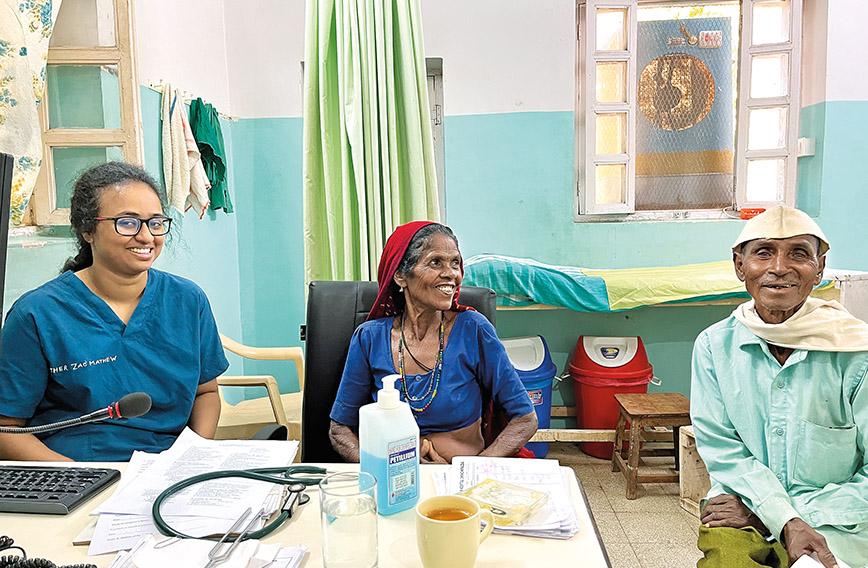
Patients seeking consultation
‘The poor have the most complicated illnesses’
Deepak Singh
In 2014, Ashita, my wife, and I moved to the Chinchpada Christian Hospital in Nandurbar district of Maharashtra with our two small children. The hospital was on the verge of closure. We had so many concerns. How would we be able to turn around a small, defunct hospital steeped in debt, with barely any staff, no patients, no equipment in a severely resource-limited area?
The hospital had been established in 1942 to serve tribal communities in Navapur block of the district in the Western Khandesh region of Maharashtra. Started as a clinic run by a nurse in 1919, it became a full-fledged hospital in 1942. The hospital was managed by expats until 1976 when the Emmanuel Hospital Association (EHA) took it over to manage it with indigenous medical professionals. The hospital was the only healthcare provider in Chinchpada till the early 2000s until healthcare facilities were set up in nearby towns by the government and private players.
Ashita is a physician trained in intensive care. I am a paediatric surgeon. How will we transform a shutdown hospital steeped in debt into a place where the poorest could be treated, we thought? And still sustain growth and competence? The situation we faced appeared overwhelming.

The region remains poor with 72 percent of the population below the poverty line (BPL) as per the 2011 Census. Three things remained extremely important for us: God, His purpose, blessings and provision in our own lives; the umbrella of the Emmanuel Hospital Association, which is our parent organization, and our own experience in seeing the turnaround of a similar hospital in Tezpur in Assam just 10 years earlier.
Our intervention in the next 10 years proved that healthcare can be practised for the poorest, at low cost and high quality. The first step was to start at a very low consultation fee of `20 for all new and repeat visits by patients. This has remained unchanged till date.
Our journey taught us that the poor have the most complicated illnesses that are neglected for too long, and which require the most astute professionals as well as good basic facilities. Our philosophy became that “the poor deserve the best”.
The essential toolkit
In keeping with this ideology, we started a basic laboratory which has now developed into a six-room facility with the latest equipment as funds became available. All the basic tests a doctor needs for an accurate diagnosis are undertaken in the current lab. The radiology section had an X-ray machine which used the old method of processing films manually. This was upgraded to automated equipment (computed radiography).
Overnight, patient turnaround time reduced to 10 minutes instead of an hour. Quality improved because, from guessing what the X-ray showed, we now had a clear image available within seconds on a computer screen at the doctor’s desk.
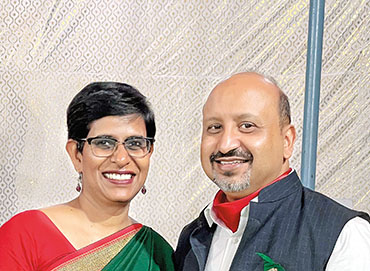
Ashita and Deepak Singh |
Chinchpada now has an ultrasound machine and a 16-slice CT (computerized tomography) scanner thanks to generous donations by friends and philanthropies like the Azim Premji Foundation. Over the years the team has grown from a staff strength of 19 to 114. This includes eight doctors and 34 nurses. Allied health support staff along with palliative care and community engagement staff make up the rest.
Recently, a state-of-the-art isolation ward for infectious diseases like tuberculosis (TB), and a 14-bed ICU (intensive care unit) for critical care have boosted services along with better amenities for both patients and staff through the generous support of Medic Assist International UK.
The region is so poor that most people would not be able to afford private healthcare. Since most of them are agricultural workers, health insurance is the exception rather than the norm. To be able to treat these impoverished people, who have diseases like tuberculosis which are curable but deadly if left untreated, partnerships with the government are extremely important.
Fortunately, we have the support of the District Collector, the Civil Surgeon and the District Health Officer who have aided the treatment of patients through government supply of drugs. The hospital also teams up with the government to provide free ultrasound services to pregnant women from neighbouring villages.
Our job was much tougher than we thought. We had to ensure we had enough money to pay salaries and bills at the end of each month. At the same time, we were striving to run a standard operation which required continuous improvement of quality and sought to serve the poor. It was stressful, to say the least.
Since all operational expenses had to be met with the hospital’s revenues it was always a fine balance between keeping charges low and therefore affordable and keeping our heads above water. EHA’s philosophy is to keep salaries and overheads minimal to subsidize care for people in our locations. In places like Chinchpada where even low charges are unaffordable for patients, it was our friends who graciously supported us to help subsidize care for the poorest with their generous donations. In addition, keeping up with administrative compliances for the hospital is a challenge, since regulations are the same for city and rural hospitals.
Compassion
India distinguishes itself as one of the worst places in the world to die, according to the World Economic Forum’s quality of death index, which placed India 67th among 80 countries evaluated.
Less than two percent of Indians receive adequate pain relief towards the end of their lives. Additionally, there is significant disparity in access to healthcare, particularly cancer care and palliative care, between urban and rural areas.
It was in this context that Chinchpada Christian Hospital initiated its home-based palliative care service in 2016 for surrounding villages where we had witnessed some of the most terrible suffering.
It is common for us to find a seriously ill patient hidden away in a dark inner room or kept with cattle in the cowshed with a large putrefying oral cancer wound infested with hundreds of maggots crawling in it. Adding to the sick person’s misery is the excruciating cancer pain that is left completely untreated because it had been declared that the disease was incurable.
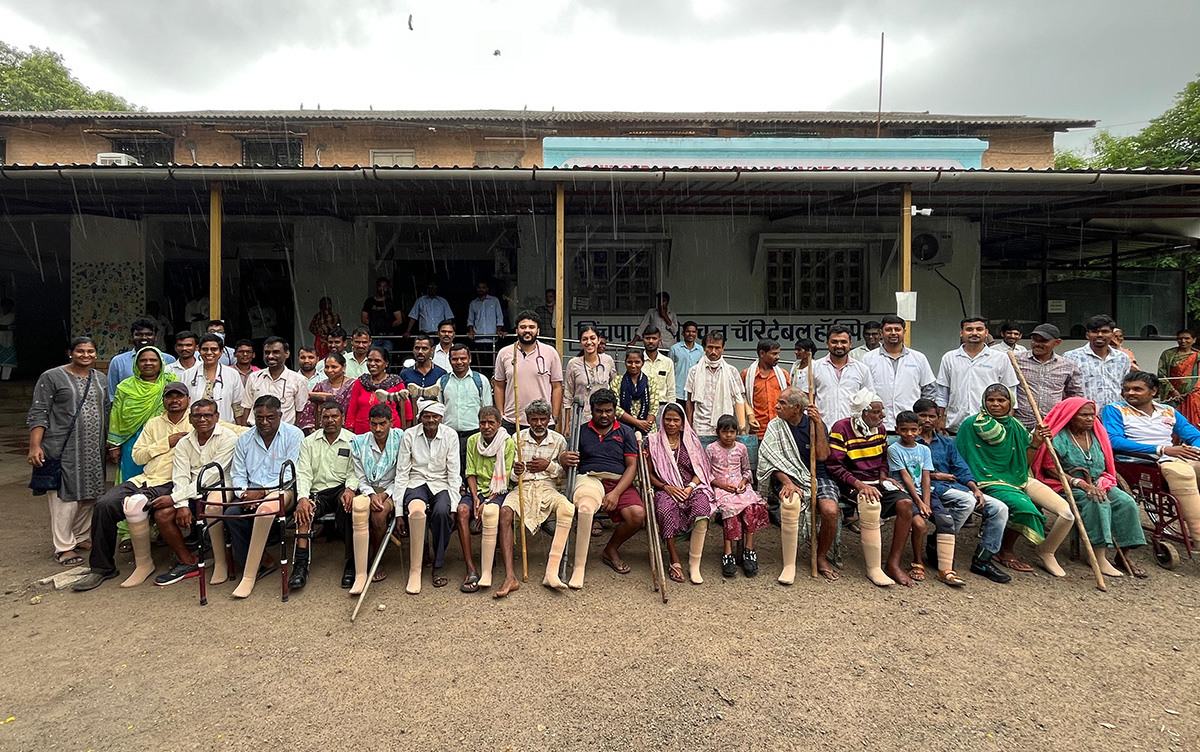 People with a missing limb get a prostheses
But what about the pain? What about the maggots and the foul smell? Could nothing at all be done to restore this precious person’s lost dignity? Some morphine for pain relief, removal of the maggots, a dressing for the wound, drugs to decrease the odour and secretions, a warm bath and body massage, and the caring, listening ears of the palliative care team as they encourage the sharing and expression of grief and emotions.
All these actions bring relief, comfort, sometimes even a smile. It’s priceless.
About 130 patients with cancer and other life-limiting illnesses are currently receiving holistic care through our palliative care team. The team also provides community-based rehabilitation to about 184 persons with disability with the involvement of a physiotherapist, helping them with mobility devices, enablement of government benefits, home modifications where feasible, and livelihood support. It is a joy to be their friend and watch their lives being transformed from a place of hopeless despair to meaningful living.
A painful affliction
What we see in the Emergency too often are patients of sickle cell anaemia with tear-streaked faces, and muffled wails and groans from the unbearable pain of the illness. The worst part is that a large proportion of sufferers are children. We are often astounded by the resilience of these little ones and their capacity to endure.

The huge burden of this disease with its diverse presentations prompted us to establish a Sickle Cell Disease Programme to walk the extra mile with our patients. Some of the ways we support and accompany our dear patients are through the provision of free hydroxyurea in partnership with the government, highly subsidized hospital admissions, vaccinations and facilitation of government benefits. We also celebrate their birthdays, and give them gifts. We teach them about the illness on World Sickle Cell Day each year.
We have about 400 patients enrolled with us. The number is growing, as word gets around that life for those with the disease can be much better with appropriate care. It is pure joy to hear a grateful mother say with tears in her eyes, “Before we started the regular treatment that you advised us, our child would need at least six blood transfusions every year. She would miss school very often because of her pain. Now, for the last three years since she is on treatment, she has not needed a single transfusion, and not missed a day at school. Thank you for caring for her.”
Comments
-

Jessy Skaria - Sept. 13, 2025, 6:20 p.m.
Medical profession calls for compassion first and foremost. Thank you for being such wonderful professionals serving the most needy. Thanks also for this heartening account of the progress and modern amenities acquired by the Chinchpada hospital, of which we have already heard glowing accounts from Drs. Sunil Ninan & Shanti Mary. May the good endeavors endure.
-
Dr. Jacob K Jacob - Sept. 13, 2025, 6:09 a.m.
Very true .May the church find continued freedom in our land to give care.......
-
Bharati Mullick - Sept. 13, 2025, 12:21 a.m.
Heartening account of changing the tragectory of the poor and deprived. May the scope of services expand and such nuclei take shape all over the country’s rural, remote areas.