



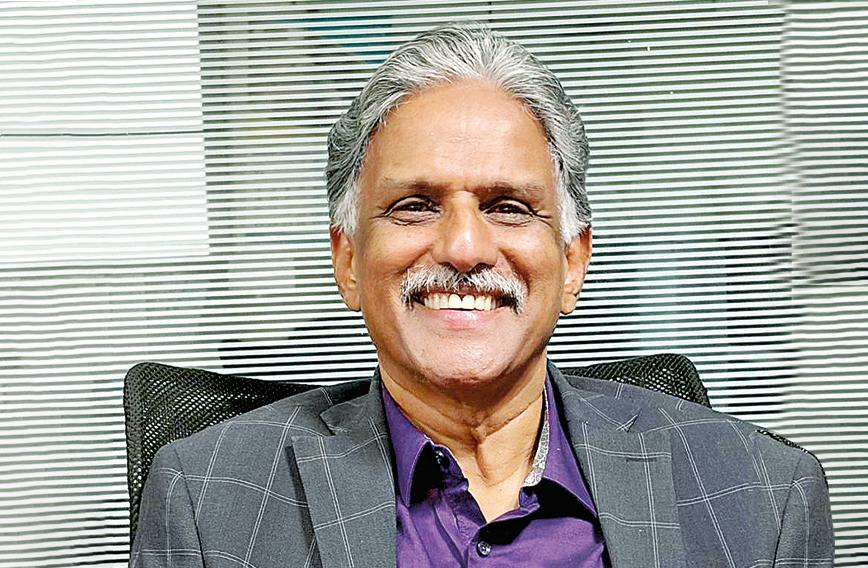
Dr Alexander Thomas: ‘District hospitals have excellent and diverse clinical material’
‘300 doctors in districts trained as specialists’
Civil Society News, New Delhi
When patients in rural areas need specialty medical care, they invariably have to seek it in cities. How then can district hospitals be upgraded to handle such cases? While improving infrastructure is important, it is equally necessary to enable MBBS physicians in rural areas to acquire specialized degrees where they are already located.
To this end, a tripartite effort in Karnataka has delivered beneficial results. Doctors are being successfully trained in district hospitals in specialties that matter with visible advantages for local populations.
The programme came out of a tripartite initiative involving the National Board of Examinations in Medical Sciences (NBEMS), the Association of National Board Accredited Institutions (ANBAI) and the Government of Karnataka.
Civil Society spoke to Dr Alexander Thomas on how the Karnataka model has been developed and the results it is delivering.
Q: There has been an ongoing tripartite effort, a public-private partnership, in Karnataka to use district government hospitals for training specialists. How many specialists have you trained? When did this programme begin?
According to the latest figures, 300 specialists have been trained until now. Actually, the pilot for this programme started in 2017. We worked for about a year and a half before that to make the concept and the mechanism of how to implement it acceptable to all stakeholders. Apart from district hospitals, I think for the first time in our country, taluk hospitals were also used for training. We chose about three hospitals initially and we now work with 36 hospitals.

Q: Which hospitals did you choose?
I’ll give you a little background. I was the CEO of Baptist Hospital and part of an ambitious project by the Quality Council of India (QCI) to grade and accredit gram panchayats in Karnataka. It was a very successful project. We called all of them to a meeting in Bengaluru where the chief minister awarded prizes to them.
Fortuitously, I got introduced to C. Ranganathan, a very visionary chief secretary in Karnataka. I proposed the idea of accreditation of government hospitals by the National Accreditation Board for Hospitals (NABH). We also had a good mission director at that time, Dr S. Selvakumar, who is now principal secretary, Department of Commerce and Industry. We started the first accreditation of government hospitals. Initially, we chose two government hospitals in Bengaluru and got them both accredited.
One of the main issues which arose during this process was the lack of specialists. I was the founder of ANBAI or the Association of National Board Accredited Institutions. At that time, we worked closely with the National Board of Examinations in Medical Sciences. I suggested we try out this idea of training specialists in district hospitals because they have excellent and diverse clinical material, resources which are not so freely available in government hospitals because of the number of patients that converge there.
We had to actually talk to all the district health officials. Initially, they were reluctant. But Dr Parimala S. Maroor, advisor, medical management, Suvarna Arogya Suraksha Trust, Government of Karnataka, was able to convince them. Today, all of them have become our champions. We began with two hospitals with whom we had some interaction.
Q: Is there any broad way of categorizing the 300 specialists who have emerged from this PPP? What are the specialties they have taken up?
We have almost all the specialties. The important areas we focused on initially were maternal and child health for which you need paediatricians, obstetricians, gynaecologists, anaesthetists.
Take Gangavati Taluk Hospital as an example. It’s in a little backward district called Koppal in North Karnataka. Earlier, all cases, especially of C-sections, were being referred to the district hospital or to private hospitals in Bengaluru. Many women, I’m told, lost their lives.
But as of now, they do an average of 5,000 deliveries a year. The community is very confident. Complicated C-sections are being done there because they have the specialists: anaesthetists, gynaecologists, paediatricians. It’s made a big difference. The community reposes its trust in the hospital and the results are excellent.
There is a second hospital, again in a backward district, which started handling complicated spine surgery cases and is also doing joint replacement surgeries, which were unheard of in those days.
The District Health Officer (DHO), recently informed me that the Gangavati Hospital has introduced painless delivery, music in its labour room and aromatherapy. I was quite surprised and pleased because such facilities are usually available only in the private sector.
Q: When you say that you want to train specialists, please explain. Is this training or are these qualifications? Do you include specialties like neurosurgery, neurology, heart specialists, and cancer specialists?
We may not have all the courses that the National Board of Examinations has, like reproductive medicine, but we cover most basic specialties. That was what we were aiming for. Some of the centres, I am told, have started also doing super specialty courses, which is a great thing.
Q: Do you first assess which specializations are commonly in demand in different rural areas?
When we started, we were keen to tackle infant and maternal mortality. But we now cover a gamut of specialties including general surgery and orthopaedics. The initial effort was to improve infant and maternal mortality. But today the focus is on universal health care of quality to the community.
Q: Cancer’s incidence has been rising and we’re not even sure if those numbers are the actual numbers. Most care is suboptimal for people across the country. Is there any attempt to take this PPP to another level by identifying new outbreak areas where the demand is high, cancer being one of them?
Currently, in the taluk and district hospitals there is at least a surgeon who can basically diagnose cancer. There’s a gynaecologist who can also diagnose cancer or an orthopaedic surgeon who can identify orthopaedic cancers. Earlier, local people couldn’t even get a basic diagnosis because there were no specialists. But, yes, I think the next step would be to go into super specialization, and that has already started with the government hospitals.
Q: AIIMS in Delhi, for instance, has done very interesting work with Tata Memorial Hospital and in spreading out facilities. Is this the time now to look at more evolved partnerships, keeping in mind the needs of the population. Take diabetes or lung diseases which are affecting people in urban and rural areas.
Ultimately, that’s what we’re looking at. It’s been almost 10 years and the government hospitals are very strong now. They have good relations with the National Board. They have good leadership also. We have taken the first step and we can take it to the next level which is to train super specialists in cancer and diabetes.
We have also encouraged the government to look at family medicine, which covers a broad gamut of illnesses. We are working with the National Board and the National Medical Council (NMC) to see whether we can start courses on lifestyle medicine. You’re now looking at preventive rather than curative medicine. The great thing is that the individual controls his destiny by eating well, sleeping well, exercising well. The CMC (Christian Medical College) has been running a few courses but that is not part of this PPP.
Q: Infrastructure in district hospitals, across the country, is not known to be of the best quality or standards. Neither are management techniques. You’ve not had an environment of good quality physicians in government service in rural areas, or even at district level. How have these things been overcome in trying to do this PPP?
I’ll have to correct you. You will find probably the best clinicians in government service. See, they don’t have access to too much diagnostic equipment. So, clinicians in district and government hospitals are actually among the best because they see such an amazing variety of cases. They have to diagnose without a lot of diagnostic equipment.
That is what we physicians are actually supposed to do. But I think technology has spoiled many of us.
The exam conducted by the National Board is a very neutral one. For MBBS the exam is conducted in the host institution. For the National Board exam, the centre is far away from the hospital. The examiners and the students don’t know each other. The exam is of a high standard. Students in government hospitals in Karnataka have done better than their counterparts in private hospitals.
Q: You are saying this has worked beyond expectations?
Yes. Secondly, on infrastructure, we were very fortunate. We had responsive bureaucrats in the Karnataka government and the National Health Mission funded a lot of improvements. In some district hospitals, the local community pitched in and donated money for an academic block, etc. Because they found that high-quality medical care was being made available at their doorstep.
Third is my initial impression of government doctors. I thought they just served for four to eight years and then moved on. But when we undertook NABH accreditation of hospitals in Jayanagar and Malleswaram, there was NABH inspection, I got clinicians involved. Many of them stayed in the hospital for three days and made sure that everything went well. They’re very committed with a lot of loyalty to the government. In fact, they are champions of public funded health care. I’m part of a group where they talk — about their students, their first cases and so on. It’s been a good experience. But more than that, I think it has impacted millions at the grassroots.
Q: One reason even public-spirited physicians don’t work outside big cities has been the lack of facilities to live, schools for children, lack of urban facilities and so on. Secondly, after becoming specialists, do doctors continue to serve there?
The government job, at least in Karnataka, is highly sought after. You have stability, you go up the ladder, you have a career choice. There is a system by which the government gives doctors options for transfers, if they don’t want to stay in one place.
In Karnataka, the districts are not too bad to live in. Most of the clinicians I know have their families living with them. Districts have fairly good facilities for schooling.
People apply for these posts even with an MBBS. Probably one in 10 or one in 20 gets selected. Once selected, they have a stable job valuable in today’s times where you can be fired online in half a second. The salary is good. They have many perks and career progression. They are well looked after and retire with a pension. I think they are also allowed private practice.
Q: How replicable is the Karnataka model? What are the three things that any other state should learn from Karnataka?
This is eminently replicable because in all the states, they have district hospitals, staff, and MBBS doctors. The gap in most of these hospitals is a lack of specialists. The MBBS doctors can improve their skills through this route.
There is 50 percent reservation. The other 50 percent are from an all-India selection. They are expected to fulfil a one-year bond after they finish.
There are two advantages. While they are doing the course you have resident doctors 24 hours in-house. Quality goes up. When they finish, they have a one-year bond to serve the state.
It’s very easily replicable. I think Karnataka has got a lot of hands-on knowledge. ANBAI did this project pro bono. No huge investment is needed. For each medical college the government spends crores. If you use your district hospitals and taluk hospitals, you need faculty, and the infrastructure and funds can be sourced from the National Mission. The patients are there.
Q: Where does the faculty come from in Karnataka?
The existing staff was already there, so they were trained. But the National Board has pretty strict requirements. You need two faculty in each specialty. In many places, there was only one in the government hospitals. In some there were none. That’s where the National Health Mission in Karnataka stepped in. They took people who had just retired from district hospitals and appointed them. ANBAI helped in converting them into teachers since most of them were purely clinical people. They only saw patients and didn’t have experience in teaching.
We were able to handle the first few batches of MBBS students because we got them involved in our programmes for the private hospital students. It’s eminently workable. A huge outlay is not required, and it brings in huge dividends. In fact, I was recently asked if this would work in our neighbouring countries. And I said, yes, why not? Nepal and Bangladesh have the same system as us and so does the Maldives. If they are interested, I can talk to the National Board and see how we can work it out.
The National Board degrees are more valued than the MBBS degree. As you’re aware, in the NMC and MCI, there was a lot of corruption. Quality too is very variable in the National Medical Council. I hope that changes with the new chairman. But the National Board degrees are more valued in the Middle East, Australia and the UK because they know the system of examinations. It is very transparent and there’s no other criteria attached to it.
Q: If there is a district level hospital which wants to run these courses to help MBBS doctors become specialists, how does it go about doing this? How do these courses run? Who runs them? Do you have faculty coming in from time to time? Are you using online learning?
These courses are run by the National Board which is headquartered in Delhi. They ensure standards are maintained. For any specialty to be recognized, it’s a very rigid process. They do an inspection, they see the faculty, the infrastructure, and the patients. These three are important.

You also need to have adequate faculty. They have criteria for faculty. You need to have five years of experience to be a junior consultant and eight years to apply for a post as a senior consultant. The infrastructure, operation theatres, duty rooms, and safety of the resident doctors have to be ensured. These are all minimum criteria. Very importantly, you need to have the caseload. If you don’t have enough patients then there’s no point in having a course.
Once an application is submitted, an inspector comes, checks all this and submits his report to a committee. They approve it. After that they have surprise inspections. The faculty and students are supposed to keep a logbook, the faculty has to draw up and submit a plan of action. The curriculum is laid out. It’s all very structured. And being hands-on is crucial. They have to keep a logbook of what they have done, hands-on. If I’m an orthopaedic post-grad, I have to give them a logbook of what surgeries I’ve assisted in and what surgeries I have done myself.
Q: But how does the faculty function?
You have to have qualified full-time faculty who spend at least 25 percent of their time teaching students. There are no visiting faculty. It’s optional for the institution to call in visiting consultants. It’s very well laid-out criteria.
Q: Does political ownership of an idea make a big difference?
Let me put it this way: I think all the stars were aligned. We had excellent bureaucrats, and they had their own connection with politicians. We had some champions on the ground as well. The chief secretary and our health secretaries were wonderful.
Comments
Currently there are no Comments. Be first to write a comment!