-
‘We changed 574 hiring rules in one go to make them rational’
Most state governments in India shy away from shaping up by taking a fresh look ...
Read More
-
‘Every worker should earn Rs 26,000 a month’
There is simmering resentment among workers across categories over sparse wages, poor safety standards and ...
Read More
-
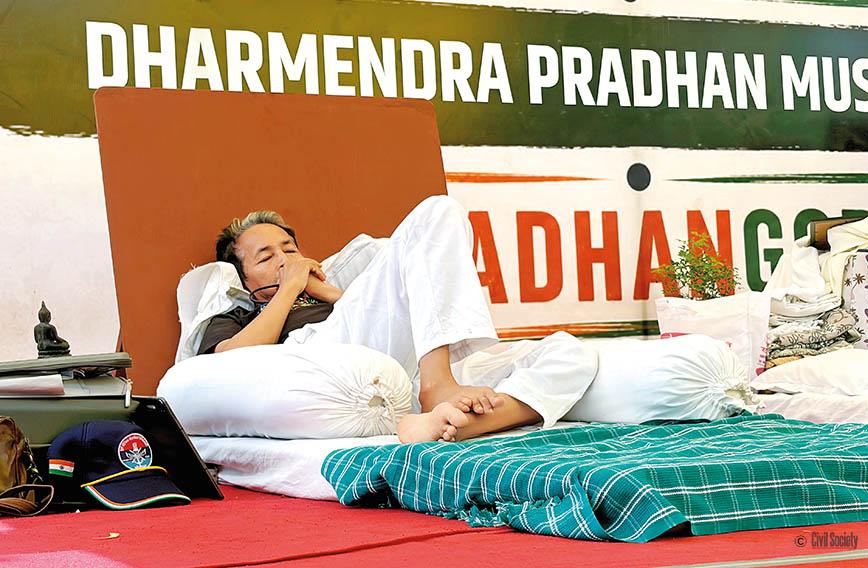
‘A fast is a soft and humble message’
As Sonam Wangchuk lay on hunger strike on the dais at Jantar Mantar, he spoke to ...
Read More
-
‘In patient-doctor disputes it is better to talk first’
HOLDING a doctor to account for malpractice or negligence is a long and complicated process, ...
Read More
-
‘Healthcare should be high quality at a low cost’
The hospital business is booming. Doctors are demanding and getting astronomical paychecks and commissions. For ...
Read More
-
‘We are asking states to register women farmers’
Women farmers have it tough. They work in the fields but they mostly do not ...
Read More
-
‘Law is not giving consumer speedy redress’
Companies eye the Indian market with great anticipation. It has been growing, for sure, but ...
Read More
-
‘Survival after cancer is tougher for the poor’
When Dr Ravi Kannan signed up with the Cachar Cancer Hospital in 2006, he was ...
Read More
-
‘It is not a high cost to support artisans. They have the skills’
Almost four decades ago Poonam Muttreja was a co-founder of Dastkar, the iconic nonprofit that ...
Read More
-
‘The little guy much safer now in the stock market’
More ordinary Indians engage with the stock market than ever before. They are egged on ...
Read More
-
‘The World Bank-IMF crowd has nothing new to offer India’
Anyone witnessing the presentation of the Union Budget would have noticed how much of an ...
Read More
-
‘Labour Codes have missed opportunity for real reform’
Relations between employers and workers in India have for the longest time been governed by ...
Read More
-
‘Political intrusions putting public varsities at grave risk’
A robust education system should be the foundation of a rising economy. Children need to ...
Read More
-
‘300 doctors in districts trained as specialists’
When patients in rural areas need specialty medical care, they invariably have to seek it ...
Read More
-
‘Science shows a major earthquake is overdue’
From imploding glaciers to landslides, floods and torrential downpours, natural disasters have been happening one ...
Read More
-
‘High-speed rail should be the big move India makes’
MORE Indians are flying than ever before. But in the process is air travel getting ...
Read More
-
‘Sourced at Rs 85, we have glasses for everyone’
When The Nudge Institute first took up presbyopia as a public health issue it put ...
Read More
-
‘Border villages should be given special insurance’
When the border with Pakistan heated up after the massacre of tourists in Pahalgam, people ...
Read More
-
‘To deal with pandemics, a global effort is important’
Even as a Covid-19 variant makes news in India and some other countries with a ...
Read More
-
‘I have always seen 24 Mantra as a people’s movement’
When Rajashekhar Reddy or Raj Seelam, as he is more widely known, set out to ...
Read More
-
‘Judges are neither gods nor lords. It’s just a job’
IT is to the courts that citizens turn when all else fails. The standards of ...
Read More
-
‘Rs 47,000 cr for construction workers lying unspent’
The construction industry is an important driver of the economy. Workers at sites, however, don’t ...
Read More
-
Ravi Venkatesan: ‘Fewer jobs but more opportunities’
THE scenes are all too familiar. Tens of thousands showing up to claim a couple ...
Read More
-
‘Himalayas on the verge of a crisis now,’ says Ravi Chopra
WHEN he set up the People’s Science Institute (PSI) in Dehradun all of 40 years ...
Read More
-
‘People should get into the sanitation business’
FOUR years ago, Raees Mohammad, with a PhD in English and a stint as an ...
Read More
-
‘Violence on doctors is rampant in India’
WHEN things go wrong, doctors face the brunt of public anger and angst. Dealing directly ...
Read More
-
‘Tensions between Centre, states going out of hand’
RELATIONS between the Centre and the states have been fraught. A recent meeting of NITI ...
Read More
-
‘AI should be used to help doctors, not replace them’
With the arrival of artificial intelligence (AI), the time is here to consider its implications ...
Read More
-
'Our way of looking at disasters has now changed'
FROM floods to earthquakes and the Covid-19 pandemic, Doctors For You has played a key ...
Read More
-
‘Make cities inclusive, give them those small houses’
AS India urbanizes, cities need to prepare to carry their new loads. New beginnings have ...
Read More
-
‘So-called activists only want to have dogs in the street’
IN the last week of February, a two-year-old girl was killed by a pack of ...
Read More
-
‘The Indian village has been changing, connected’
Stimulating rural areas should be part of any script for economic growth in India. Even ...
Read More
-
‘Future belongs to nations who have grains, not guns’
Dr M.S. Swaminathan, who passed away on September 28, 2023, was a scientist ahead of ...
Read More
-
‘Fund small hospitals for their potential impact’
FAR from the limelight, several small hospitals meet the basic healthcare needs of people in ...
Read More
-
‘Polls are far too important to be left to politicians.’
A committee under former President Ram Nath Kovind is setting out to examine the feasibility ...
Read More
-
‘People with degrees do little to solve rural problems’
THE Barefoot College has completed 50 years, a signal achievement for any voluntary organization. Based ...
Read More
-
‘Palliative care is integral to a caring health system’
Medicines deal with diseases. But patients coping with pain or the loss of bodily functions ...
Read More
-
‘Stupid to take people off farms for cheap labour’
When farmers blockaded Delhi for more than a year in 2020-21, right through the pandemic, it ...
Read More
-
‘A shift from monoculture is needed for better health’
IN these times of climate change and an increasing burden of metabolic disorders, what gets ...
Read More
-
‘There were 100,000 rice varieties till the 1980s’
THIS is the International Year of Millets and millets are everywhere. But far removed from ...
Read More
-
‘Budget cut is part of a larger effort to disrupt rural jobs’
Is the national scheme for guaranteeing rural employment becoming dysfunctional? Activists believe it is and especially ...
Read More
-
‘Good advice on Joshimath ignored,’ says Ravi Chopra
The religious town of Joshimath is sinking and making headlines. Buildings have developed cracks and ...
Read More
-
‘It took 12 years to research and come up with a script’
MUCH store is placed by early learning in the mother tongue. But what if a ...
Read More
-
‘More people die in pothole mishaps than terror attacks’
WHEN he was in the Indian Air Force, Prathap Bhimasena Rao was flying Jaguars and ...
Read More
-
‘Solar is now the cheapest power you get in India’
WITH global warming, pollution and wildly unpredictable fossil fuel prices, renewable energy is the answer. ...
Read More
-
Zakia on Bilkis and how the hijab keeps women down
THE rights of Muslim women are as fragile as ever before. An unsettling reminder of ...
Read More
-
‘Cheetahs are for tourism, not conservation’
The Kuno National Park in Madhya Pradesh was meant to receive the growing number of ...
Read More
-
‘We have not understood the value of child development’
For the past seven years, Kabir and Preeti Vajpeyi have been involved in bringing architectural ...
Read More
-
‘In villages you need to disclose your Aadhaar’
AN Aadhaar card has become indispensable. It has simplified a great many transactions, allowing them ...
Read More
-
Venkatesh Dutta: ‘Every river must get recognition’
INDIA’s once-splendid rivers have long been in decline. Traditionally, rivers were managed as part of ...
Read More
-
Amitabh Kant: ‘It is about governance based on data’
VISIBLE improvements in government services are being reported from 112 backward districts in India under ...
Read More
-
‘We are mapping officers for competence and capacity’
THE Government of India is a leviathan and bureaucrats are widely accused of being mired ...
Read More
-
‘We approach environmental cases like criminal lawyers’
TAKE a good cause to court and what can you hope to get? Only as ...
Read More
-
'Headline hungry officers will land in trouble’
GOVERNMENT officers have been in the news recently for what many would consider the wrong ...
Read More
-
‘Tech has to be teacher driven in schools’
MUCH store is being placed by online learning. Companies in the business of tutoring children ...
Read More
-
‘In a pandemic official data is crucial. We need it daily’
THROUGHOUT the first and second waves of the coronavirus pandemic, the extent of the tragedy ...
Read More
-
Messy regulation and bad vibes are hurting NGOs
VOLUNTARY organizations have increasingly been under pressure to meet regulatory requirements, find funds for causes ...
Read More
-
‘With GI status, farmers do get better prices’
WHEN Dr C.R. Elsy did her Ph.D. it was in breeding rice plant varieties. But ...
Read More
-
In Goa, Rainbow Warriors build on community
GOA is famous all over the world for its resplendent beaches and dense forests. Yet, ...
Read More
-
'I knew things were bad in Bihar but actually seeing it...'
Dr Taru Jindal earned her medical degrees in Pune and Mumbai, but it was in ...
Read More
-
‘Let Ayurvedic doctors be surgeons but train them’
AYURVEDIC doctors trained as surgeons in Ayurvedic colleges have been allowed by the government to ...
Read More
-
’Why can’t big players buy in the mandi?’
Even as the government holds talks on its three contentious farm laws, promising amendments, farmers ...
Read More
-
‘Basic worker protections lost under new laws’
When millions of workers literally burst on to the scene during the sudden lockdown in India, ...
Read More
-
Are investors, NGOs ready for a Social Stock Exchange?
The idea of having a Social Stock Exchange in India has been circulating since it ...
Read More
-
'Farmers need predictable linkages with markets'
After their agonizing experience in cities during the lockdown, migrant workers, in very large numbers, ...
Read More
-
‘Green approvals given online are a mockery’
The future of the human race depends on the health of the planet. This is the ...
Read More
-
‘We need an inter-state migration council’
MIGRANT workers have been at the core of the Indian economy. People from villages work ...
Read More
-
'People better than govt in family planning'
A useful voluntary organization should be ahead of its time. The Population Foundation of India was one such ...
Read More
-
'I was recreating those times through the prism of love'
The plight of the Kashmiri Pandit community, uprooted from its homeland three decades ago due ...
Read More
-
'I believe in people's participation'
The surprising new entrant into Delhi politics is Arbind Singh, national coordinator and founding member ...
Read More
-
'We work for everyone, in every area'
It is pretty much a done deal that the vote of the poor will go ...
Read More
-
'The Northeast's fears of being swamped are genuine'
A jumble of assertions has engulfed India over the passing of the Citizenship (Amendment) Act ...
Read More
-
Aishe Ghosh: 'JNU is worth fighting for'
Aishe Ghosh, president of the Jawaharlal Nehru University Students' Union (JNUSU), spoke to Civil Society ...
Read More
-
'Bill on data gives little to citizens, too much to State'
Right through the debate on Aadhaar, the absence of a law on data protection found ...
Read More
-
Shireen Vakil: 'The justice system isn't working.'
The strength of a democracy can be measured by the working of its justice system. ...
Read More
-
'Delhi's Central Ridge could be a beautiful urban forest'
Pradip Krishen is a home-grown expert on trees. Insightful and sensitive to cultural influences, Krishen ...
Read More
-
'MPs could spend their local area funds better'
Members of Parliament get Rs 6 crore a year to spend on the uplift of ...
Read More
-
Ankit Srivastava: 'We will bring water bodies back'
In days gone by Delhi used to be dotted with water bodies. Many have disappeared ...
Read More
-
'Bring back bacteria and sanitise less'
Dr Pallab Ray explains the findings of a study led by him on resistance to ...
Read More
-
'Education policy doable but will it get done?'
Madhav Chavan, CEO of Pratham, provides a perspective on the provisions of the draft National Education Policy ...
Read More
-
‘A candidate’s allegiance is to the ticket-giver not voter’
The past two decades have witnessed growing concern over diminishing fair play in elections and ...
Read More
-
'The higher education market has gone wild'
Is the proliferation of privately run colleges and universities in India a good thing or ...
Read More
-
Small biz: How to make it cool for the young.
Everybody has got the lowdown on the unemployment problem. Nobody seems to have figured out ...
Read More
-
'We must unionise women workers, speak for them'
The feminist movement has taken different turns over the years, but to remain relevant it ...
Read More
-
'A basic income will enable youth to make choices"
Sikkim has a lot going for it. The state’s economy has been growing at 12 ...
Read More
-
'Tech must go bottom up and take people into account'
Digital technology has brought major changes in India and there are more coming. It has ...
Read More
-
State and people: 'We need dialogue for development'
Development is about demand and delivery. If people know what to ask for, governments will ...
Read More
-
‘We have set up palliative care centres in 8 districts’
Telangana has become a frontrunner in State-supported cancer treatment by opening palliative care centres in ...
Read More
-
‘Gurugram must be dealt with as a single city'
Barely a year after it was created, the Gurugram Metropolitan Development Authority (GMDA) found its ...
Read More
-
'If we earn more at Amul, we pay the farmer more'
Amul is easily one of India’s most recognised and loved brands. Much of the following ...
Read More
-
‘To fund green projects look beyond banks’
India’s environmental record stares the country in the face, be it the foul air in ...
Read More
-
‘Affordable housing needs better processes’
Affordable housing allows people with low incomes to live decently and stay healthy. The idea ...
Read More
-
‘Poor families need balanced home cooked food first’
In 1974, Dr Samir Chaudhuri, a paediatrician working in Kolkata’s slums, founded Child in Need ...
Read More
-
‘When you are in govt, you can’t afford to be defiant’
Governance in Delhi over the past three years has come to resemble the traffic on ...
Read More
-
Japanese billionaire speaks up for leprosy patients
Every year, on World Leprosy Day, Yohei Sasakawa makes a Global Appeal to end stigma ...
Read More
-
‘We have raised crop output but not farm income’
THe rural sector faces multiple challenges ranging from environmental decline to lack of infrastructure and ...
Read More
-
Pvt hospitals: Why health can't be a business
Every now and then, tragic stories about the consequences of poor quality healthcare make news ...
Read More
-
Metro fares: Let a regulator decide on a hike
When the Delhi Metro Railway Corporation (DMRC) decided in May to raise fares to meet ...
Read More
-
India can go electric by 2030, says Chetan Maini
Chetan Maini is the pioneer of the electric car in India. His Reva was an ...
Read More
-
‘NGO funding has been falling quite drastically’
The voluntary sector in India has been under regulatory pressure for one reason or the ...
Read More
-
‘GEAC and Niti Aayog are wrong on GM mustard’
Differences are out in the open once again over genetically modified (GM) crops with the ...
Read More
-
‘A lot of work is being done in govt schools’
Interest in government schools has been growing. The Sarva Shiksha Abhiyan has sought to ensure ...
Read More
-
‘India is on the cusp of energy change’
Ajay Mathur took over as Director-General of TERI (The Energy Resources Institute) in 2016. He ...
Read More
-
‘We are unusual as a university and attractive'
The Azim Premji University was founded five years ago to contribute to achieving a just, ...
Read More
-
‘Disabled people now have jobs in best of companies’
A new law on the rights of people with disabilities was passed in the winter ...
Read More
-
‘Gurgaon can be a walkable, cyclable city one day’
Gurgaon’s rapid growth has come with wide roads, lots of cars, gated communities and shopping ...
Read More
-
‘Note ban has put digital inclusion on fast forward’
With the demonetisation of Rs 500 and Rs 1,000 notes the goal of rapidly converting ...
Read More
-
‘Midday meals for children are a national investment’
Madhu Pandit Dasa oversees the world’s biggest midday meal programme. He is chairman of the ...
Read More
-
‘Urban heritage should have wide ownership’
As urbanisation spreads, how can heritage be saved? In the rushed transformation that Indian cities ...
Read More
-
‘Give cities a share of GST to make them viable’
India’s long-term economic prosperity will be closely linked to how its cities perform. Can they ...
Read More
-
‘Govt has asked for advice on net neutrality’
Are net neutrality and discriminatory pricing of data on the Internet on their way back ...
Read More
-
‘We have become guinea pigs for biometrics’
For the past decade state governments have launched a series of Internet-based initiatives to deliver ...
Read More
-
‘Let this be the last photo-op for drought’
Two headlines on water have competed for mind space. The first was on a train ...
Read More
-